Cairo and Out

Once Bubbles arrangements were sorted it was time for me to head through to Cairo for a day of sight-seeing before jet-setting back home to South Africa. At this point, I finalized a decision I had been toying with for a while. I would meet up with Bubbles in RSA and complete the European half of my journey in a year or two, after giving my bank balance a bit of time to recover. The traces of Kinmont heritage in Scotland weren’t going anywhere soon, and the prospect of a bit of time back with with April was all too tempting. I followed in Shea’s wake, heading through to Cairo by train. He was already in Germany at this stage, having left a few days earlier to catch Oktoberfest in Munich. It’s a good idea to book your train ticket ahead of time in Egypt. However, the uncertainty surrounding the shipping issues had made this difficult. I was forced to opt for the “sneak aboard and pay en-route” ticket option. We’d done this a couple of times already. The penalty fee is less than a dollar and the trains always have a handful of spare seats you can nab. Well those were my thoughts when I boarded. After changing seats a dozen times and responding to more than my fair share of angry Arabic ranting, I eventually gave up. The 3hr journey was spent standing in the lavatory hallway with a handful of fellow stow-away miscreants. It was a good opportunity to practice being positive. At least I caught the right train.
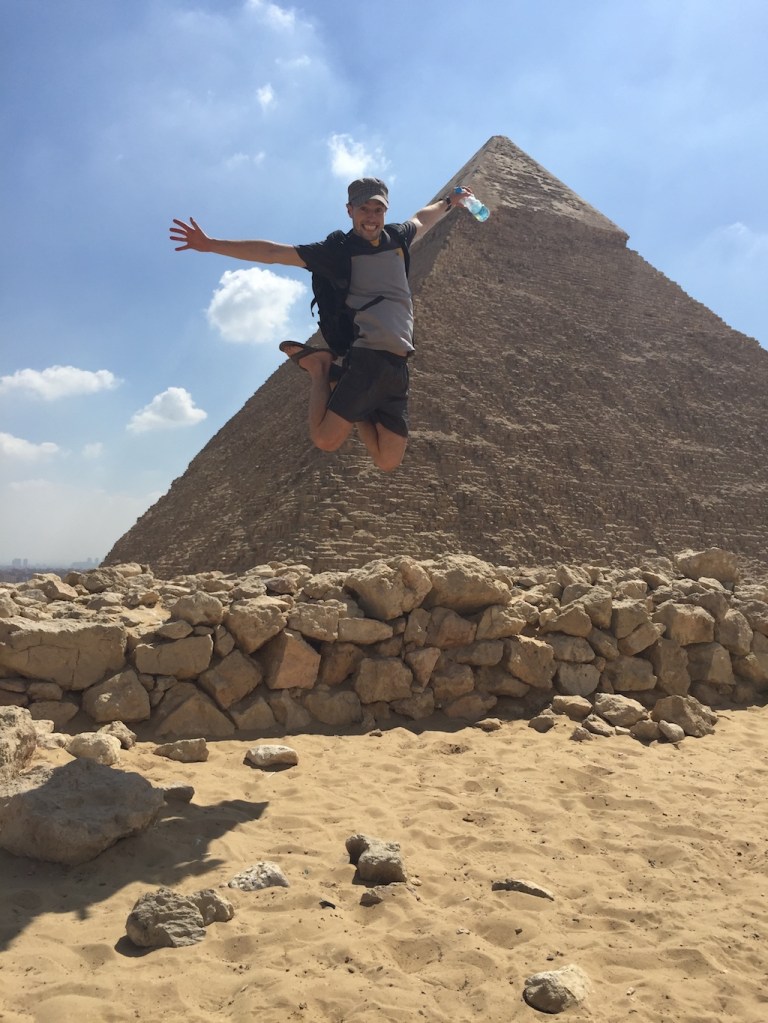
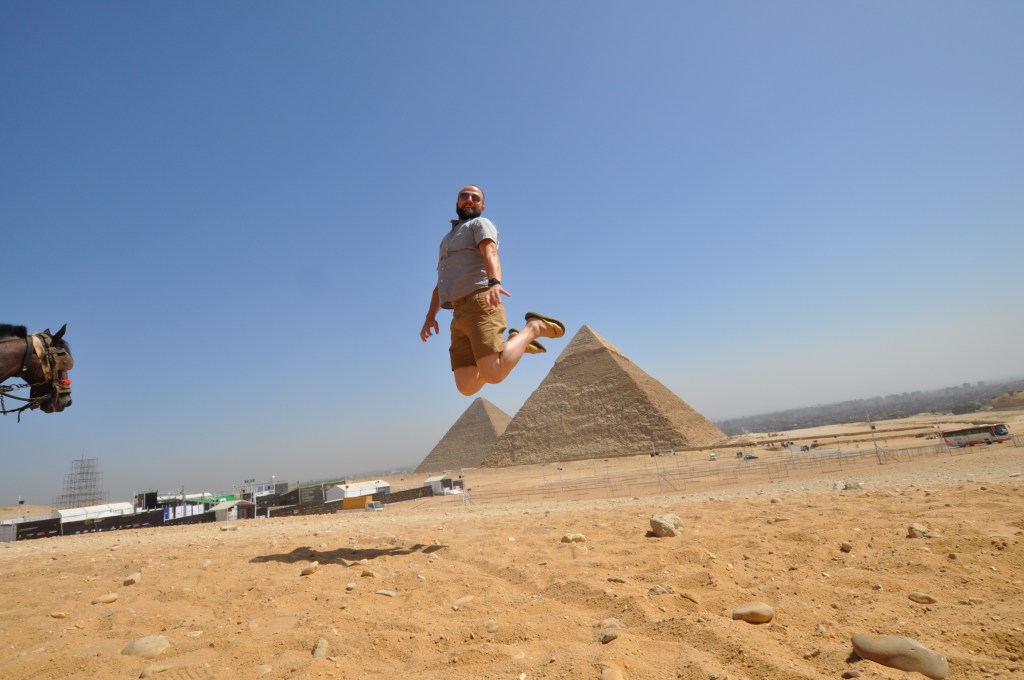
Obligatory Pyramid jump-shot.
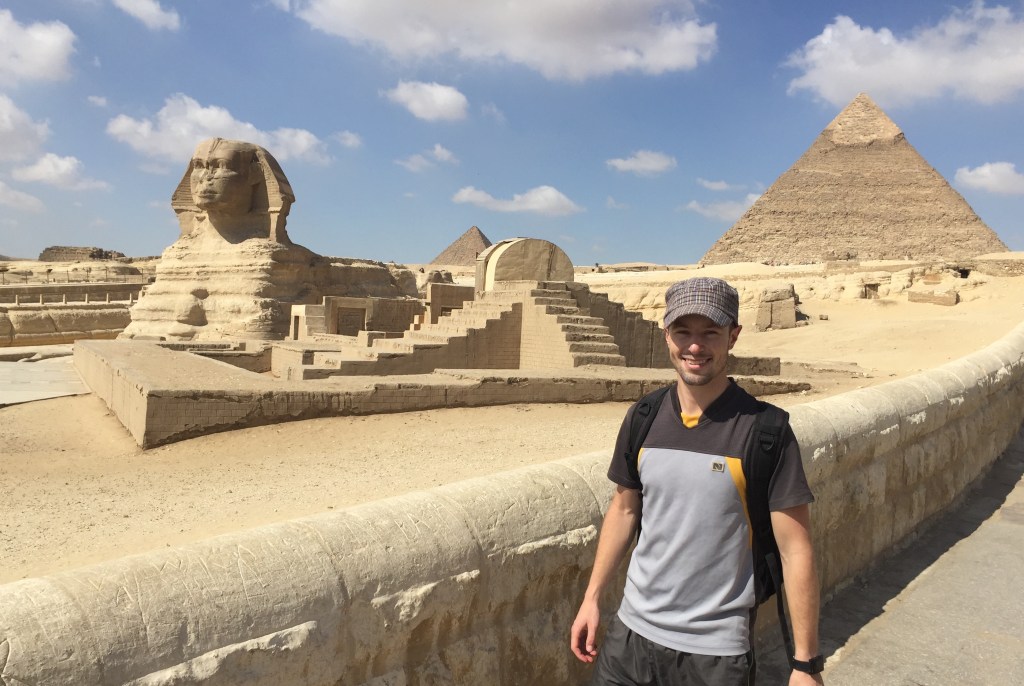
The famously minxy Cairo sphinx.

Admittedly, despite the many cultural distractions of Cairo, I did miss my traveling companions (both Bubbles and Shea). As much as it was my trip, it wouldn’t have been half the experience without Shea’s company. After a night or two of ultra low-cost hotels, cheese and jam breakfasts, a museum, a sphinx and two pyramids it was time to head home. It has been one hell of a ride but the time has come to say goodbye, for now…

A big thank you to you, our loyal readers, especially those of you that started following us by choice and not because our moms instructed you to do so. If you ever shared a link to the website, liked a post on Facebook or subscribed to the blog, thank you for your contribution to our self esteem. Hopefully we managed to entertain you.

The long road home

It’s hard to believe I said goodbye to Ross and Bubbles 10 days ago. Without either of us being too sentimental, we shared what an epic ride it had been. This had always been Ross’s trip, I was simply fortunate to have been made redundant at just the right time in order to join. Given that we hadn’t spent that much time together before departure, we both considered it remarkably lucky to have been most excellent travel partners for this adventure. With a flight and a post Cairo travel itinerary that couldn’t be delayed, I said goodbye to Ross and Bubbles on the streets of Alexandria and took the train back south to Cairo.

Final team selfie. What an adventure!!

My train landed late on Tuesday night and Cairo traffic being the disaster that it is, my uber took another 45 minutes to arrive. By the time I got to The Australian Hostel, they had given my room away. Fortunately, they provided an alternative room at a sister hostel a few blocks away. All things not being equal, what mattered at that point was a bed. I woke early the next morning and organized my pyramid tour.

Cape to Cairo – I made it!
Mission accomplished – jumping for joy!

The next morning, I was on my flight to Dubai. The elevator music Emirates plays when you board was truly music to my ears. It was a quick 15-hour layover where I exchanged road trip clothes for European adventure clothes from a couple suitcases I keep stashed there. Then I exchanged some Dubai Duty Free wine I purchased for a couch to crash on for the night. In the morning it was off early for Munich and Oktoberfest.

Oktoberfesting with old and new friends.

My plan now is a long tour through Eastern Europe before heading back to Seattle permanently at the end of the year. After Oktoberfest I made it to Prague, then Krakow, and write this from Chisinau, Moldova having just returned from the breakaway province of Transnistria. So my fun adventure continues using planes, trains, cars and buses. Though I can’t help but feel a bit remiss hurtling through Bavaria and the Balkans without Ross and Bubbles.

A Bed for Bubbles

After reaching out to every Egyptian contact we could find, we realized we were not going to track down a friend-approved mechanic in Aswan. Our only chance was in Cairo, and even there we would be looking for right-hand-drive parts for an Australian Model Land Cruiser in a left-hand-drive country. After mulling over our options, we voted against the possibility of being stuck in Egypt, with Bubbles engine in pieces, waiting for car parts. With the help of Heba, our guardian angel contact in Cairo, we organized a flatbed to tow Bubbles to Alexandria where we would load her into a shipping container.

While in the tiny town of Aswan we needed to stop by the local traffic office and collect a Traffic Fine Certificate, which certifies that you have no unpaid traffic fines. I was confident we were infringement free since we hadn’t driven Bubbles faster than 50km/h for the last three days. The only risk was our 80km/h towing experience. If you enter from Sudan, the only office that will issue you the Traffic Fine Certificate is in the town of Aswan. If you forget to stop and pick it up here you will be unable to ship your car and will need to pay a fixer to travel to Aswan, collect it on your behalf and travel back to your location. All a bit absurd.

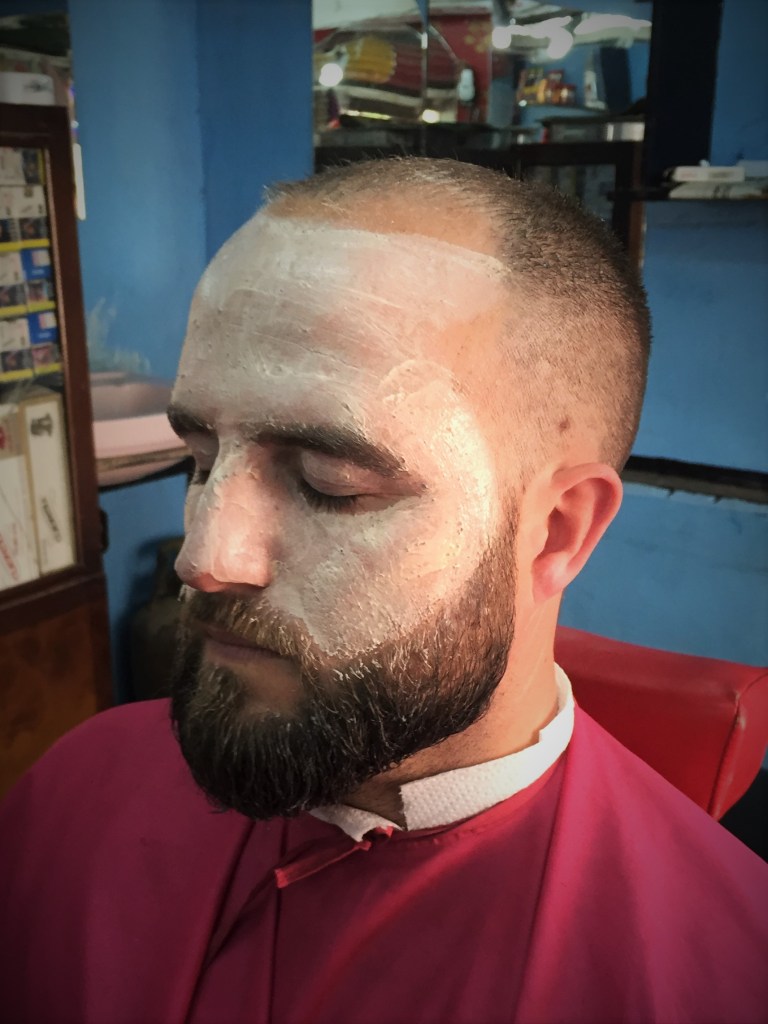
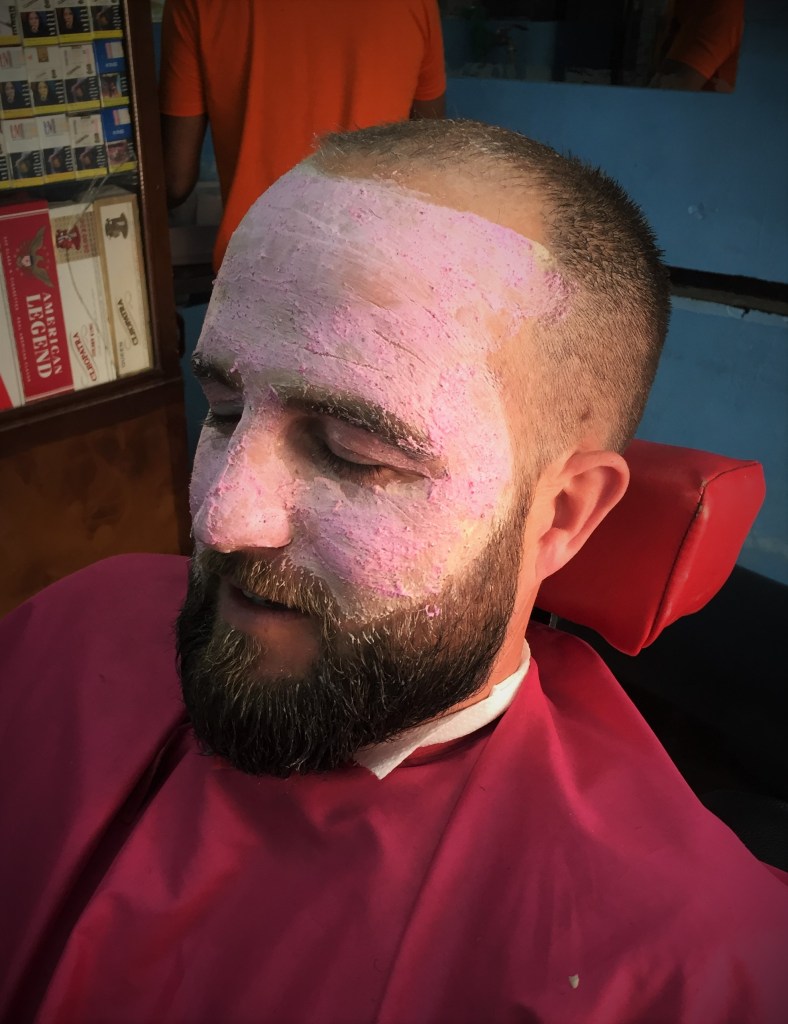
While I was busy with the paperwork, Shea made friends with a local barber named Tito. We were both looking a bit unkept at this stage so a haircut seemed completely reasonable. Shea went first and I’m not sure exactly what he agreed to but this is what happened:

I emerged from the traffic office an hour and a half later with the golden ticket in my hand. Shea’s haircut/beauty session still wasn’t done yet.

The flatbed arrived the next day and, as we should have expected, the drivers spoke no English. I went about explaining how to operate the vehicle’s alarm system with a combination of sign language and grunts while Shea spent the morning at the 5-star Movenpick Hotel. He had decided the previous evening that he had earned an upgrade from camping and budget hotels.

Bubbles spent the next few days in the towing company’s lot as we made our way through to Alexandria, by train, at a tourist pace. We were re-united in style as the flatbed cruised down the road to meet us with Bubble’s alarm system putting on a full discotheque extravaganza. Clearly, my explanation was not as well understood as I had assumed.

Bubbles, locked and loaded.

The next few days were spent sorting out paperwork for Bubbles shipment before handing her over to our new friends at Consolidated Freight Services. There is a paperwork maze to navigate for vehicle shipments and these guys did a great job guiding us through it. On top of that they also loaded the vehicle and organized us a spot on a ship headed south.

The view from the Alexandria port area, where we said our final farewells to Bubbles.

Spot the Tourist

It took us half a day of calm breathing after our challenging arrival to Aswan before we were ready to explore. Settled comfortably at the Ekadolli Nubian Guesthouse, we started hatching plans to make the most of what this sleepy resort town had to offer. Planning and coordinating took a little extra effort because the backpackers was located outside of town and while the rooftop offered a picturesque vista of the Nile and the Old Dam, the surrounding village was an old Nubian village, leaving us confused throughout our stay as many people we encountered had Arabic vocabularies as large as our own due to Nubian being their first and only language.

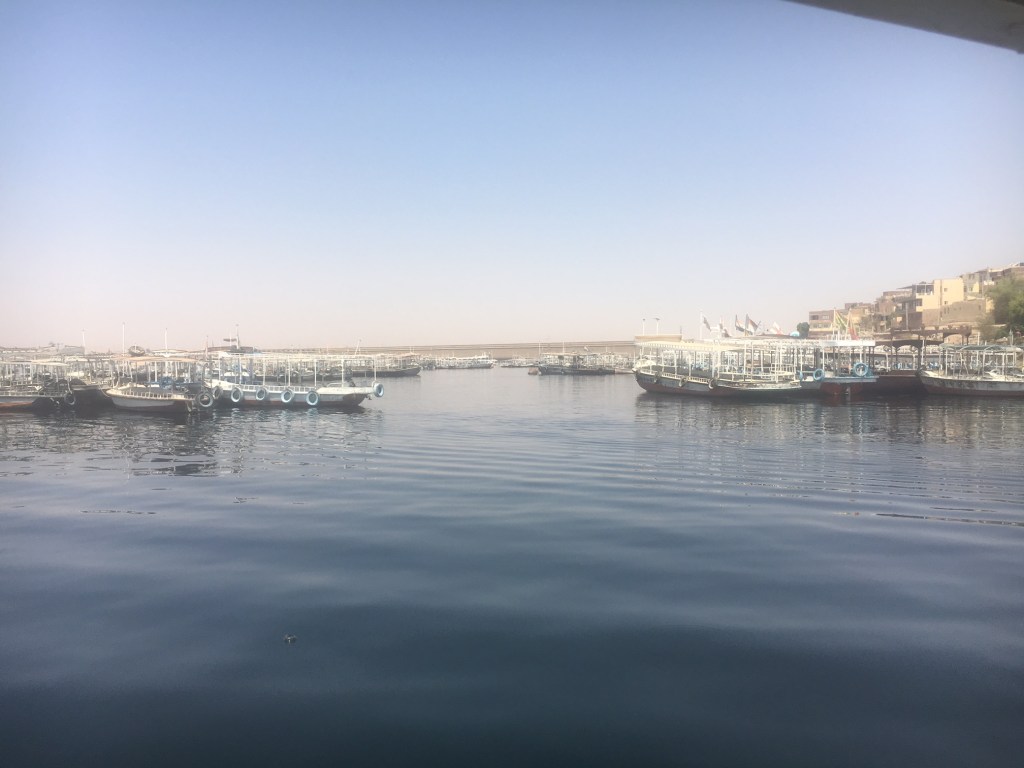
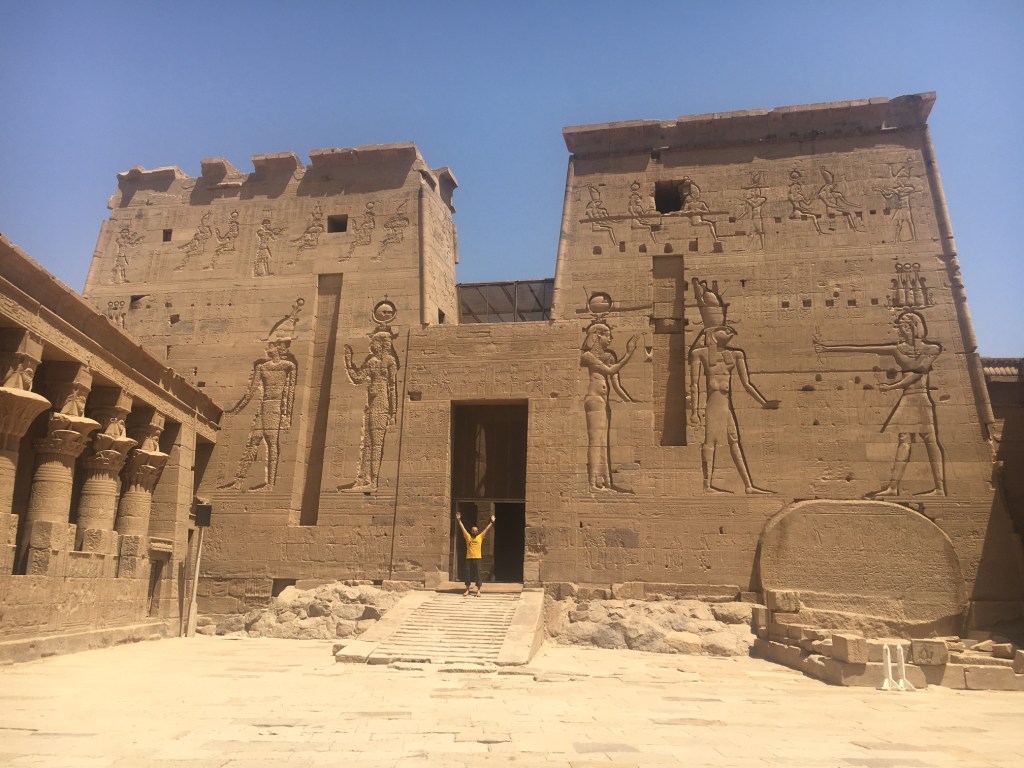
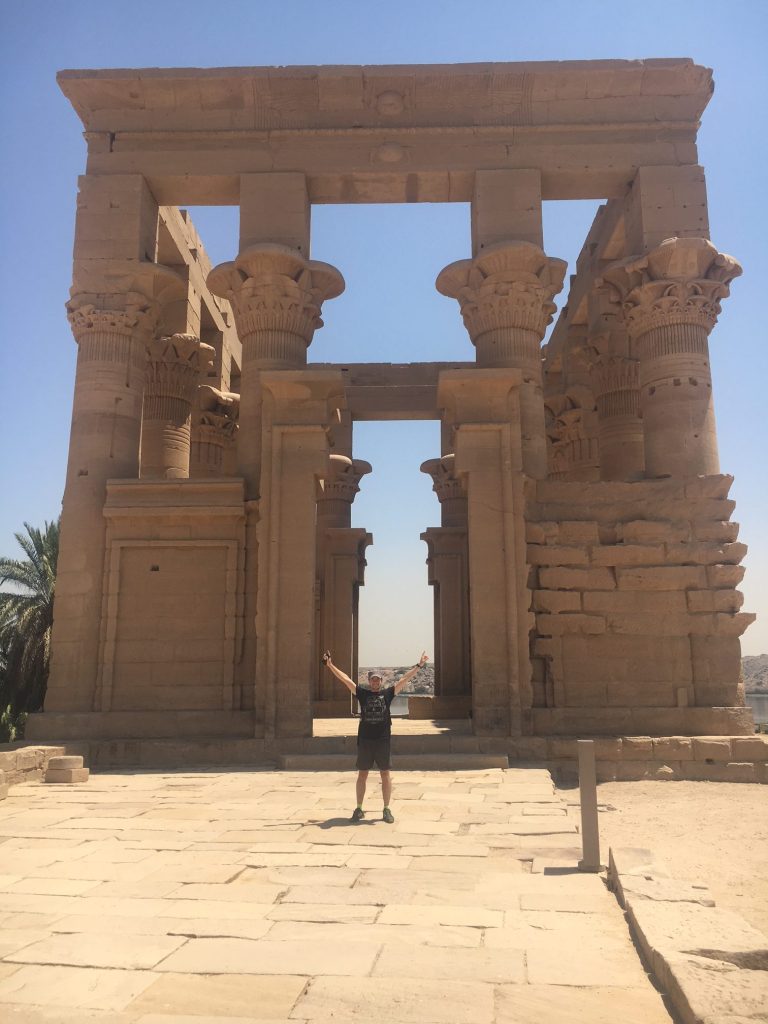
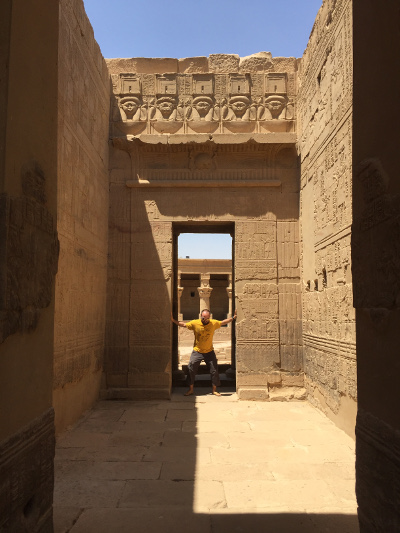
Arranging a tour guide to start our second day in Aswan seemed a safe bet and so we set off relatively early to explore the Temple of Philae on Philae Island. The boat ride out to the island was very peaceful in the mid-morning sunshine, but despite this, the scene was a little bit depressing. Only 3 or 4 boats were operating with more than 1,000 tied up along the shoreline. Prior to the Arab Spring, all those boats would have been jam packed with tourists. Our guide opted to leave Church mid service when he heard we wanted a tour and was very happy to be working after not having had a job for several months. We definitely benefited on pricing for most of our time in Aswan because the supply of tourist were few and demand for our dollars was desperate. He did a fantastic job walking us through the Philae Temple and explaining a myriad of small details we could have never picked up on our own. Additionally he was smart, funny, engaging and spoke some of the best English we had encountered in a while. For more tours like this, check out their website.

Probably the most impressive part of the Philae Temple is that the whole thing was 75% underwater after the British completed the first dam (Old Dam) in 1902. Philae was destined to be completely submerged with the construction of the new dam (High Dam) which started in 1960. With the help from the US, EU and other assorted countries, the entire temple, even the submerged parts, were dismantled into 47,000 pieces and then reassembled on a different island. It is a fascinating story of engineering and determination to preserve a site from the Ptolemaic Period.

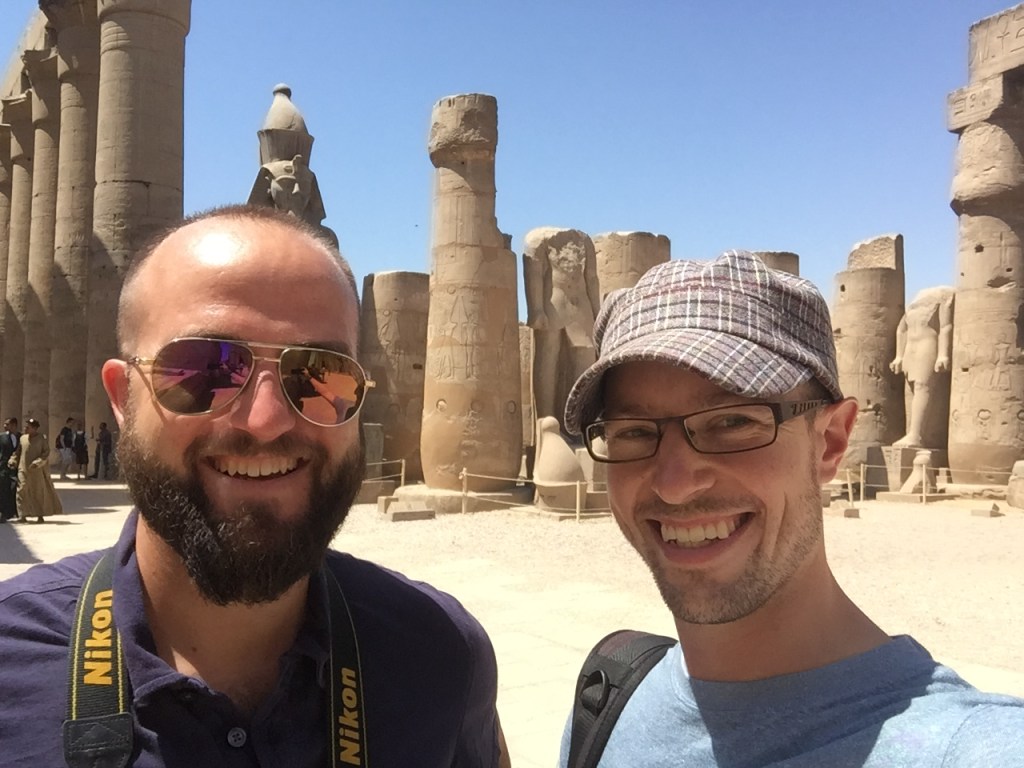
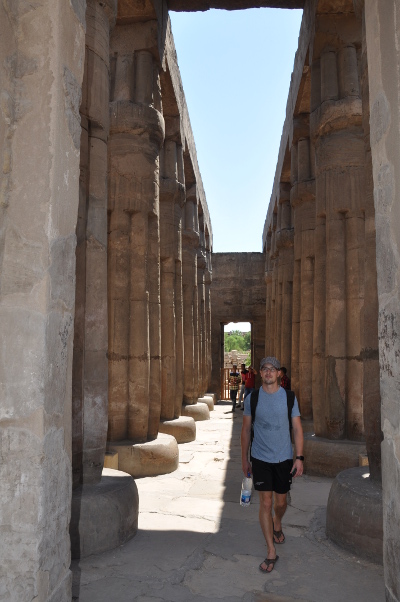
In Luxor, we stayed at the top rated Nefertiti Hotel, which in addition to being in our budget had a great restaurant downstairs and a rooftop lounge for breakfast, lunch, dinner, evening shisha or games of Scrabble. The nighttime view from the rooftop while crushing Ross at Scrabble again was particularly beautiful. The tourist sites in Luxor were also fun. The Luxor Temple was practically across the street so it was an easy morning of exploring. Luxor Temple was also remarkable for how few foreign tourists we encountered. In fact, the Egyptians visiting started asking to take pictures with us. Either dirty sweaty pan-African journeying backpackers are the new celebrity or foreign tourists really were a rare commodity.

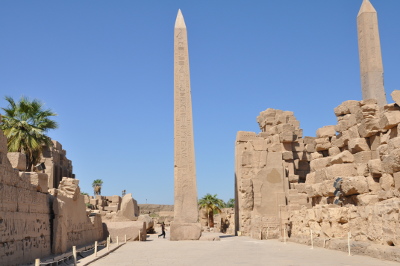
Three kilometers straight north on the “Spinx Road” from the Luxor temple lies the Karnak Temple. We thought it would be an easy walk but our superior navigation skills led us on a 4 km detour through the midday heat. We arrived at the ticket office exhausted with the first symptoms of dehydration. Karnak temple grounds are more than 60 acres built by 30 different Egyptian Pharoes. It’s simply too large to see everything we told ourselves as we recovered from our arrival hike in the air conditioned entrance hall. We pushed through for another hour of walking around the grounds and it was well worth it.

After finishing Karnak, our hubris about walking in the heat was diminished enough to negotiate with taxis out front. It wasn’t a long trip but the best price came from an old man who offered us a ride in his Ferrari. It wasn’t the fastest Ferrari I’ve seen but we arrived back to the hotel refreshed from sitting down with wind on our faces.

Luxor Ferrari.

The next day we toured the Valley of the Kings. This is an amazing group of tombs, including King Tut, that are burrowed into the rocky hillsides across from the main city of Luxor. It was HOT again but well worth the hike to see these ancient sights.

I forgot to mention how we got 215 km from Aswan to Luxor with broken Bubbles. Tune in next time.

Tow Ropes and Temples

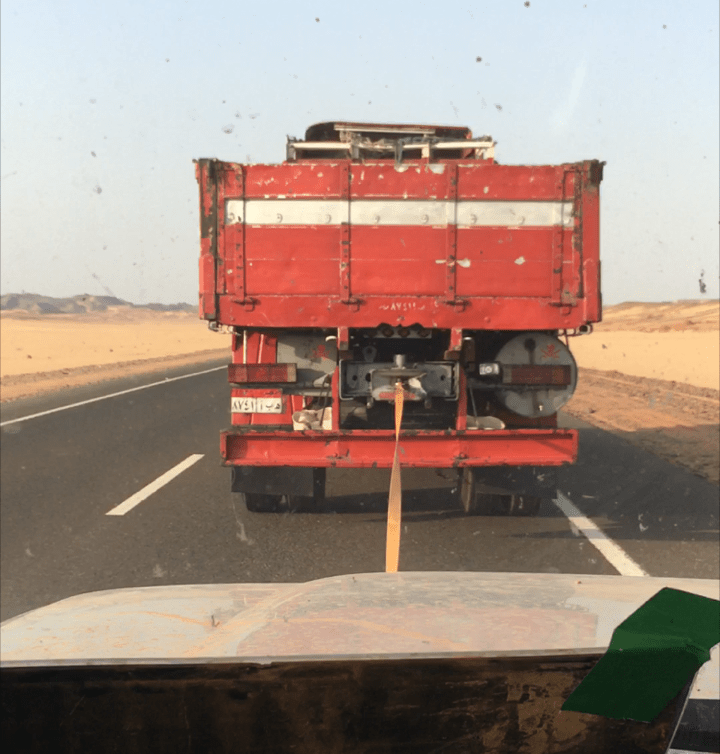
The stressfest had started when Bubble’s radiator first seized up and the bizarre border bureaucracy had been icing on the crazy cake. But everyone knows cakes need more than just icing and so Bubbles drove her obligatory 5km north from the border and gave us another round of overheating. We had our cherry. We didn’t have too much time to consider solutions before a friendly trucker stopped to assist. We knew we needed to get another 30km north to the ferry across the lake to Abu Simble and so without much hesitation we pulled out the tow rope and were away.

Math problem : 80km per hour + 4m tow rope x zero visibility = ?
[A] Fear
[B] Euphoria
[C] TIA
[D] All of the above.

Being alive at the ferry line gave us time to say prayers of thanksgiving and wonder if there was a medium paced speed of progress north, something between 0.25km per hour at the border and 80km per hour towed behind a semi-truck. It also gave time to speak* with various truck drivers as they climbed all over Bubble’s engine and gave us clear** explanations on her damage and what repairs must be made. We knew she needed to get to Aswan and we knew we didn’t have 10 days to hobble her there in 5km stints. We managed to initiate a bidding war with the drivers offering to deliver us to Aswan as they all had empty flatbed trailers post Sudan deliveries. The price started at 5,000 LE but we shook hands 10 minutes later with a large unshaven and toothless older gentlemen who spoke absolutely no English for 1,800 LE. You get what you pay for.

Ferry rides across Lake Nasser are perfect for either a shady drug deal or negotiating a tow to Aswan.

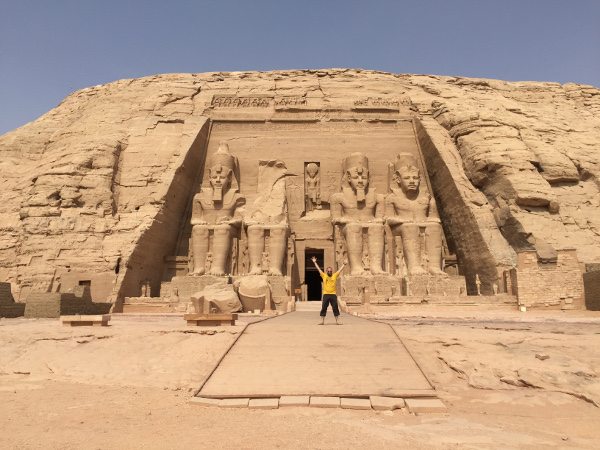
Arriving to Abu Simble that night, we checked into a hotel and had one of the best tasting beers of our life. The hotel was built in the early 90’s and had pictures of the King and Queen of Sweden’s visit in 1991. The hotel hadn’t been updated since but the swimming pool overlooking the Nile and AC in our room meant we had arrived in a Garden of Eden. Rising early, we dashed to the Temple of Rameses II to take in our first Egyptian sites, literally jogging through them to see it all before meeting our driver.

Shea is thrilled to be in Egypt.
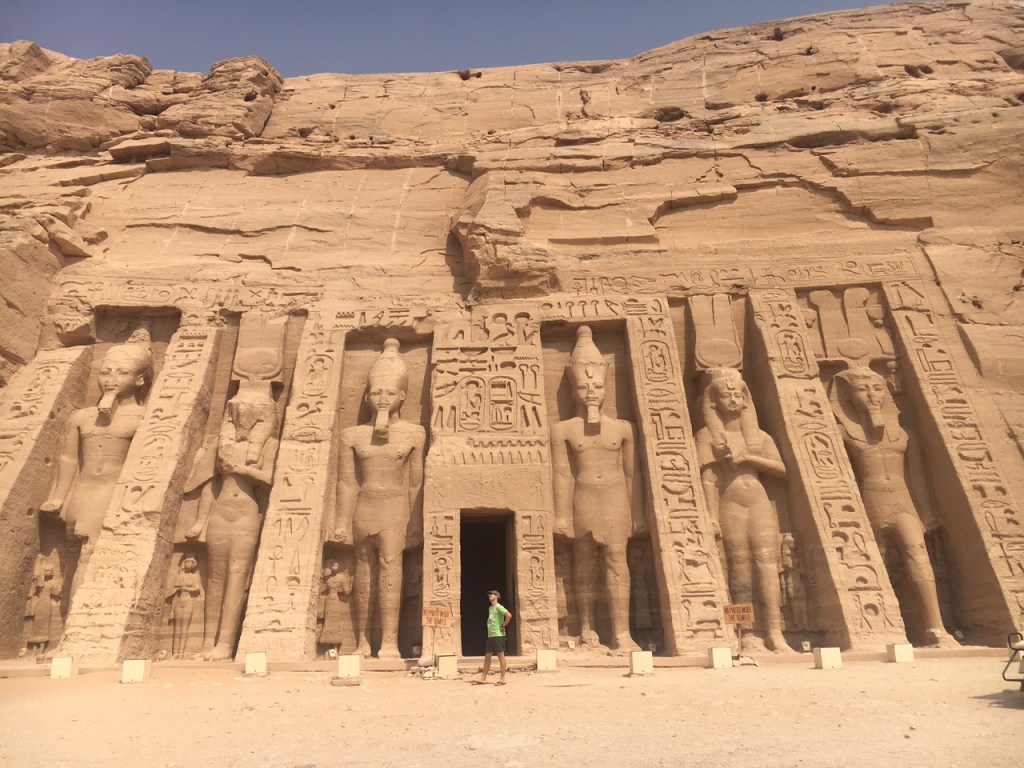
Ross wonders if there is space on the wall for a statue of him?

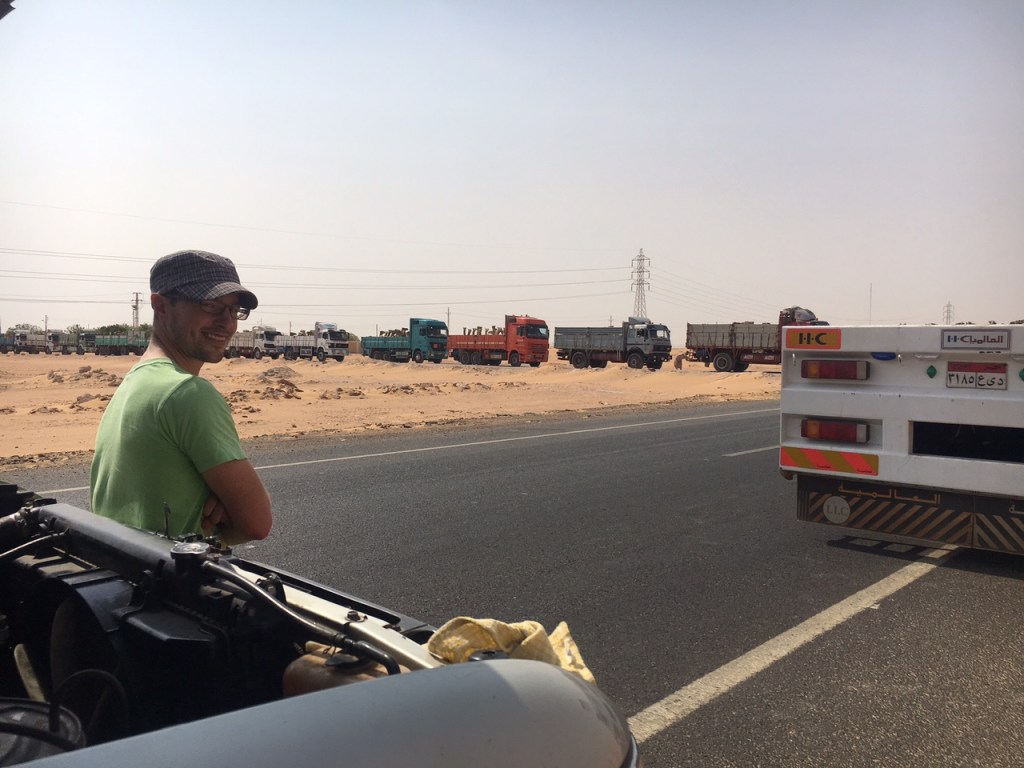
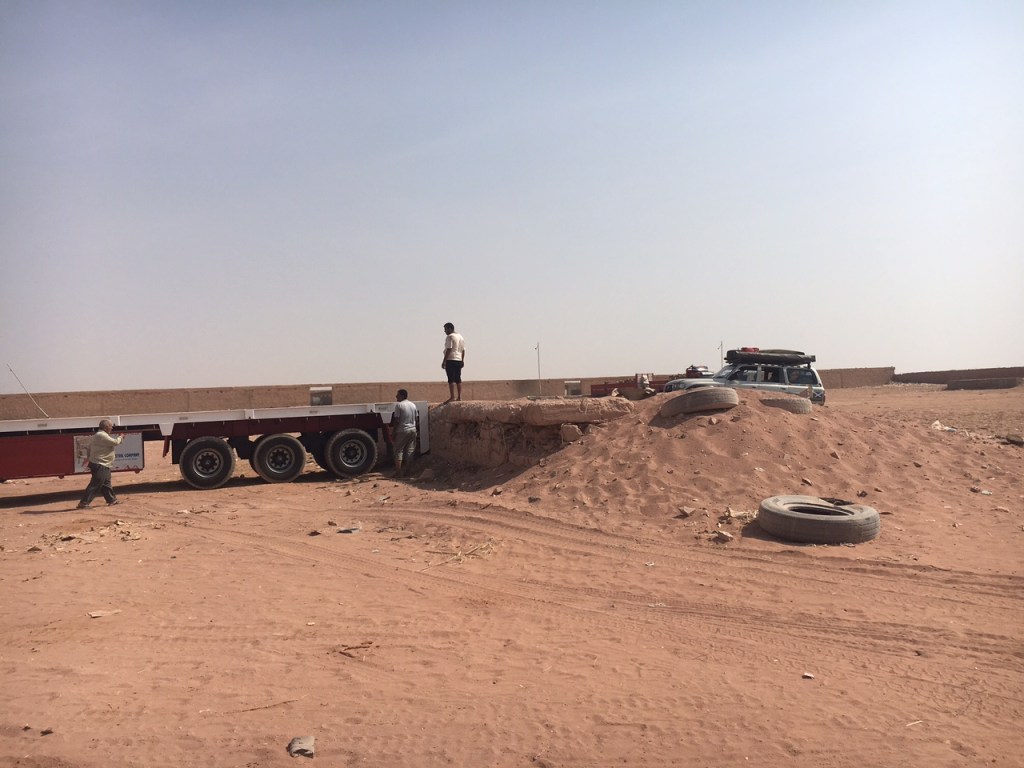
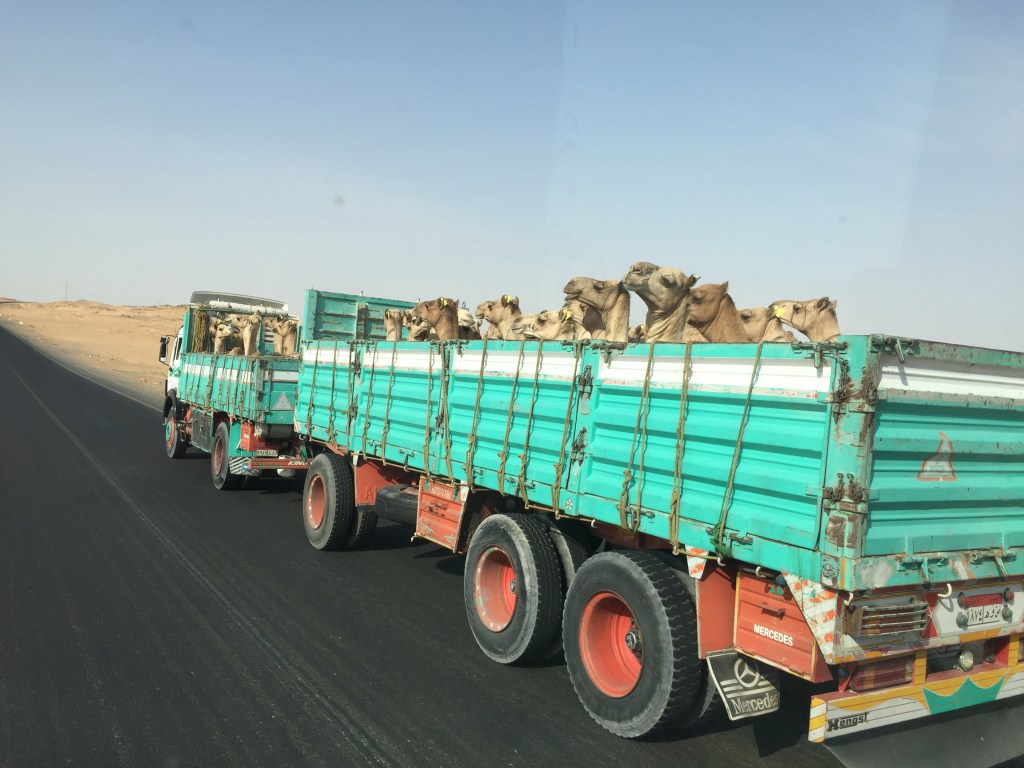
Meeting the driver at the appointed time, we wondered what his plan was to get Bubbles loaded. Like much of the trip so far, this also was destined to be ad hoc. First it was tea, then prayers at the Mosque (him, not us) and then an hour driving through the wasteland of a large abandoned construction site hoping that a random pile of dirt would work as a loading ramp. Finally, the police showed up and told the driver to get out of town. Fortuitously, outside of town was a camel farm where 2,500 camels had just been loaded onto 104 trucks (Ross counted) for delivery to Cairo where they were destined to be slaughtered for the upcoming Islamic holiday of Eid al Adha. The strategy quickly became clear, ask for forgiveness and not permission. Precisely as the last camel van left we raced through the farm gate before it closed and used a camel loading ramp to get Bubbles on the trailer, driving back out of the farm and down the road 10km before even stopping to secure her with straps.

Ross, making sure he doesn’t lose count.
Our skilled driver, attempting to back up to the loading ramp without busting a taillight.
She’s on! Now DRIVE!!

With Bubbles lashed sort of securely on the back, we relaxed in the air conditioned cab of the relatively new semi-truck. The driver spoke* to us in Arabic for the first 30 minutes but eventually ignored us allowing 3 hours of quiet driving time for me to beat Ross at Scrabble and both of us to work on blog updates.

Our nameless driver.
Passing camels on the road.
Shea dominating at Scrabble once again.

Upon arriving in Aswan, unloading Bubbles became our next mission. Finally the truck driver and three friends he picked up drove to an empty industrial area with no lights or other vehicles around. We assumed it was either another obscure loading ramp or a good place to dispose of our bodies. Unloading Bubbles and driving 8km down the road to a hotel took some time but it seemed as if the hardest part may have been over.

Unloading Bubbles in Aswan.

* language barrier remained in full effect
** they only spoke Arabic

The Longest Mile

The Sudan-Egypt border crossing is notorious for its bureaucracy. We awoke bright and early after three hours of sleep, determined to get a good start. Unfortunately, as we arrived at the gate, so did six passenger buses. It was going to be a long day.

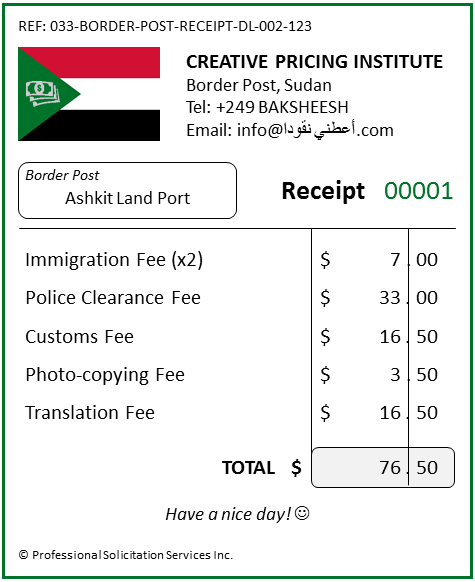
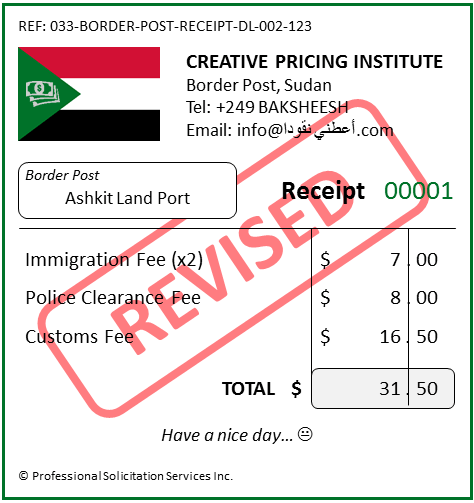
As we moved through the process of exiting Sudan, we were repeatedly greeted with surprise charges. We had exited many countries by this stage, and this was the first time we had been asked to pay in order to leave. The bill came out as follows:

The original pricing provided by a room full of uniformed Sudanese border officials.

And after a few more discussions, a revised version:

The revised bill after a few conversations over tea.

We made it out of the Sudan border post in a mere two and a half hours, cautiously optimistic about what was to come.

Our route through the shelters of the Sudan border post.

The Egyptian bureaucracy started even before we entered the compound with compulsory “quarantine” and “entrance” fees at the gate, administered by the border control “bouncer”. An onslaught of paperwork and fees ensued as we were sent back and forth between the buildings.

A slightly longer walk through the Egyptian border post. Yes mom, we did wear sunscreen.

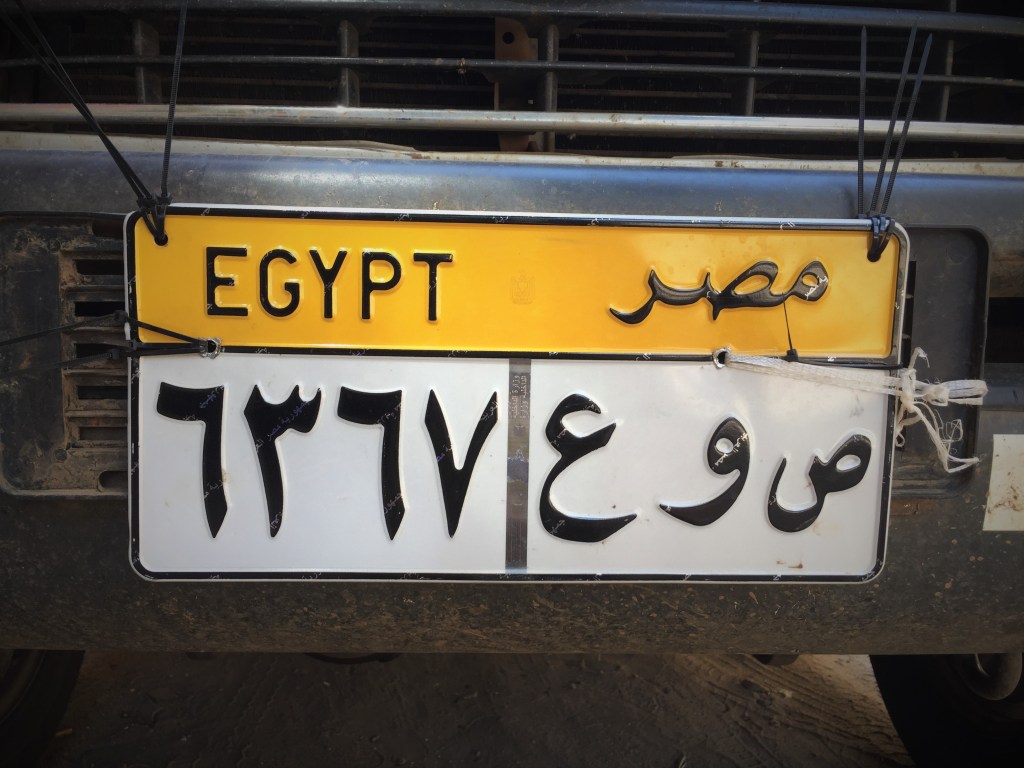
It took us five hours to navigate the process but we made it out before nightfall. Egyptian number plates professionally fitted and good to go.

Ross’s glorious handy-work.

Note: If you plan to tackle the Sudan-Egypt border yourself, I highly recommend this step-by-step blog. We would have been lost without it.

Borderline Crazy

Unfortunately, the elation we experienced as we rolled into Wadi Halfa was premature. We were informed, shortly after arrival, that the Aswan vehicle ferry had been discontinued. A new road had recently been constructed that led directly into Egypt. Vehicles were now required to enter by land, through a border post located 30km north.

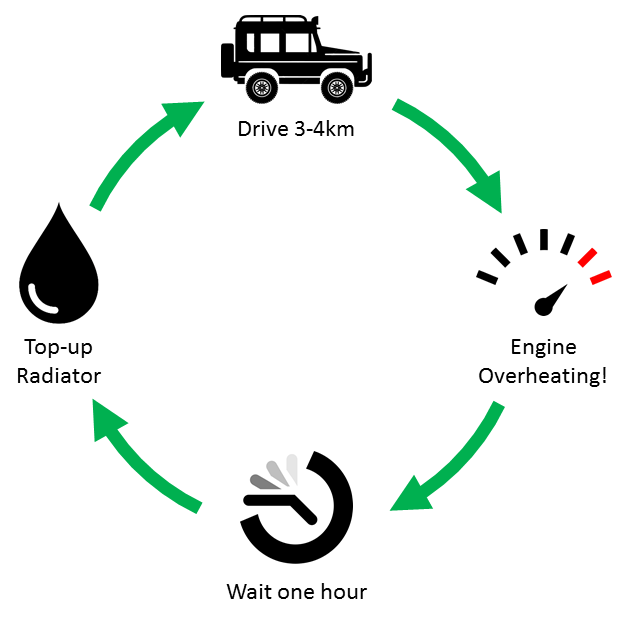
Bubbles was in pretty poor shape at this point, but not completely inoperable. A quick inspection from a mechanic in Wadi Halfa confirmed that her gasket was blown, but she would still drive. Not particularly quickly, but she would still drive. If you went easy on her you would get a few kilometers before the radiator was completely empty, and the engine was on the verge of melting into a solid block of steel. And thus, our proposal to get to the border was as follows:

At one stage, in the early hours of the morning, we were stopped by the Police. Well, “stopped” is the wrong word. They caught us napping on the side of the road while we were waiting for the car to cool. The Police ordered us to turn back. It was apparently not safe to drive these roads at night because of a high concentration of bandits. Good to know at this stage, exactly half way between Wadi Halfa and the border, limping along in a semi-functional vehicle. We convinced the officers to let us push through and arrived at a sprightly 4am, now only a mile away from the sanction-free holy land of Egypt.

The Eruption of Old Faithful

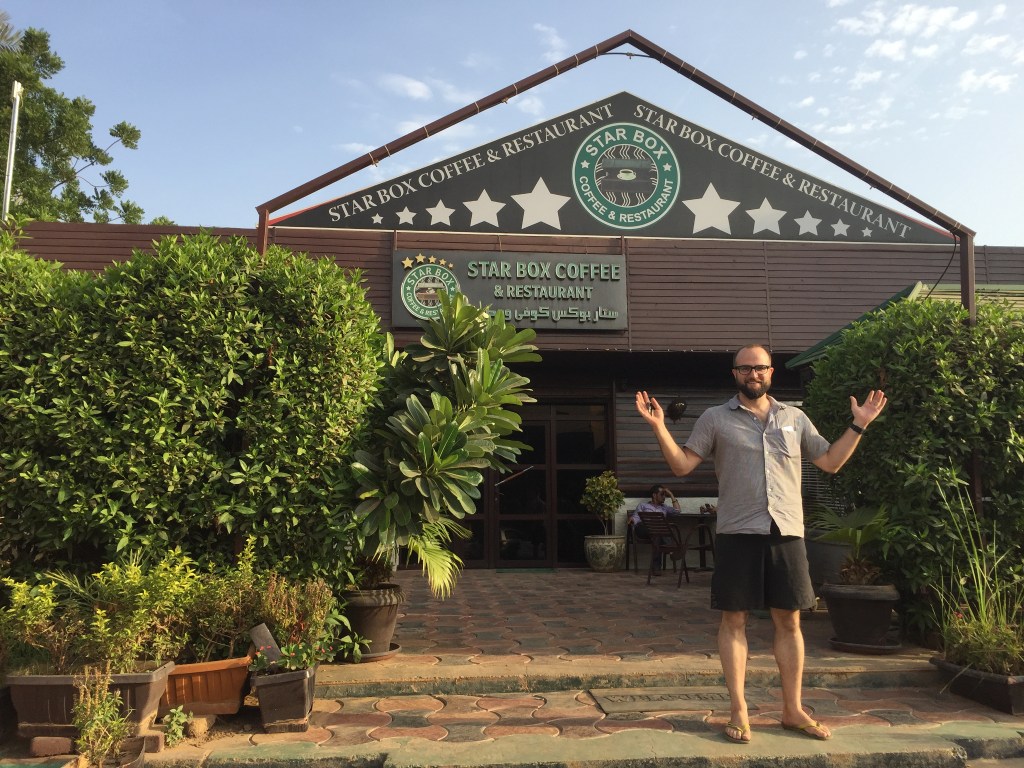
After a fuel-up in Khartoum we grabbed a quick Star Box coffee and headed off north again. The plan was to catch a ferry at Wadi Halfa that would take us 400km down the Nile, into Egypt, to the town of Aswan. The passenger ferry completes the trip in roughly 24hrs. A separate “vehicle only” barge would transport Bubbles the same distance over a period of 2-3 days, so we would have a bit of time to explore the town of Aswan before being re-united. It was a great plan.

Star Box – the home of good coffee… and boxes.
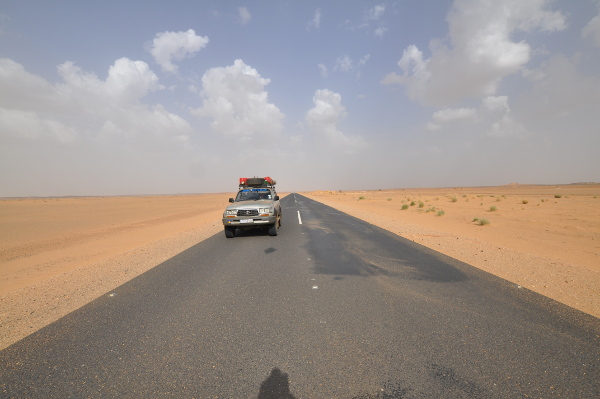
The never-ending, dead straight roads of Sudan.

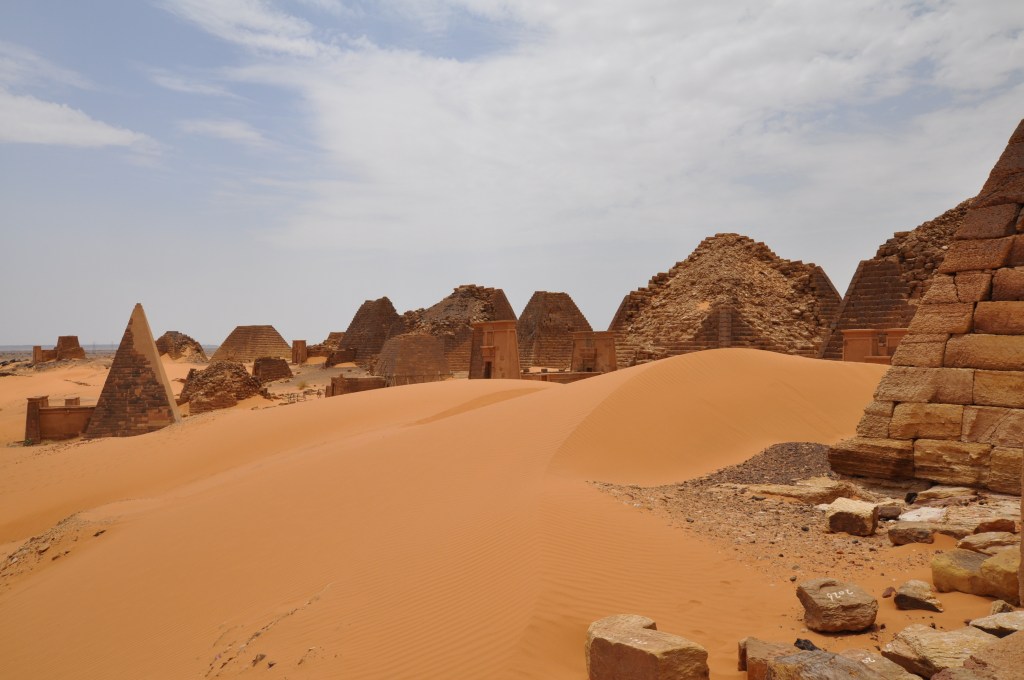
Shea stuck his head up as we were driving along the hot, featureless roads of Sudan. “That looks interesting”, he noted as he pointed to a misplaced set of stone structures. It was 30km later that we realized what we had passed. It was the pyramids of Meroe, the capital of the old Nubian Kingdom of Kush. This site contains 50 pyramids, the highest density in the world. It took about 2 minutes of skim reading on the pamphlet we received from the Sudanese tourism board to convince ourselves to spin the car around and retrace our steps. It was totally worth it.

The many pyramids of Meroe.
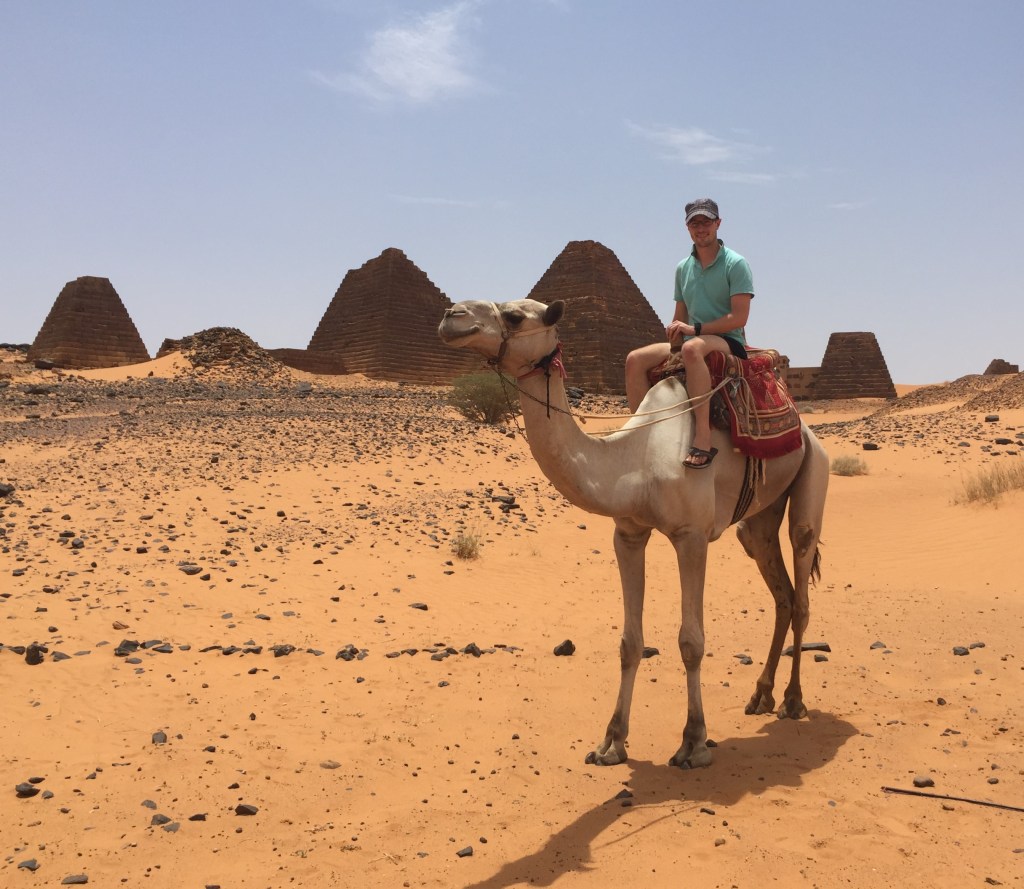
The optional taxi service for the pyramid tour. Shea’s strong views on animal cruelty prevented him from using the service.
More pyramids (sometimes mistaken for a pile of rocks).
The internal organs of a Meroe pyramid.
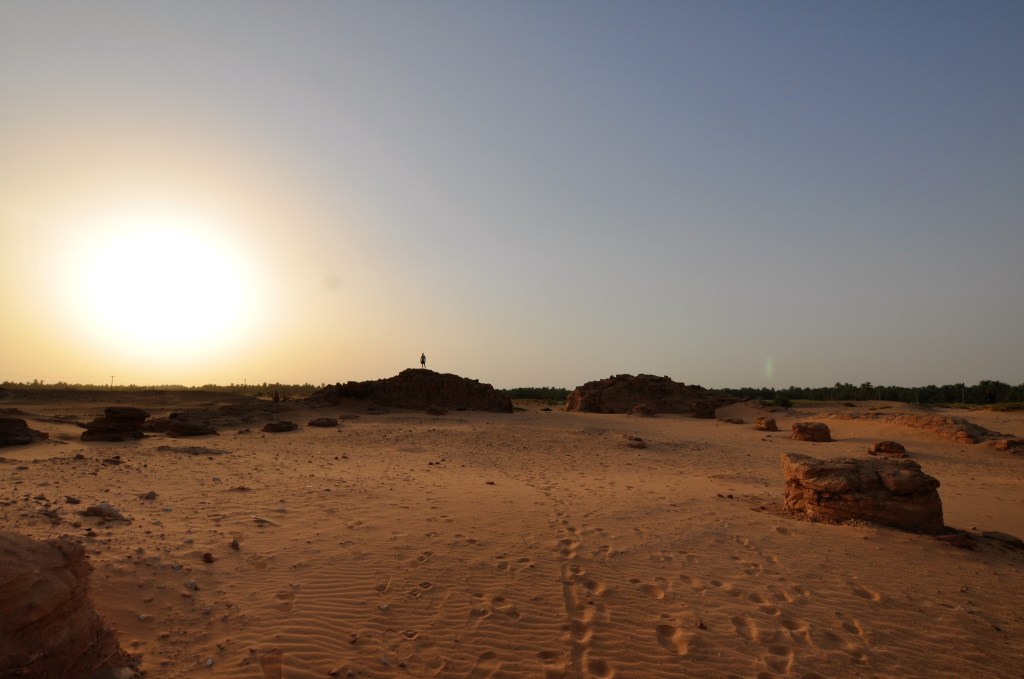
Is that another tourist at the site? No, it’s just Ross again.
Shea, dancing like a white guy.

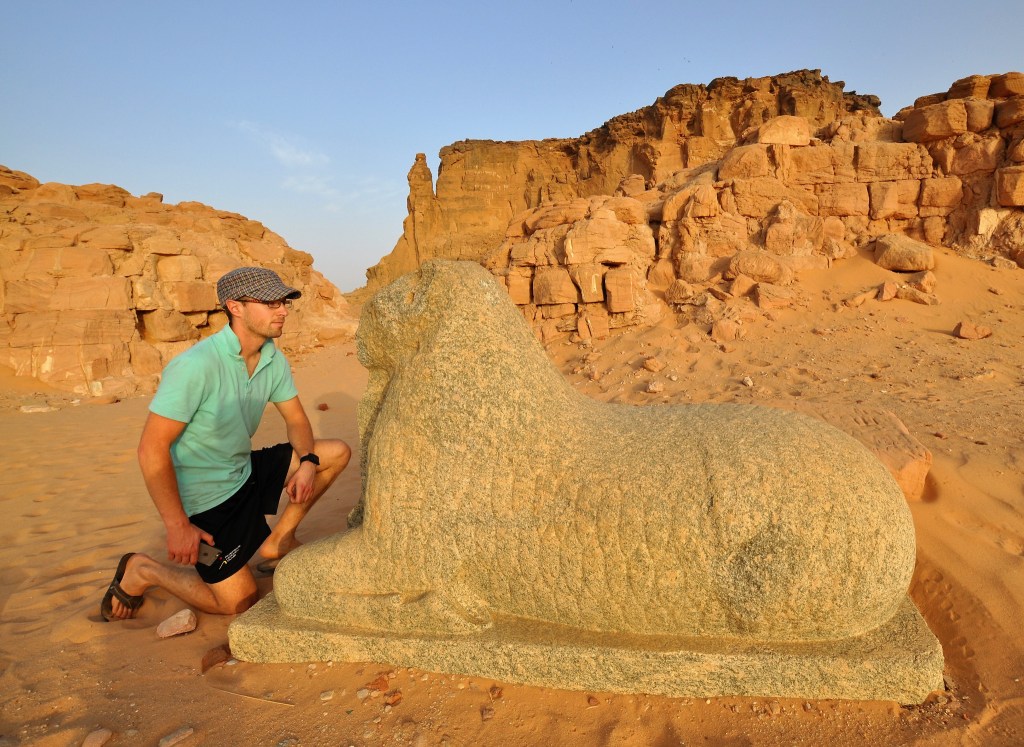
Our first night out of Khartoum was spent in the remote town of Karima where we camped at the foot of Jebel Barkal Mountain. Most historical sites in Sudan are not particularly well managed, something we realized when we awoke the next morning and noticed that we had parked in the middle of an ancient temple site / burial ground.

The benefit of early mornings is getting to see this kind of thing every day.
Our view in the morning, the great Jebel Barkal.
And the ruins we nearly drove over while parking.
Ross, practicing his intimidation tactics.

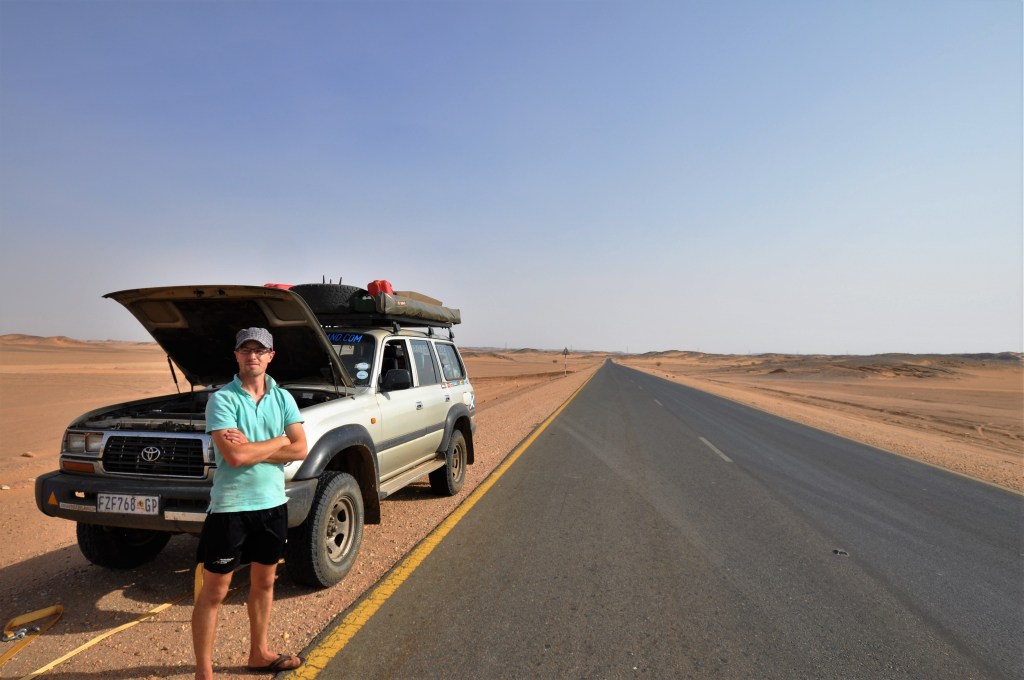
We headed off from Karima nice and early, to avoid too much fuss with the locals, and had a good run until around 80km short of Wadi Halfa. It was at this point that Bubbles started whining for attention with the distinct sound of a high-pressure leak. Our hearts sank as we watched the engine temperature go up and up and up until we hit the redline. Good old faithful had finally seized. We were stuck, in desperate need of a mechanic, in a country in the midst of global sanctions.

Hanging out, waiting for a tow.

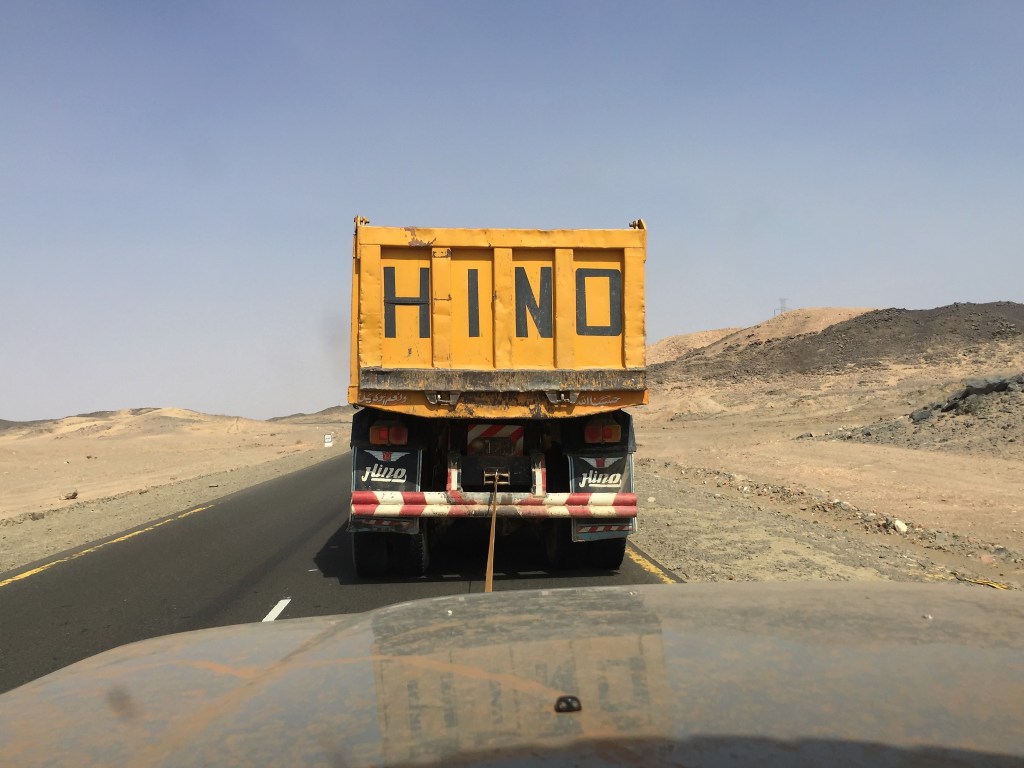
Shea and I attempted to “relax” in the plus 40-degree temperatures as we waited for another car to pass by on the desolate desert road. It took a while, but eventually a dump truck came along. We convinced the driver to give us a tow after a confusing exchange of sign language and broken Arabic. There was an incredible sense of relief when the small town of Wadi Halfa appeared on the horizon. We had only been 50% confident that the driver’s understanding of our agreement was the same as our own. We pulled up to the docks triumphant. Now only a ferry ride away from Aswan, the land of milk and honey (a.k.a. car mechanics and spare parts).

Our dump-truck savior.

Hawala what?

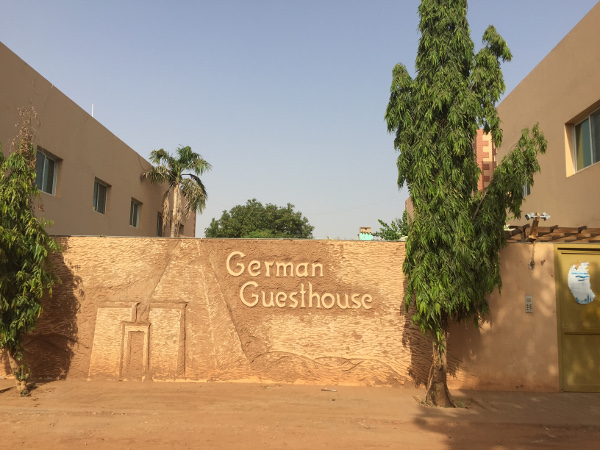
Arriving at German Guest House in Khartoum was a relief because our last couple days in Ethiopia, besides the chaos of conflict, could have been characterized as a chaos of communication. Our Arabic speaking skills didn’t magically improve when we crossed into Sudan and so it was a relief to meet the German Guest House staff who spoke great English and helped answer a few basic questions. What is registration? Do we really need it? How do we pay you when we leave here? And how do we pay for anything at all? Sanctions against Sudan meant ATMs and credit cards would not work anywhere and our current cash total was US$450. This was not enough to catch the ferry into Egypt, let alone food, fuel or our current accommodation. Fortunately, three meals a day were included with the lodging (camping in Bubbles on the street outside) for $20 a night, we ate well and spent time at the pool in-between sorting out registration and fundraising brainstorming sessions.

Car camping in Khartoum
Sanctuary from the 45 degree afternoons.

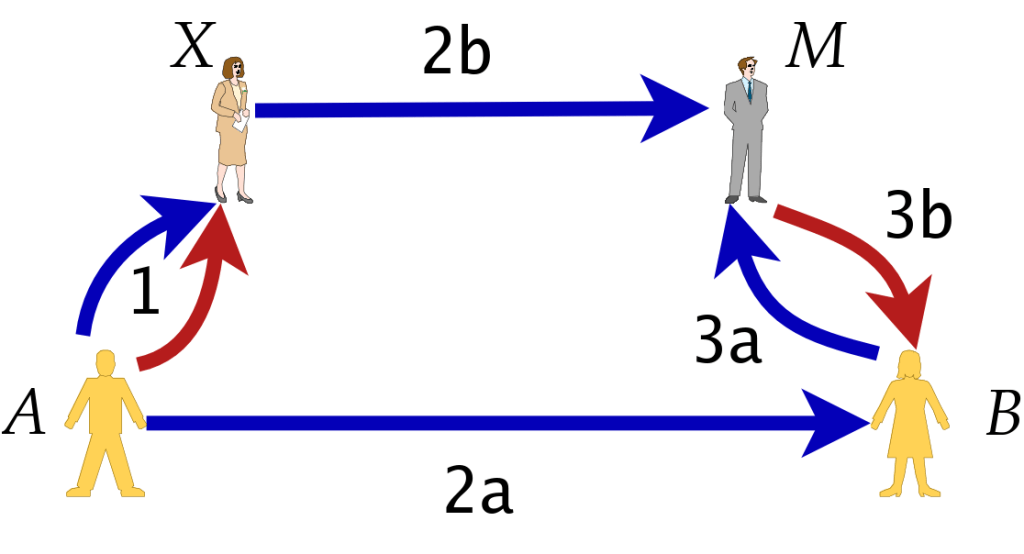
I had learned some Arabic in Dubai, but more important I had learned about a Middle Eastern cultural financial tool called Hawala. It is in effect where a friend pays your debt to your debtor’s friend. Then each party to the initial transaction sorts out payment with their friend directly.

A relatively simple Hawala tansaction

Based on trust, it has been used around the Middle East and North Africa to make payments and loans for a long time. It was also used, as discovered after 9/11, as a terrorism financing tool as well and so has fallen out of favor with most Western governments and Sudan sanction enforcing countries. So let me spare you the details of who/how/what/when/where, etc and confirm that after a few days relaxing by the pool, we felt confident enough about our cash flow to head north. Hawala what?

Crossing to Khartoum

Previous border crossings had taken some finesse and patience. It seems those crossings were just the warm up for Sudan. We arrived at 7AM and had to fend of money changers and beggars on the Ethiopian side for two hours until Ethiopian customs showed up for work around 9:00. Once out of Ethiopia, the real fun started. We had photocopies of passports, but not photocopies of Sudan visas and so the immigration officials set us up with a “fixer” to go make copies. Unfortunately, there was no power anywhere on the Sudan side so the fixer had to find a shop with a generator, and then we assume bribe the shop owner to start the generator so that copies could be made. With this finally sorted and having exchanged some remaining Ethiopian Burr for Sudanese pounds (at what we thought was a great exchange rate; ie: above the official rate) we returned to customs. Next step was convincing customs that our visas had already been paid for and we didn’t need to pay again. They asked us for registration and we told them the visa counted as registration. True story: visa does not equal registration, just ask the police in Khartoum! Finally our passports were stamped and we only needed to process Bubbles paperwork. Unfortunately, the man with the power (ie: the official stamp) was on lunch break. Let me remind you it was 10:30 in the morning at this point. We sat. And sat. And waited. And then waited some more. We were served complimentary Sudanese tea but this did not speed up the process at all. Finally on the road in the early afternoon, we aimed for Wadi Madani which was the ½ way point between the border and Khartoum.

A rare stretch of open road en route to Khartoum.

Only upon arriving and discovering the challenge of financial transactions in a sanctioned country did the issues start to pile up. Our dollars were limited and so the choice was food + hotel or gasoline and hope to make a plan in Khartoum. My appetite has been taking an oversized leadership role in my life lately, but fortunately Ross’s cool logic prevailed and we drove to the gas station to fill up. Here is where Bubbles gave us her first signal that she is getting tired of this little adventure. The cover for the gas tank cap did not want to release and we ended up having to use a screw driver to pry it loose in order to top off with our remaining 200 Sudanese pounds. With the top off we estimated we could make Khartoum, just barely, before 10PM and so we were off. The nice part about driving in Sudan at night is that the police seem to go home and no longer operate road blocks in the dark. The less pleasant part is the large passenger busses driven by maniacs at reckless speeds. We were able to get the flow of traffic eventually, but by then were arriving to Khartoum. We had extremely limited data connection heading into Khartoum and would have been lost without the iOverlander app on our phone. Fortunately it directed us to the German Guest House and we were able to arrange a “stay now, pay later” agreement with Norbert the owner. It had been a long day but we were thrilled to find dinner still available and cold bottles of water in the fridge. Masha’Allah we were out of Ethiopia and safe in Khartoum!! (said no one ever before!!!)

A European oasis in the middle of Khartoum.