
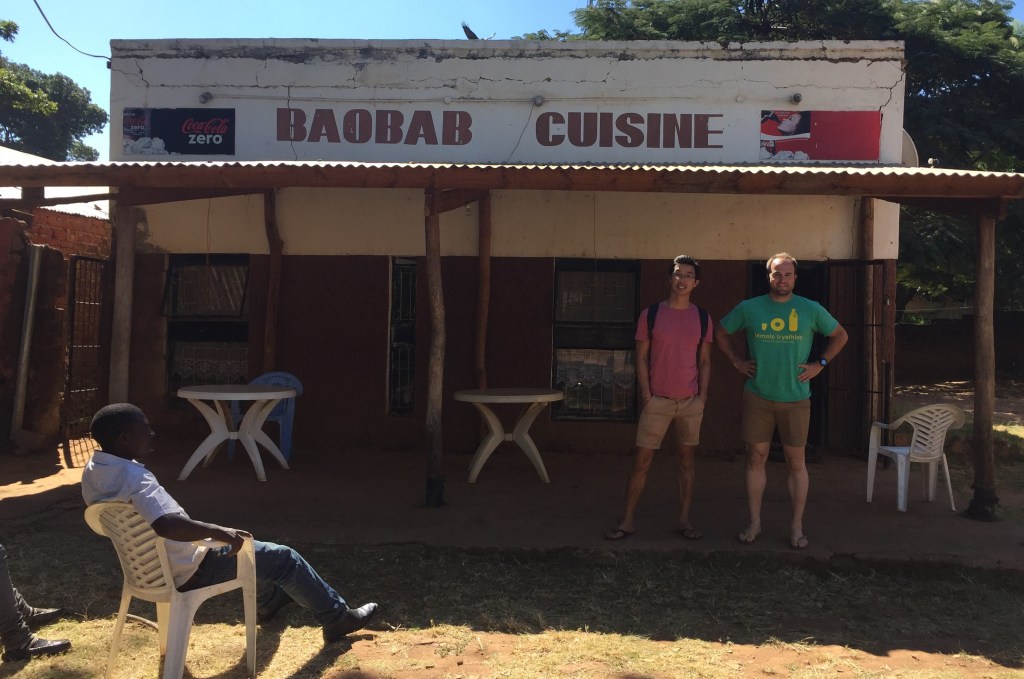
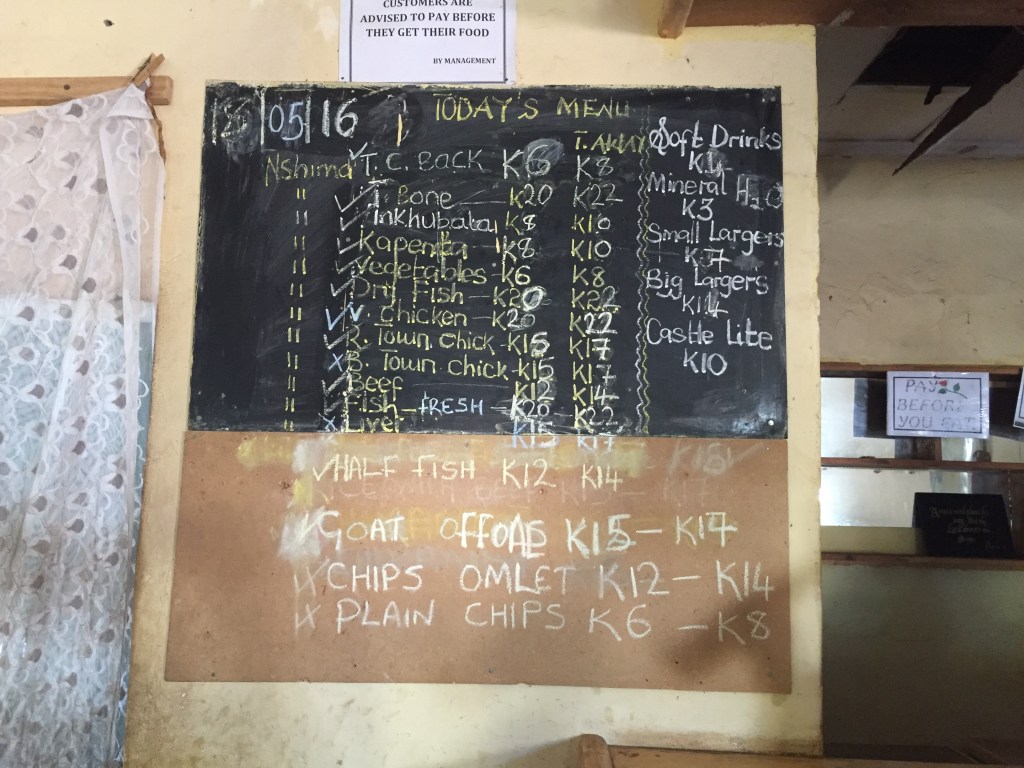
After some great game viewing in South Luangwa the time came to leave Zambia. We found a great lunch spot on the way out, recommended to us by a Petrol attendant. Baobab Cuisine treated us to a distinctly local lunch of chicken, beans and pap with a side of rape. A member of the cabbage family, rapeseed is a vegetable the Zambian’s do particularly well. Commonly abbreviated to “rape” on practically every restaurant menu, the veggie has a habit of provoking terribly inappropriate jokes. Our food was not accompanied by any napkins, only a little bucket of water in the corner of the room for hand-washing, and when I queried about cutlery I got nothing but a confused stare in response.
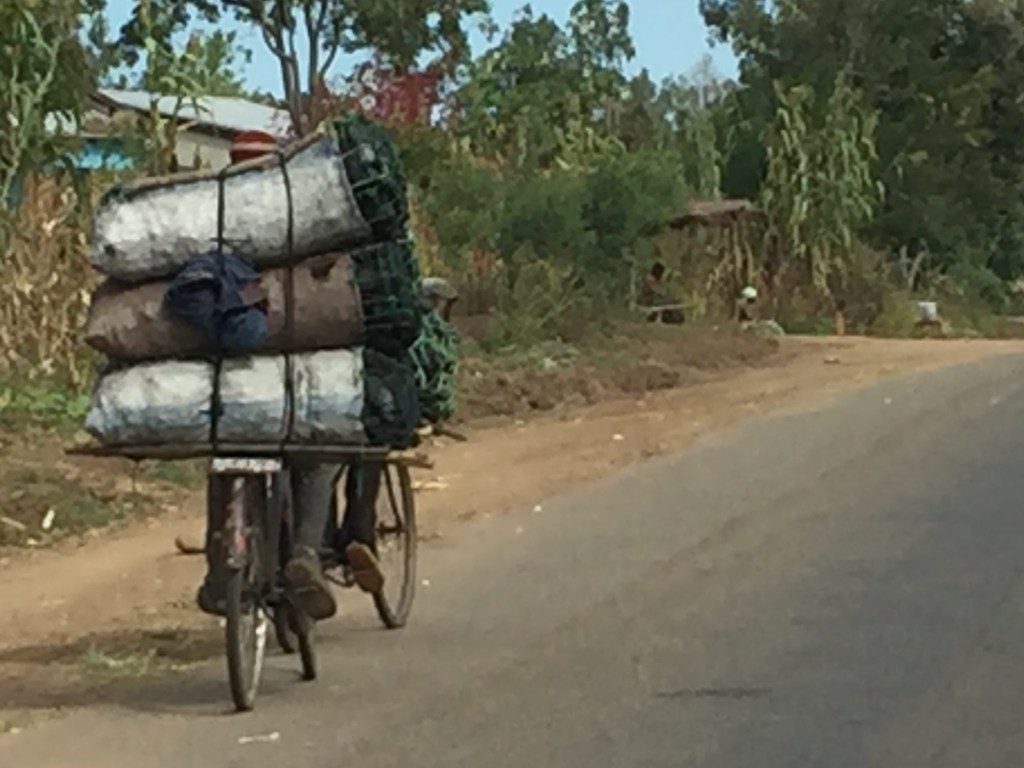
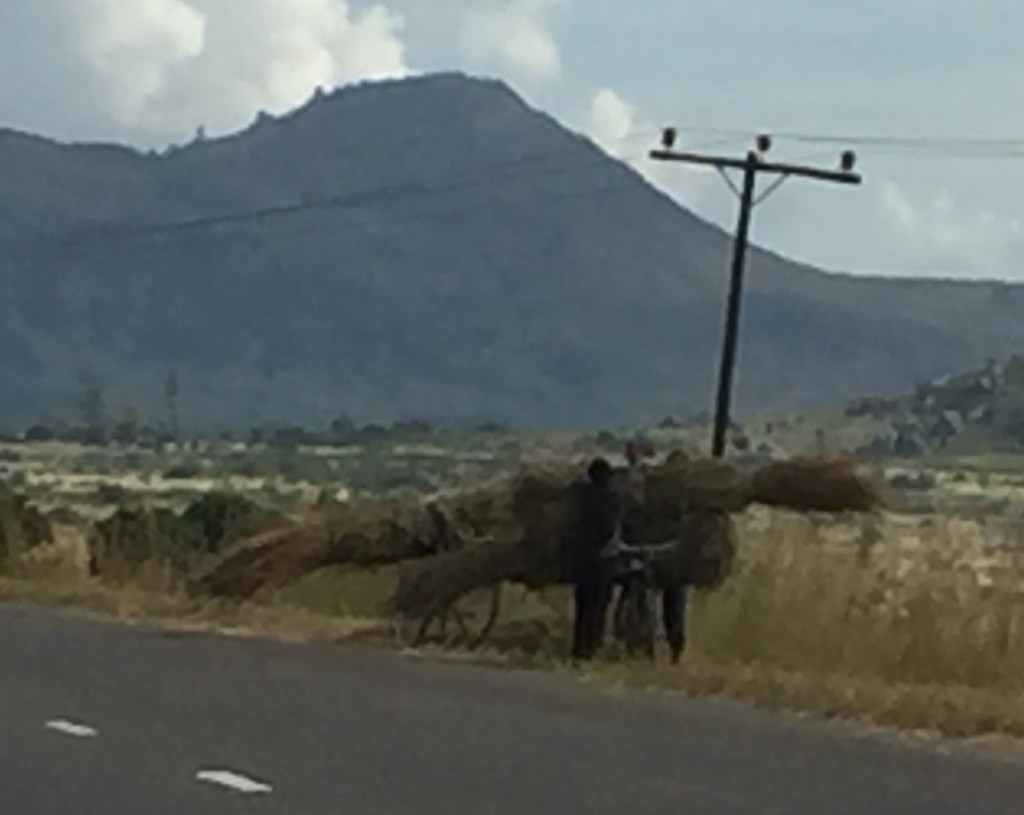
The change is clearly apparent once you cross over the Malawi border. Cars and motorcycles all but disappear, replaced by bicycles carrying everything from maize meal to the entire annual harvest. It is utterly absurd what people decide they can fit on the back of two wheels. My personal favorites…
- Twelve canisters of petrol.
- A mine cart worth of coal.
- 2m long sticks of sugar cane.
- A cluster of palm trees.
- A front door.
- Enough grass to thatch a house.
- Human cargo (as in pedal-powered taxis).

After a night hanging out with the locals in Lilongwe we headed through to Monkey Bay. Our first stop was Mufasa’s Eco Lodge where we said goodbye to our new friend, Asahi. He had organised a one month job at the lodge before continuing with his travels. We’ve come to learn that the term “Eco Lodge” in Africa often acts as a disclaimer that loosely translates to: We don’t adhere to proper building standards, we don’t have electricity and you can expect to poop in a hole in the ground. This is all sold under the guise of “caring for the environment”. Mufasa’s was true to this stereotype with architecture that reminded me of the kind of structures I built in beach sand as a six year old.
We were famished when we arrived and asked at the restaurant about quick lunch options. The chef eagerly informed us that if we ordered immediately he could put something together for us in under two hours. After about a minute of awkward silence Shea and I recovered from shock and rephrased the question to “what can you make in under 30 minutes”. Mr Chef had a think and proudly announced “Toast!”.

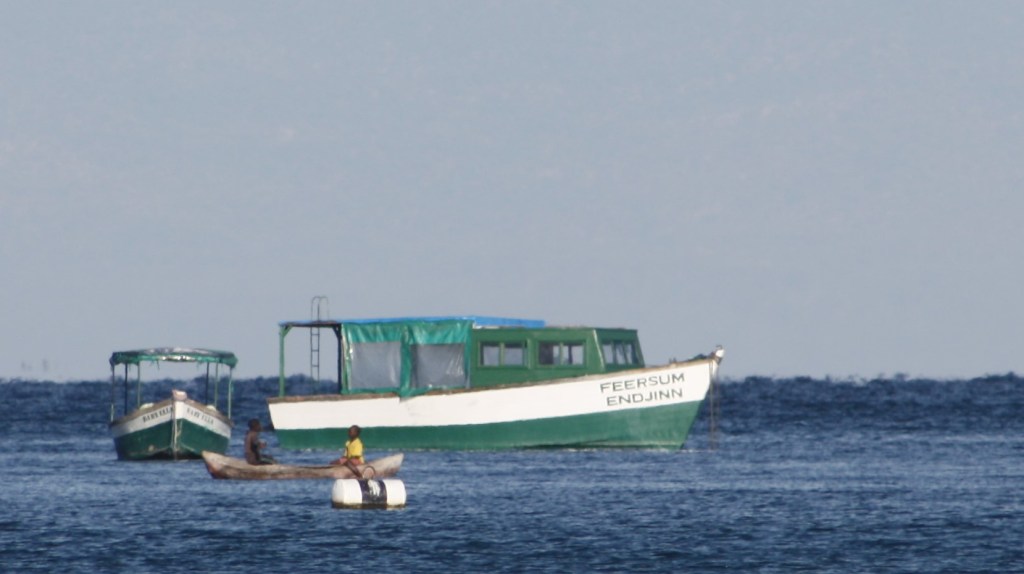
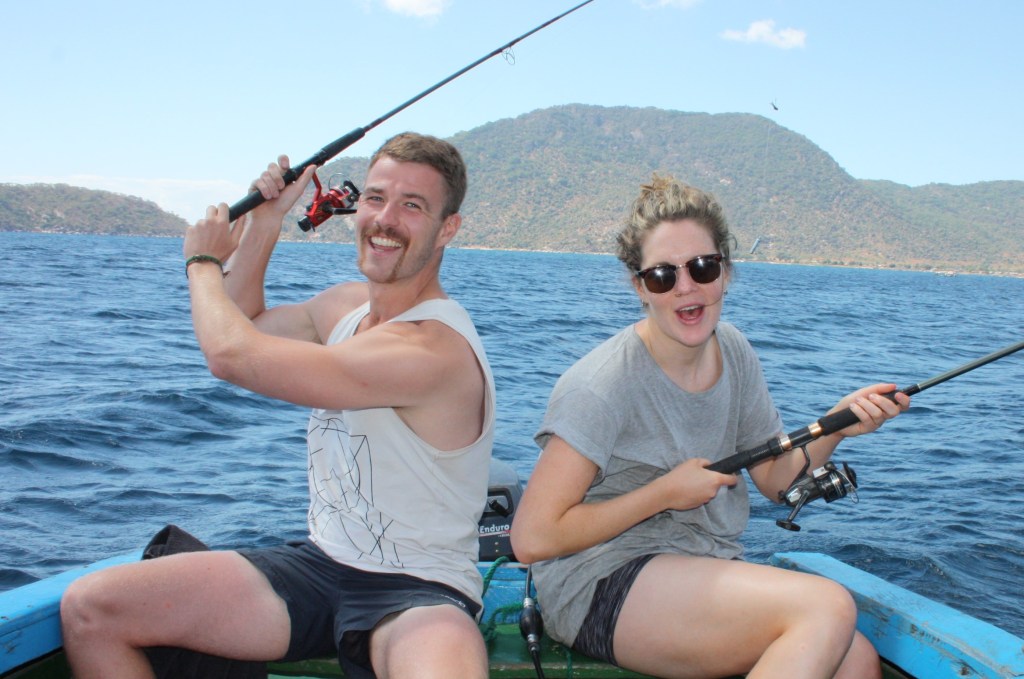
Base camp for our time in Monkey Bay was a spot called Mgoza Lodge. It turned out to be the perfect compromise between luxury and price with a pool and a great little restaurant specializing in goat burgers and freshly squeezed passion fruit juice. We bumped into some old friends, Paul and Josie, and joined them for dinner at a restaurant owned by “Snoop Dogg”. The food took ages (to be expected when you are using that many herbs in the kitchen) but it turned out to be worth the wait. Dinner was followed by a drum circle around the beach fire, a great way to settle the stomach. The rest of our stay at Mgoza was a combination of boat trips, fish eagle feeding, kayak paddling and swimming punctuated by beer, wine and gin and tonic. The tonic proved particularly difficult to source with Shea placing an order for said beverage at 11am on one day only to receive the beverage in question at 4:30pm due to a chronic tonic water shortage in the area. Contrary to popular belief drinking water is still an issue in Malawi, especially if your drink is gin and tonic.



 Joburg to Scotland