THIS BLOG IS NOT FOR SALE

Onward we marched towards the civilized chaos of Kampala. We left early in the morning hoping to get into town before rush-hour traffic. What we didn’t realize is that it is ALWAYS rush hour in Kampala. In our haste we also managed a critical oversight; we missed the “equator” sign. Even worse, we only realized this sitting knee deep in gridlock Kampala traffic, two hours drive from the equator. We both sat in silence; overcome by sadness at the thought of a missed opportunity for a jump-shot photo.
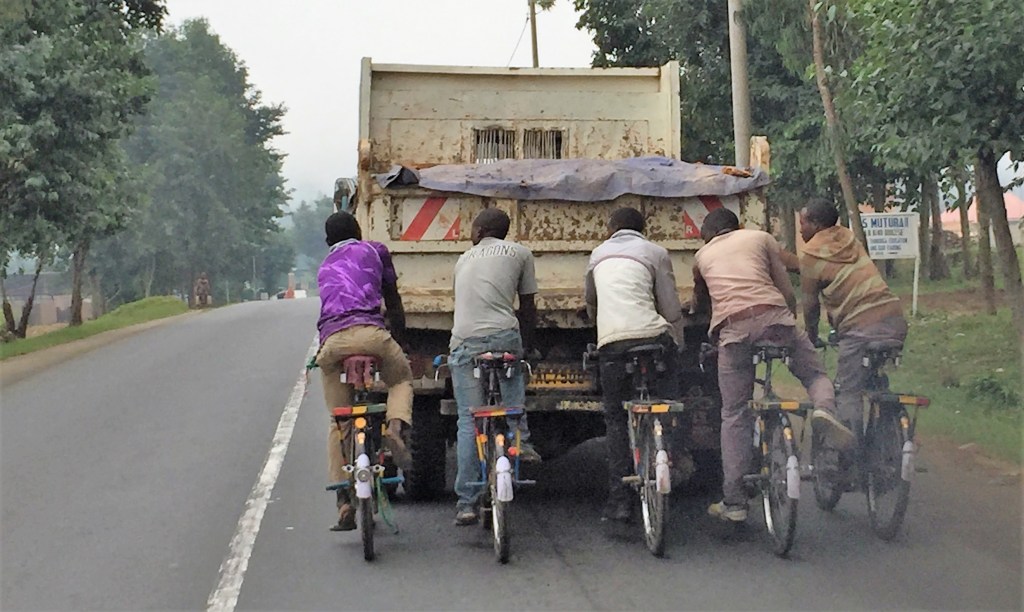
The trip wasn’t all bad. We did run into this, the most impressive case of bicycle freeloading we have seen on the road to date.

After visiting a handful of backpackers in Kampala we settled in at Bushpig. A great little spot in the “Beverley Hills” of Kampala. We dropped our bags and went pub hunting. Shea’s team (Croatia) was playing in the Euro and it was imperative that we find a place to watch the game. We stumbled upon a classic Irish Pub named Bubbles O’Learys (naturally) where we were vividly reminded of the 2010 fan park bombings with an informational poster in the bathroom depicting the entire known range of bombs, landmines, grenades and missiles.
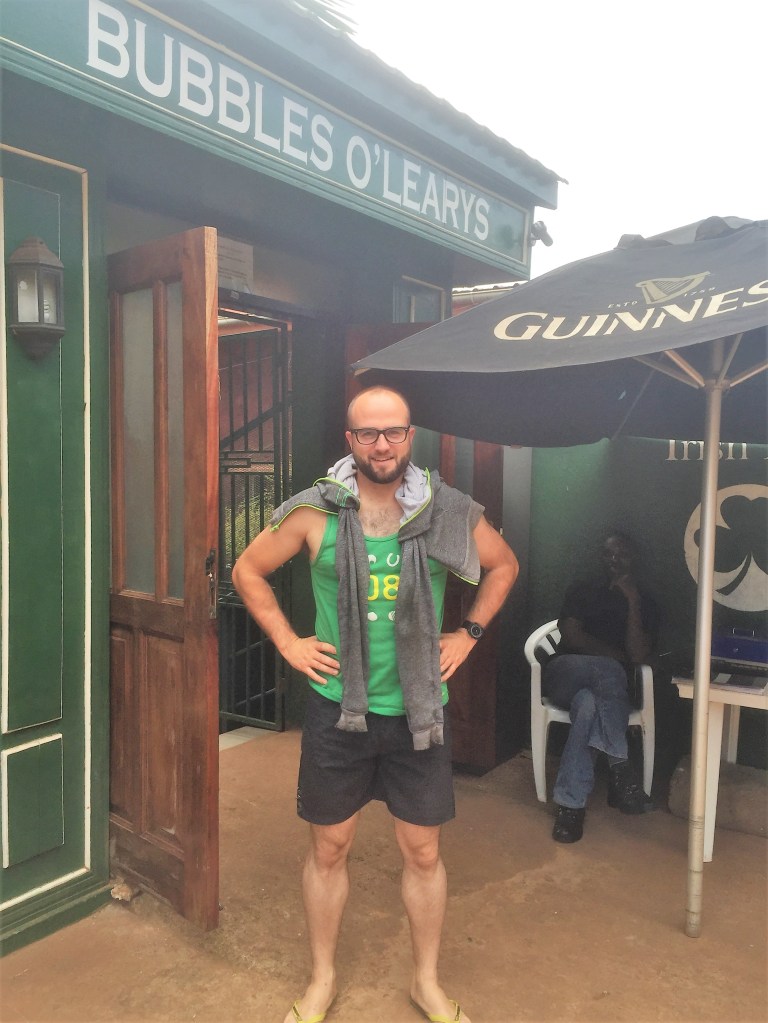
The Irish wonderland of Bubbles O’Learys.
Highly educational but a bit unnerving.

The next evening we found ourselves at Guvnor, a local Kampala super club, with the group of veterinary students from Veterinarians Without Borders that we had met in Kigali. Shea was on high alert after having been propositioned by a “professional” female companion at Bubbles O’Learys the night before but loosened up after a few whiskeys and by the end of the evening we took shameless control of the dance floor. Veronica, one of the vet students, found the evening particularly educational after pulling a pair of escorts dressed as policewomen to our table. The ladies attempted to teach her a series of booty-shake dance moves only to conclude that she did not have enough junk in the trunk to pull it off. The evening was rounded off with a Rolex, a distinctly Ugandan street-food dish comprising of an omelette wrapped in chapati.

Considering the constant traffic, the most efficient way to get around Kampala is undoubtedly by motorcycle. It is also by far the most dangerous so Shea and I were relieved to discover that the Boda Boda tour company we had selected provided helmets. Shea’s was an ultra-manly pink colour, slightly concerning in a country where it is illegal to be gay. I probably should have mentioned to the tour operator that we were both male when booking a day trip for two.
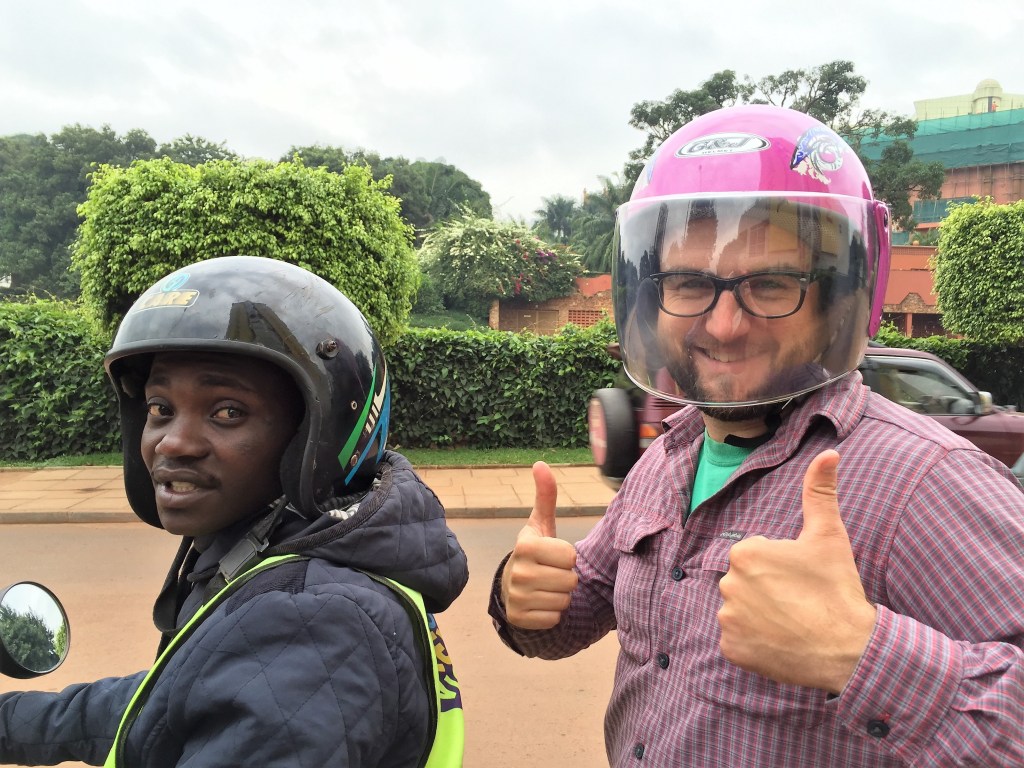
Shea loving his helmet choice.

The tour was great fun and incredibly informative. Sites visited include Gaddafi Mosque, the Hindu temple, Idi Amin torture chambers, the Royal Palace and the Baha’i temple. We also had the fortune of savoring some local banana beer at a stall marked out by a giant calabash.
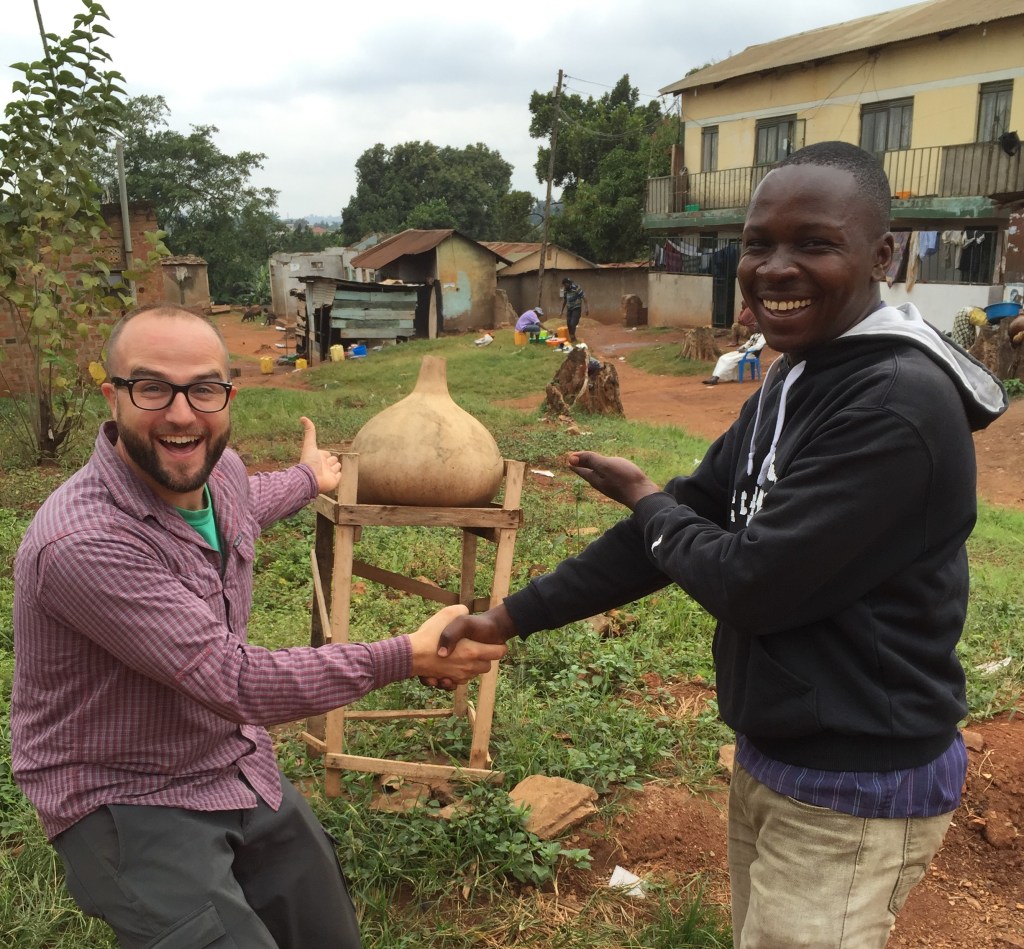
Shea, excited about the prospect of a thirst quencher after a long morning’s ride. The “extra strong” banana beer option packs quite a punch. Watch out!
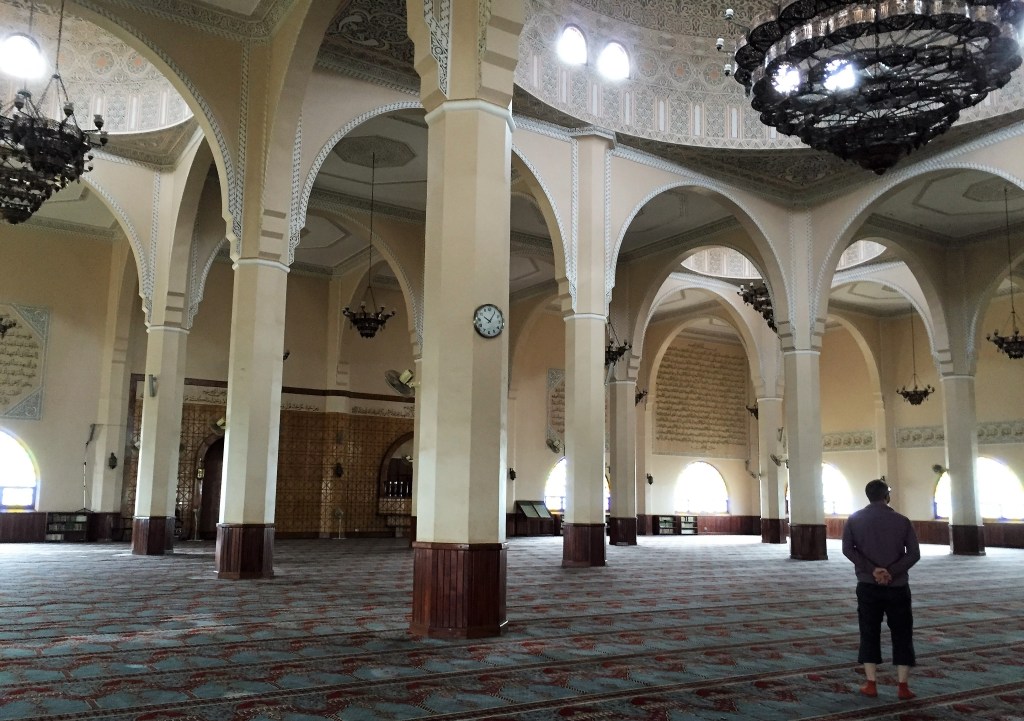
The inside of Gaddafi National Mosque. Enough space for 16 thousand worshipers!
A short walk back down from to the top of the mosque tower.

The Idi Amin torture chambers in particular were incredibly underwhelming. The entire construction consists of a single corridor connecting three featureless cells. Political prisoners were crammed into the cells waiting to be electrocuted in the water-logged passage. Many died from suffocation or hunger while waiting. All a bit morbid and rather uncreative. The bodies were taken to the closest dam where Idi Amin had imported crocodiles from the Nile to eat the bodies. The crocs are all dead now but I am told they grew enormous.
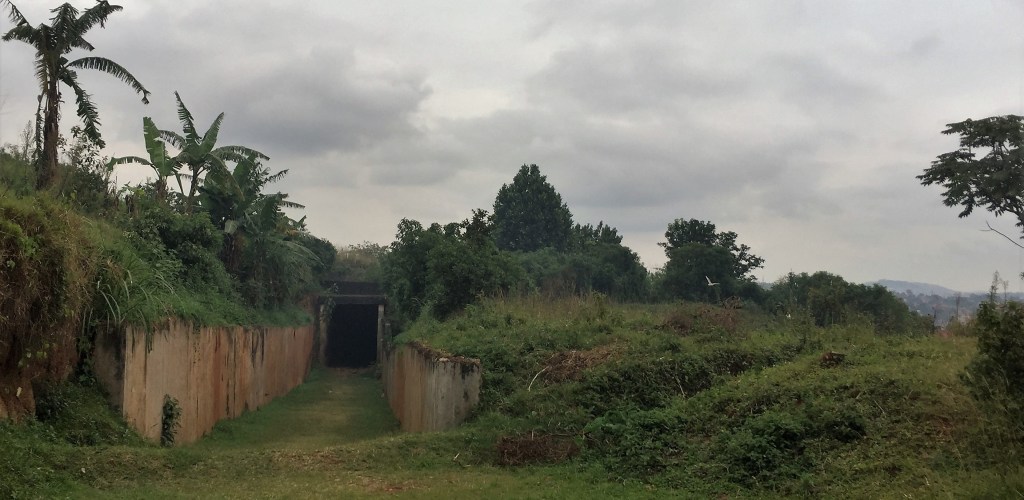
The entrance to Idi’s chambers.

An interesting quirk of Ugandan society is the precarious relationship between the tribal kings and the political powers. The royal mile is a particularly interesting case. This mile of road links the residence and parliament of the king of the Buganda, the tribe covering Kampala and its surrounds. The road is bisected by a monument with a path directly through the centre through which only the king is permitted to drive.
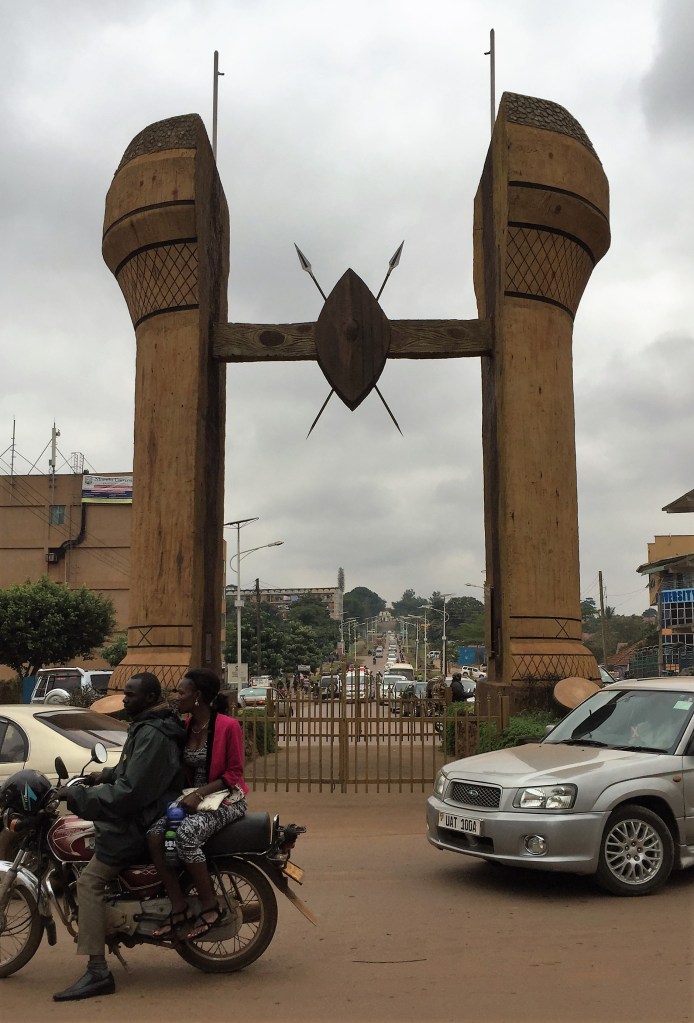
The king’s monument on the royal mile.

We’ve spoken before about the peculiar signage we’ve spotted throughout our travels. The most notable one in Uganda has to be the ubiquitous “this land is not for sale” sign which is hand painted on nearly every vaguely commercial building in the country. I’m told it has something to do with false ownership claims linked to fraudulent title deeds but the details are not clear.
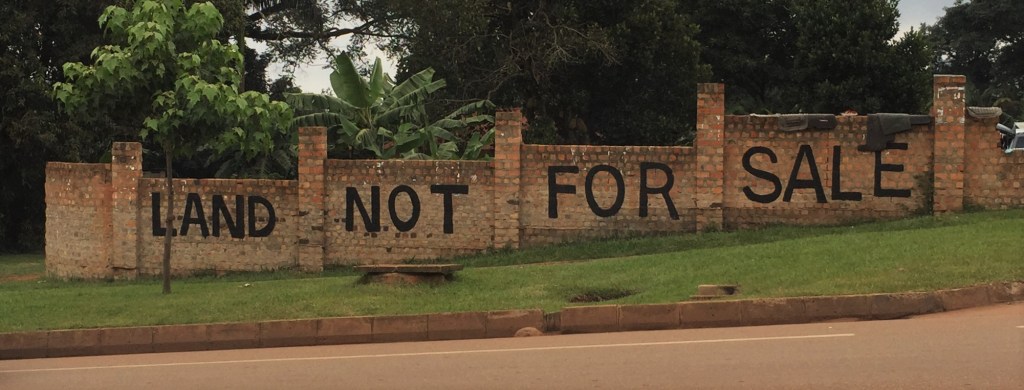
A classic not for sale sign on a piece of land being used to run a car wash.

After a few days in Kampala it was time to continue through to Jinja where we were to meet up with some friends at the Kakira Sugar Plantation. Jenny and Chris Strathern welcomed us in with open arms, despite our very loose connection, and we settled in for a few days of home cooked meals, stimulating conversation and tours of the facilities. We were spoilt rotten.
Volcano Virgins

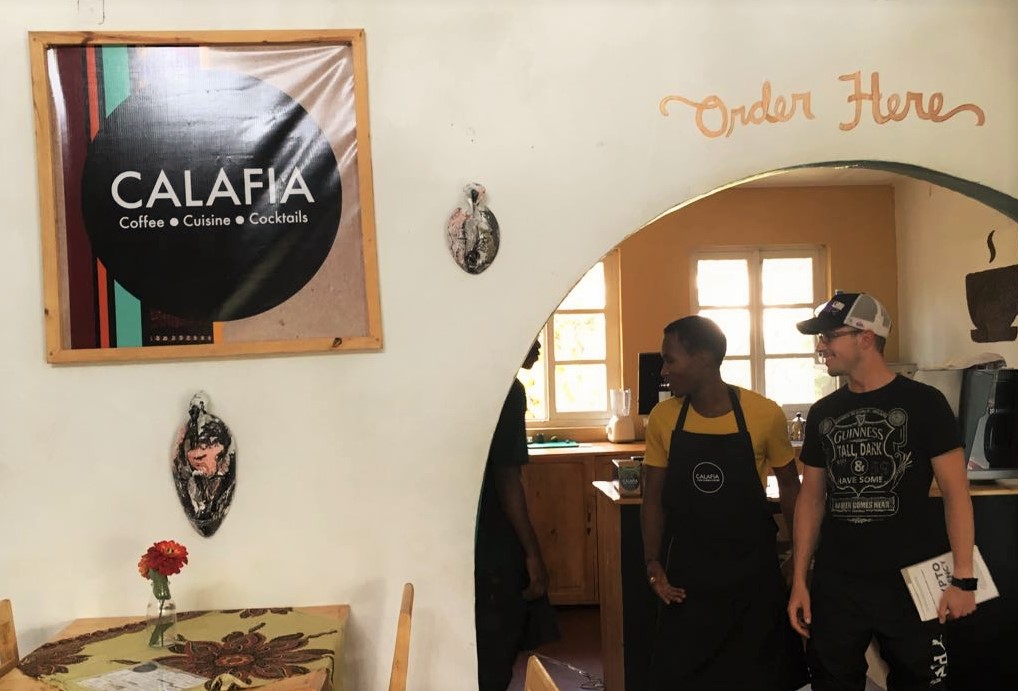
Our plans to hike the Nyragongo Volcano in the DRC were preceded by a few nights at the Discover Rwanda hostel in Gisenyi, Rwanda. It was here while hunting for lunch that we stumbled upon the strangely misplaced Calafia Cafe. Describing itself as “California Style” the cafe boasts a menu filled with terms seldom seen in Rwanda like “Kale”, “Beetroot”, “Goat’s Cheese”, “Pesto”, “Garlic Mayo” and “Cucumber Gin”. After placing your order you can watch as the kitchen staff walk outside to pick your leafy greens from the garden. A great spot if you’re lusting for a good sandwich or a salad.
Calafia Cafe – an impressive setup with great food but as out of place as a goat in a sauna.

It was in Gisenyi that I took my first Bicycle Boda Boda*. The whole experience was somewhat analogous to a king on a palanquin as I sat leisurely on the back of the bike watching the driver peddle his single-speed transmission up the road. An interesting experience appropriate for trips consisting mostly of downhills when you are not in any rush at all.

The man behind the pedal-powered boda boda machine.

The next day kicked off with a more traditional Moto trip to the DRC border where we were to liaise with Rogers, our resident border control expert. He directed us through to Congolese immigration where we were put through a brief “interview” consisting of very few words, some awkward stares and a surprise laser gun attack. This device was in fact an infrared thermometer. Nothing to worry about if you knew what was happening but the Congo border staff aren’t particularly good communicators and tend to spring the device on you without warning as if they are playing laser-tag.

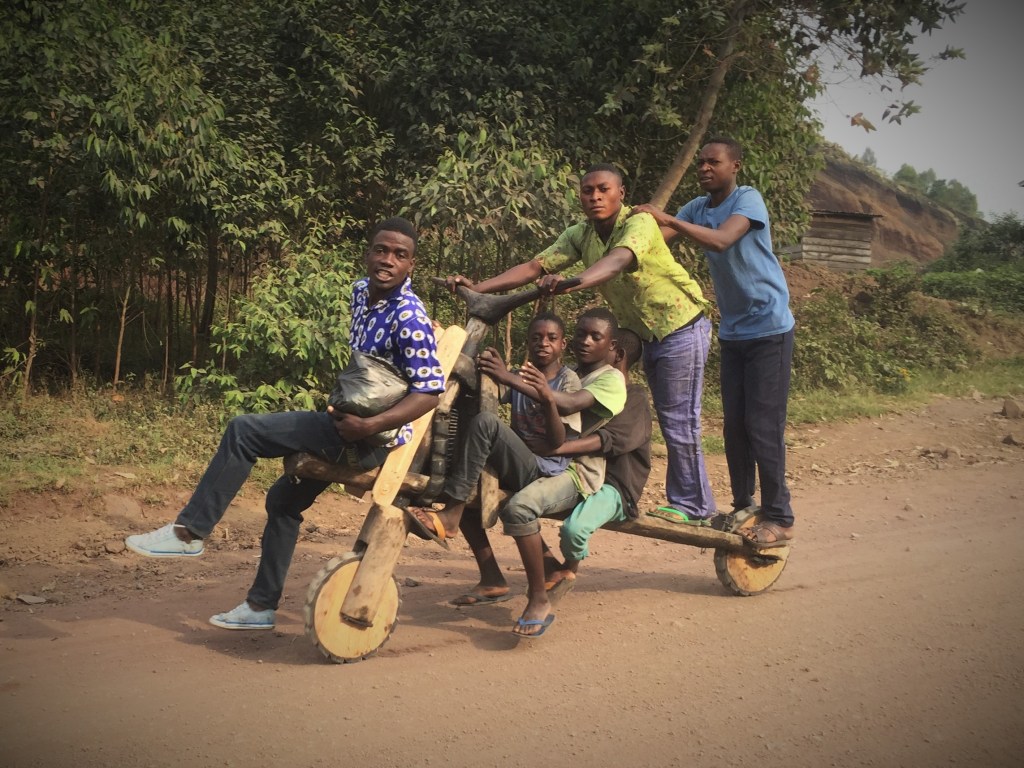
After surviving border control, we were escorted to our transport vehicle which was to take us into the park. The road slowly deteriorated as we moved further and further from the city till we were driving on nothing more than a pile of rocks. Considering the poor road quality, Shea and I were surprised to discover it was in fact a toll road when two men with AK-47s stopped the car to demand payment of $40. This seemed a bit unfair but my mom taught me not to argue with anyone armed with a semi-automatic assault rifle so we refrained from making a fuss. The poor road quality was no deterrent to the locals who cruised down the hill past us on their home-made wooden bicycles, known as Chukudus. These devices are the carthorses of the Congo, used to transport everything from sugar cane to charcoal to people. The most impressive sighting of the trip; six people squashed onto a single bike.

The soccer mom chukudu, with space for the whole family.
The Congolese delivery van.
Driving through the Congo is a bit like being in a scene from a 1940’s version of the movie Rambo. UN soldiers and bases are everywhere, choppers fly overhead regularly, the buildings all look neglected, there doesn’t appear to be any electricity anywhere and there are almost no vehicles on the road. We passed the South African UN military base at one point. I waved. They didn’t wave back.
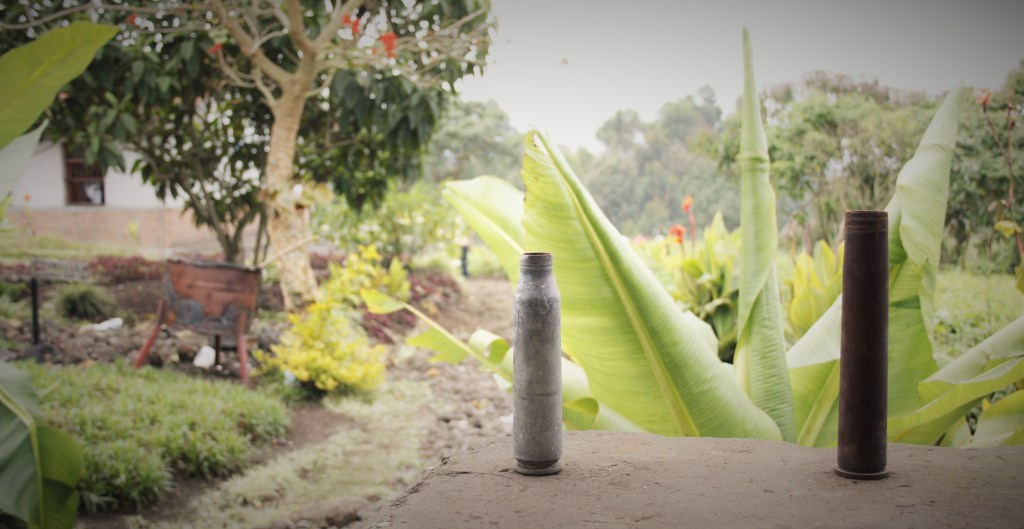
Used bullet casings casually lying around at the Nyiragongo park ranger’s office.

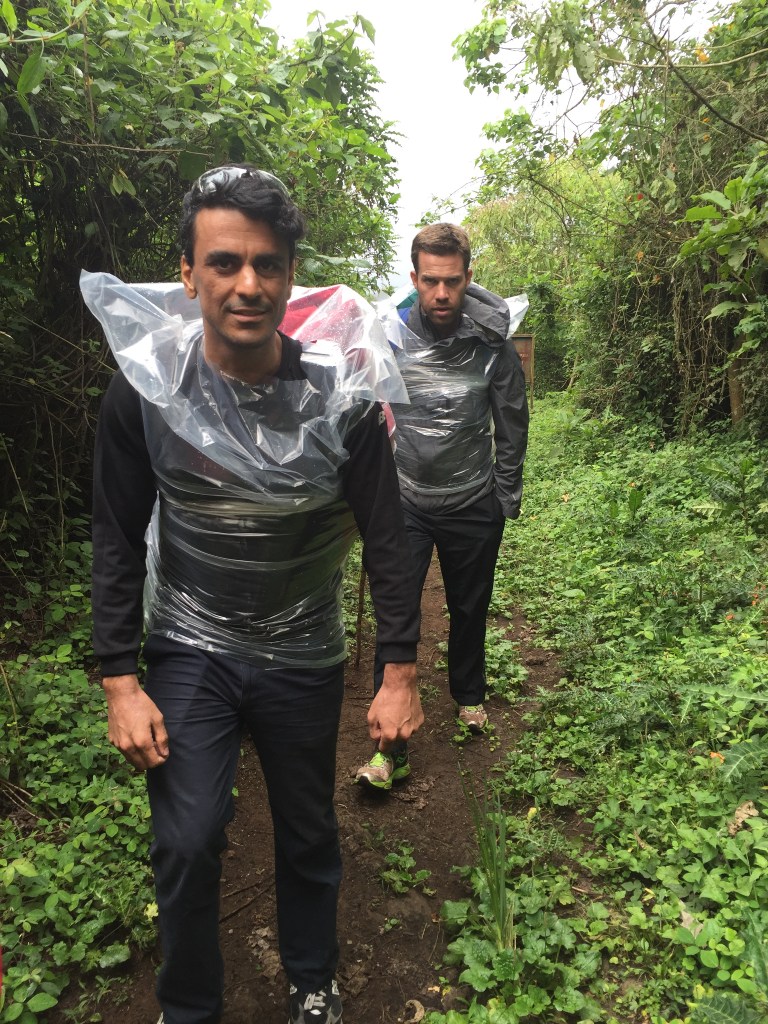
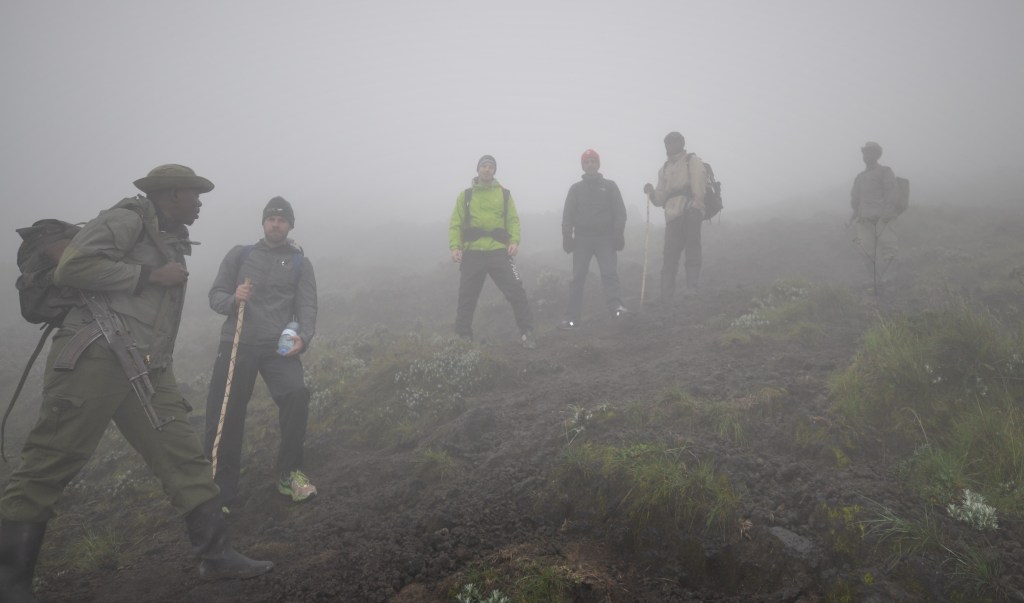
We met up with two friends at the base of the volcano, Joe and Miraj, who we had first come into contact with at the pool party in Kigali. The four of us were guided up the mountain by two extremely friendly, AK-47 wielding, gentlemen named Esparo and Paul. The hike proved to be a great workout with a climb of 1,500m in only 8km. In order to get to the peak you track the path taken by the lava flow from the previous eruption in 2002. It’s hard to imagine that the lush bush through which we were trekking was at one point burnt to a crisp. The eruption itself resulted in the destruction of 30% of the city of Goma, over 15km away, with the lava travelling at speeds of up to 60km/h [1].

Miraj and Joe in their makeshift rain-jackets.
Walking alongside our executive administrator of weight redistribution and management (a.k.a. Mr Porter).

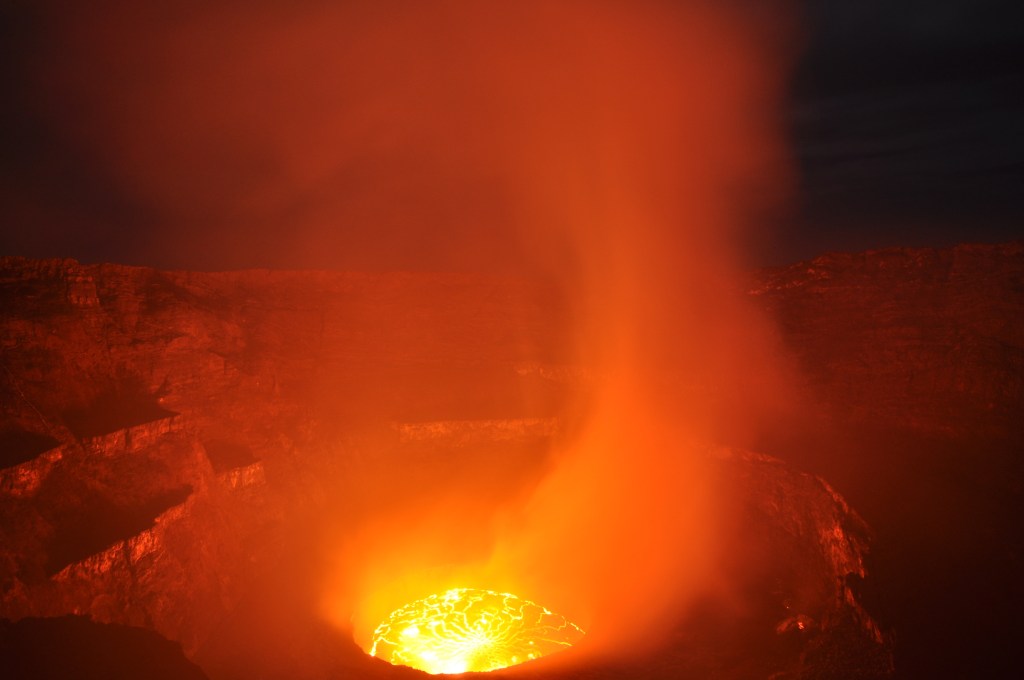
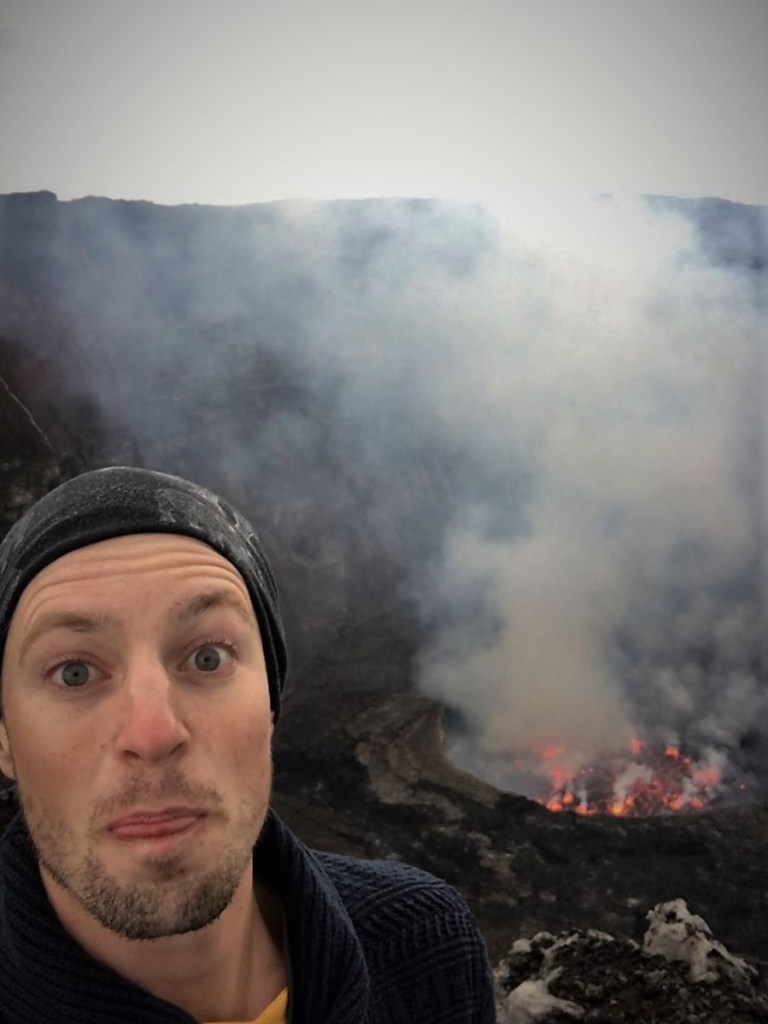
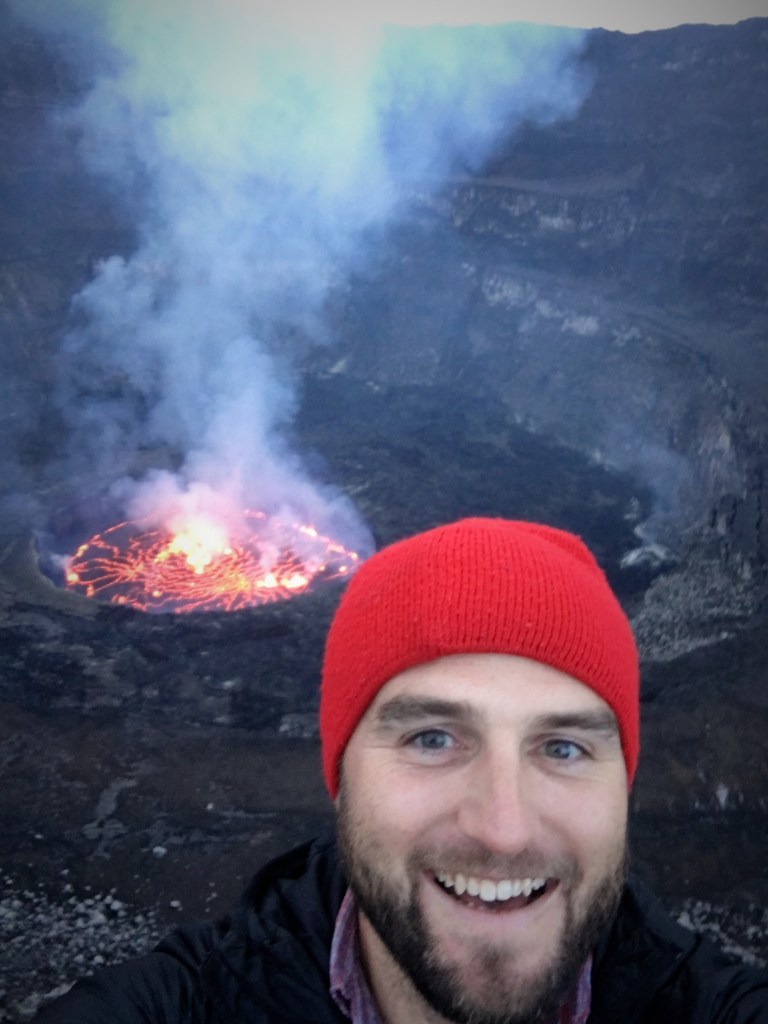
We reached the top of the volcano in the middle of a down-pour and huddled into the cabins to thaw. An hour or two later the weather cleared and we were able to see the bubbling lava, a truly epic sight. Naturally we had to take a selfie.

The volcano shot taken with a decent camera.
#volcanoselfie #rossisboss.
#volcanoselfie #hoorayforshea.

Dinner was a delicious basil pesto spaghetti with chorizo lovingly prepared by head chef Shea. When it came time to dig in we realized we had diligently packed everything needed to cook the meal but none of the cutlery required to actually eat it. I’m not sure if you’ve ever attempted to eat spaghetti with a spoon but it is definitely sub-optimal.

The next day we awoke inside a cloud with less than 5m visibility and no chance of an early morning lava viewing. We sent up a quick thank you to the volcano gods for the clear weather the evening before and headed back down. The loose gravel along the path made the trip back significantly more treacherous than the previous day’s hike up. At one point Joe landed his stride on a particularly loose spot and managed at least four full tumble turns down the side of the mountain before sliding to a halt. This prompted Shea’s adoption of a rather creative walking technique to avoid a similar fate. This patented hiking style known as “Crouching Tiger, Sliding Rock” consists of a series of bunny-hop-like rotational strides followed in quick succession by a bos-kak** style squat for stability. In his defense, in spite of losing a significant amount of self-dignity, Shea did not lose grip once. I on the other hand came well short and nearly fractured my coccyx.

The cloud in which we found ourselves the next morning.
The expedition team along with their hiking accessories.

On arrival at the bottom of the volcano we were informed that our payment for the volcano hike was not yet reflecting in the tour company’s account. Our guide informed us that we would be taken on a detour to Goma to enjoy some local food instead of heading directly to the border as planned. We enjoyed a rather delicious hostage buffet before negotiating an arrangement to pay for the tour in cash and then collect a refund from their accountant across the border in Rwanda. After scratching together enough dollars to secure our freedom we were allowed to pass safely back across the border where we both took a huge sigh of relief, hugged, high-fived, fist-pumped and made loud “woo” noises before jumping on a Moto back to Gisenyi to put the DRC flag sticker on the car.

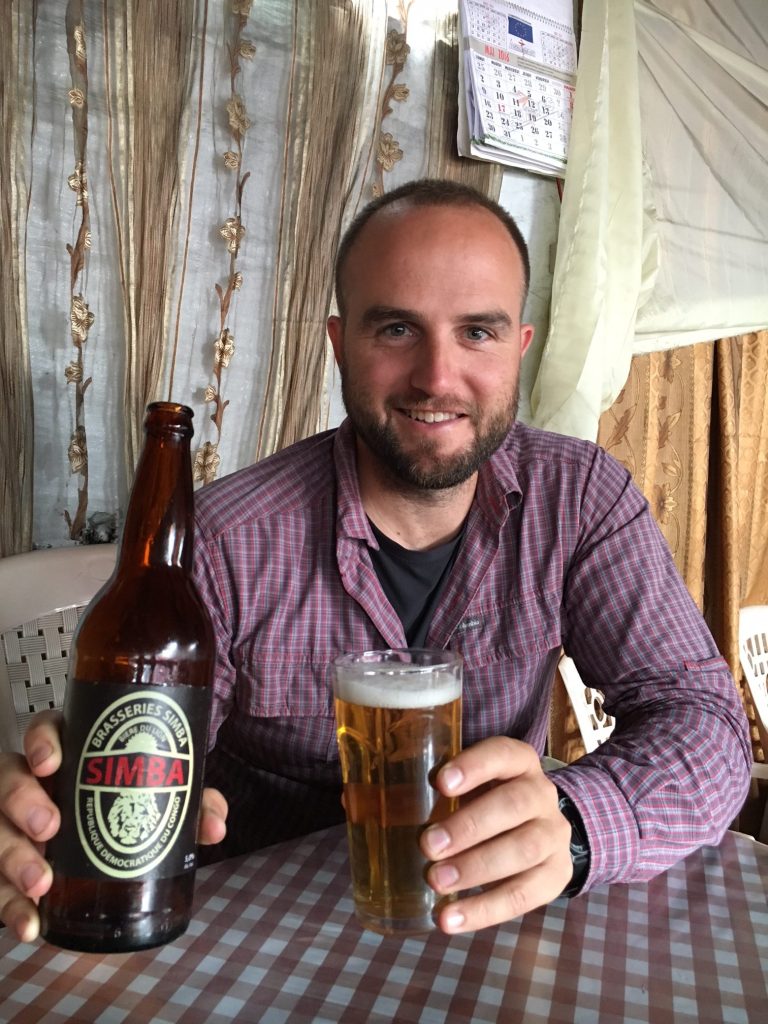
Enjoying a Simba Lager with our hostage lunch. Probably the second best tasting beer we’ve had all trip. The circumstances may have affected our objectivity.

*The terms “Moto” and “Boda Boda” are used in Rwanda and Uganda, respectively, to refer to motorcycle taxis.
**An Afrikaans term directly translating to “bush poop”.

The Third Musketeer

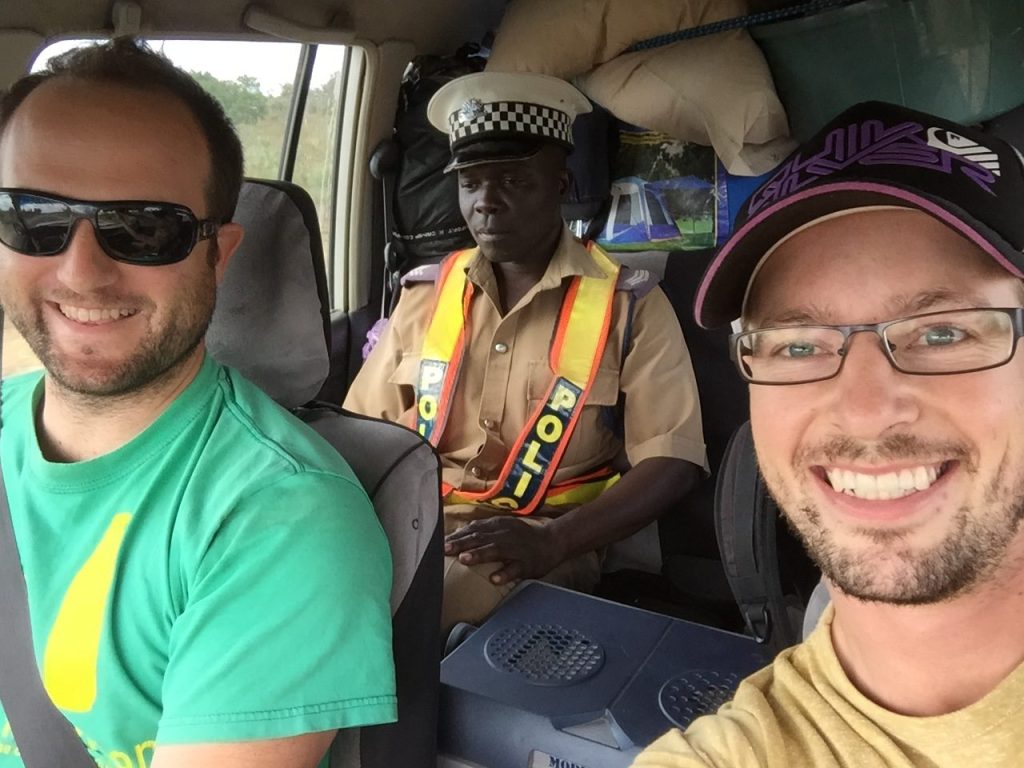
After a day or two of recovery I was back on my feet and we were off north to collect April from the airport in Lilongwe. In addition to the usual scattering of roadblocks, we were waved down by a friendly Police officer who we soon realized was attempting to hitch hike.

Got to love Malawi, where policemen catch lifts with strangers to get around.

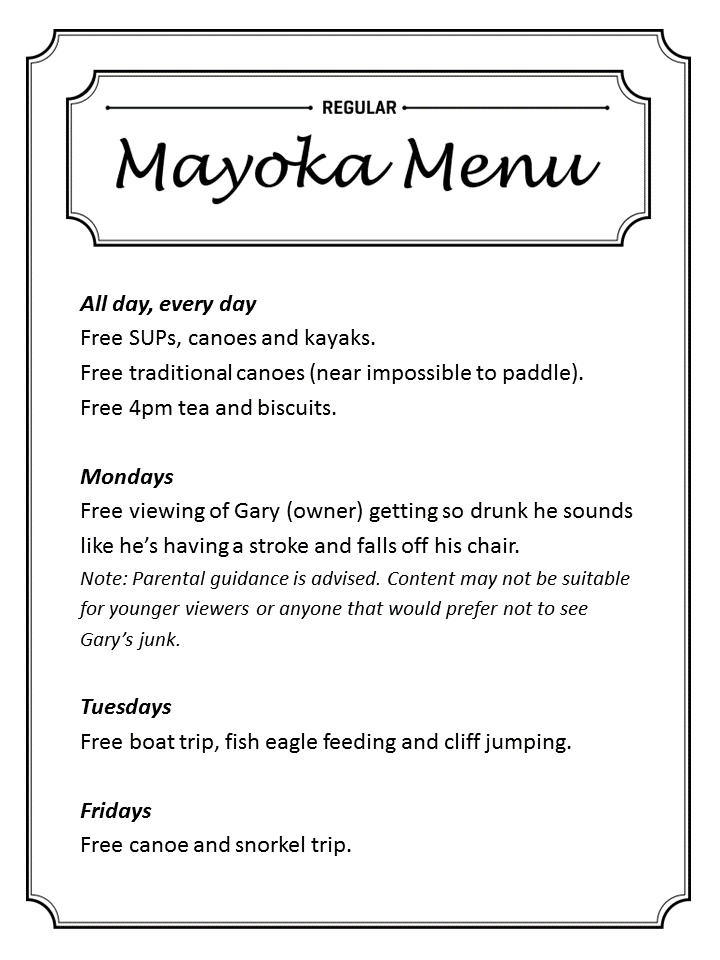
After collecting April from the airport we headed through to Mayoka Village, a beautiful little spot on the water’s edge. Great for a few days of relaxation and pretty affordable if you’re willing to be a shameless freeloader and take advantage of all the freebies.

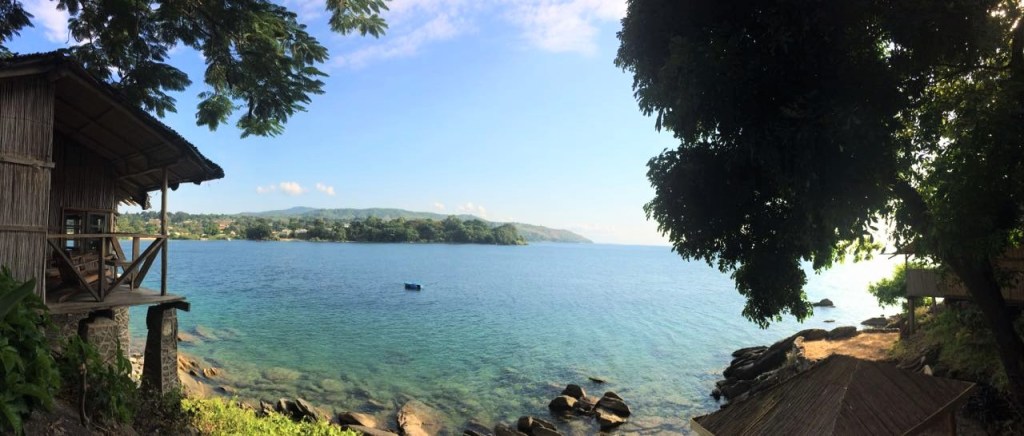
The view from our chalet at Mayoka Village.

We enjoyed more than a couple great meals in Nkhata Bay. Our favorite: a tiny Indian spot named “Takeaway Palace”. The restaurant is run by one guy simultaneously acting as the waiter, head chef and owner. Food preparation time is around two hours but it’s well worth the wait. If the president is in town the restaurant is closed because there are too many orders.

We took a two day respite from Mayoka to visit Zulunkhuni Lodge in Northern Malawi. It’s a three hour boat trip to get to the lodge which is inaccessible by road. The blurb reads as follows: “Imagine paradise. Now imagine staying in the lap of luxury, with your every need catered for…” except if your needs include clean sheets, windows, electricity or meat. A beautiful spot but not the best lodging experience.

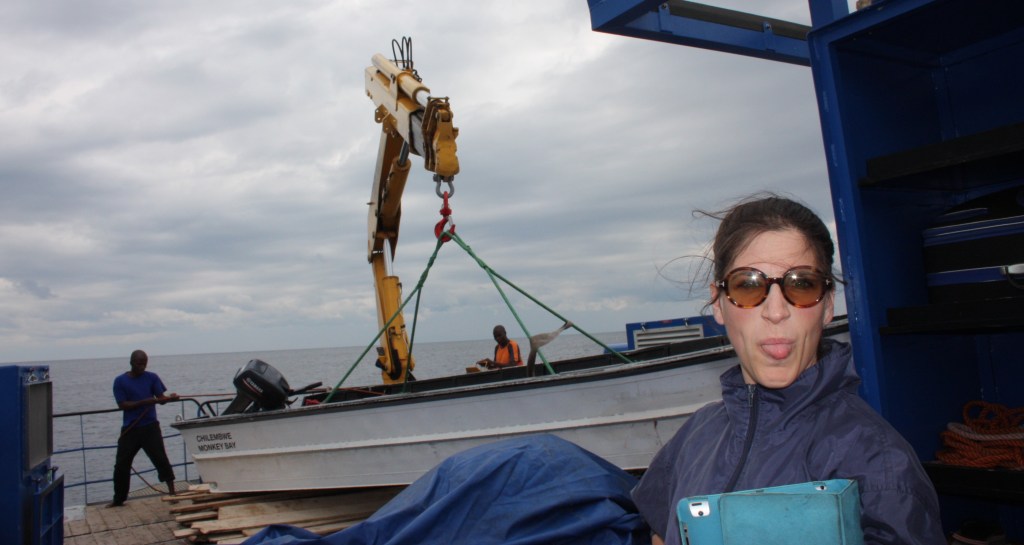
Unloading the Chilembwe Ferry harbor boat at a stop-off en route to Zulunkhuni. There are no ports so passengers are crammed onto this tiny motorboat to get to shore. Think minibus taxi with the added risk of drowning.
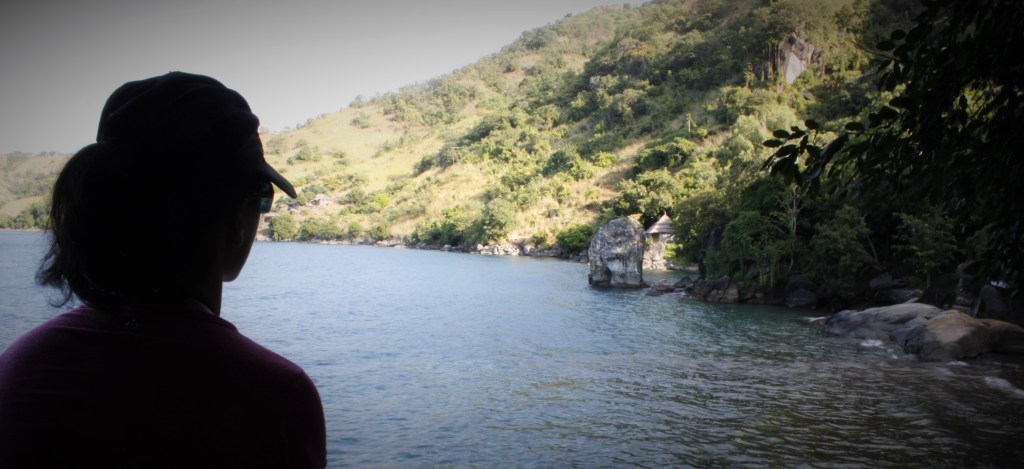
The view of Zulunkhuni from around the bay.
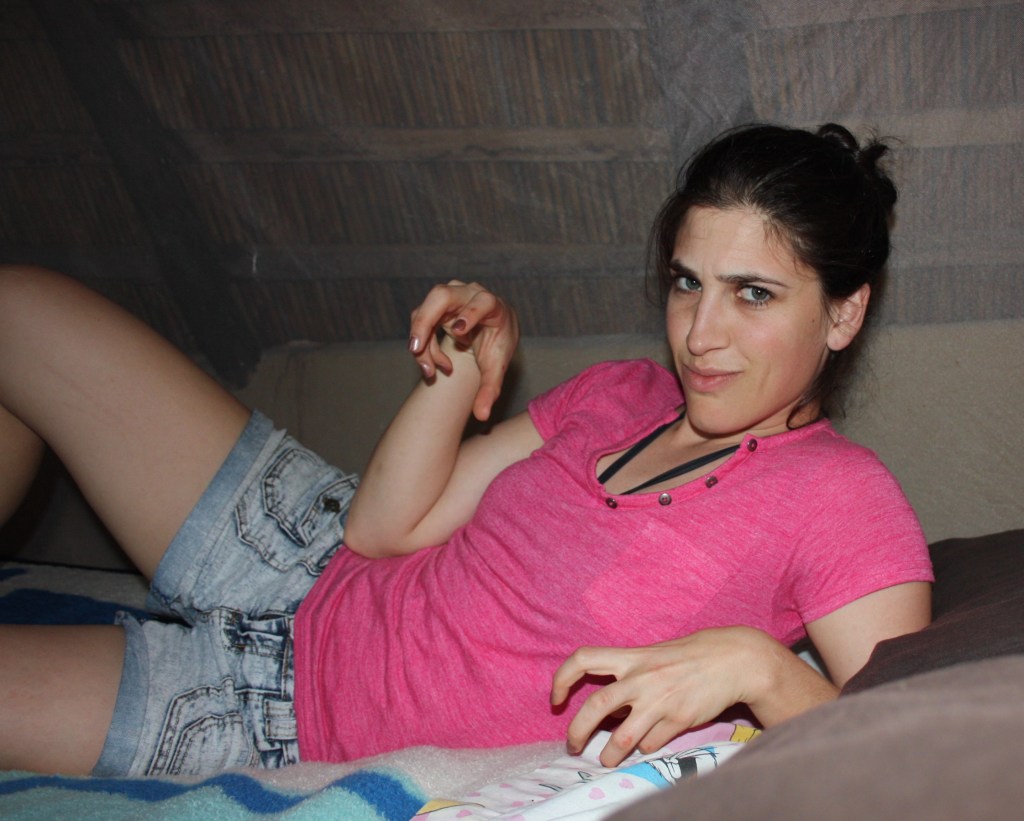
April expressing her anger at having to sleep in smelly sheets.

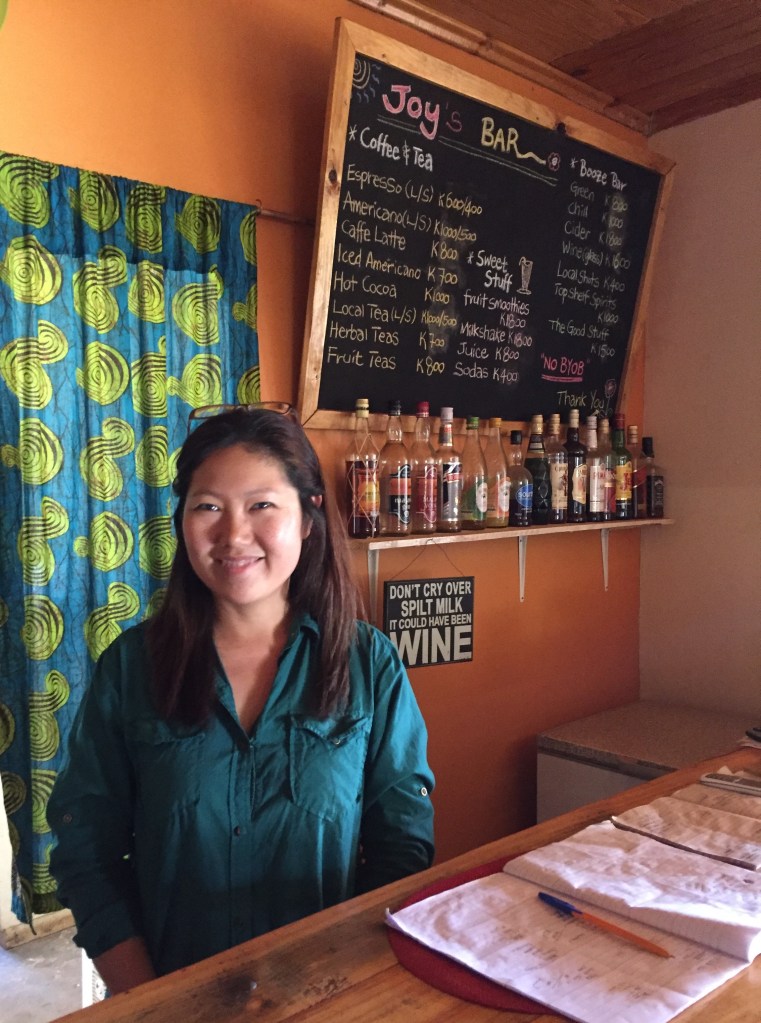
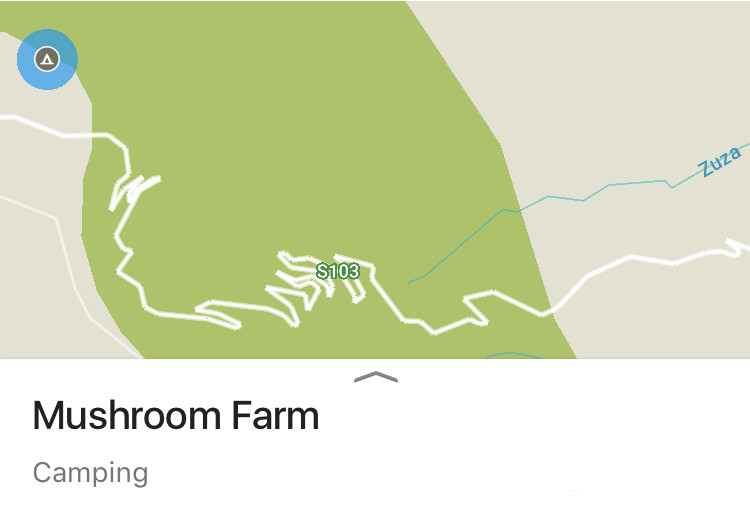
We grabbed a delicious “Korean style” lunch at Joy’s Place Backpackers in Mzuzu, on our way out of Nkhata Bay. The next stop was Mushroom Farm; an all vegetarian, eco-friendly, yoga-centric, one-love, hippie retreat up in the hills of northern Malawi. This gem of a spot lies behind some of the worst roads we have driven to date. The front shock on the car was bust by the time we got to the final stretch, making it a particularly slow one hour ascent up the 5km long mountain pass. Equally as remote as Zulunkhuni, Mushroom Farm is night and day in comparison. Clean sheets, incredible food and breathtaking views. A great spot to sit and relax for a few days.

Joy, at her place.
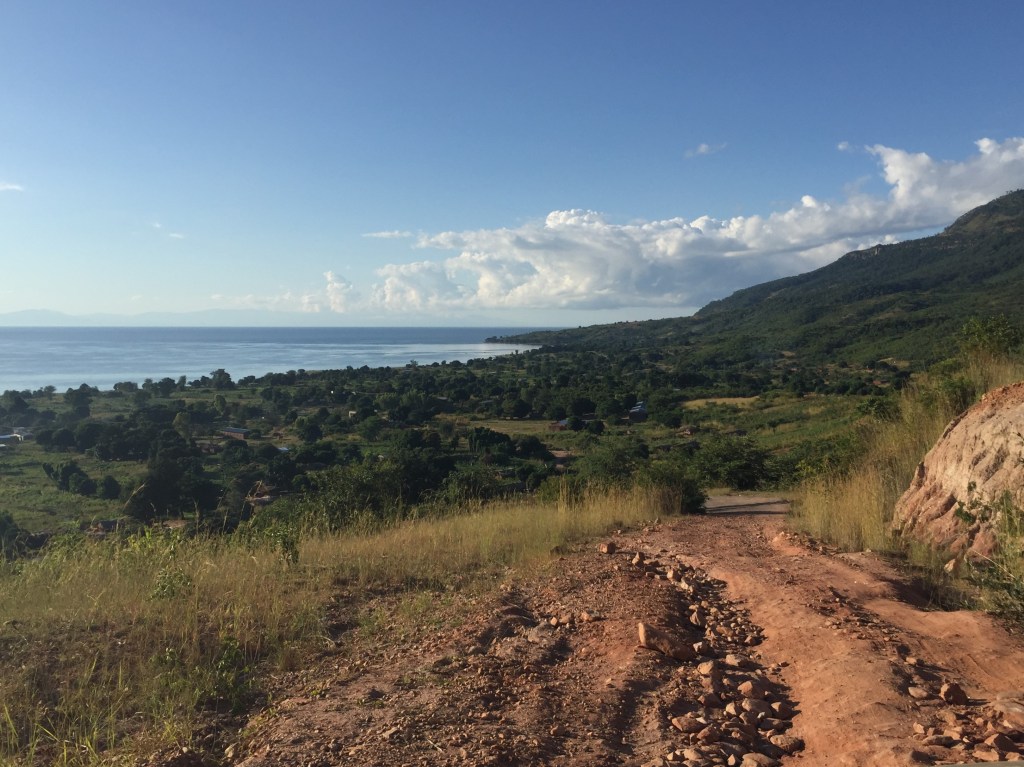
The road up to Mushroom Farm. This is the easy section.
The 5km mountain pass up to Mushroom Farm. Awesome fun but not recommended if you are prone to vertigo, suffer from car sickness or have trust issues with the driver.
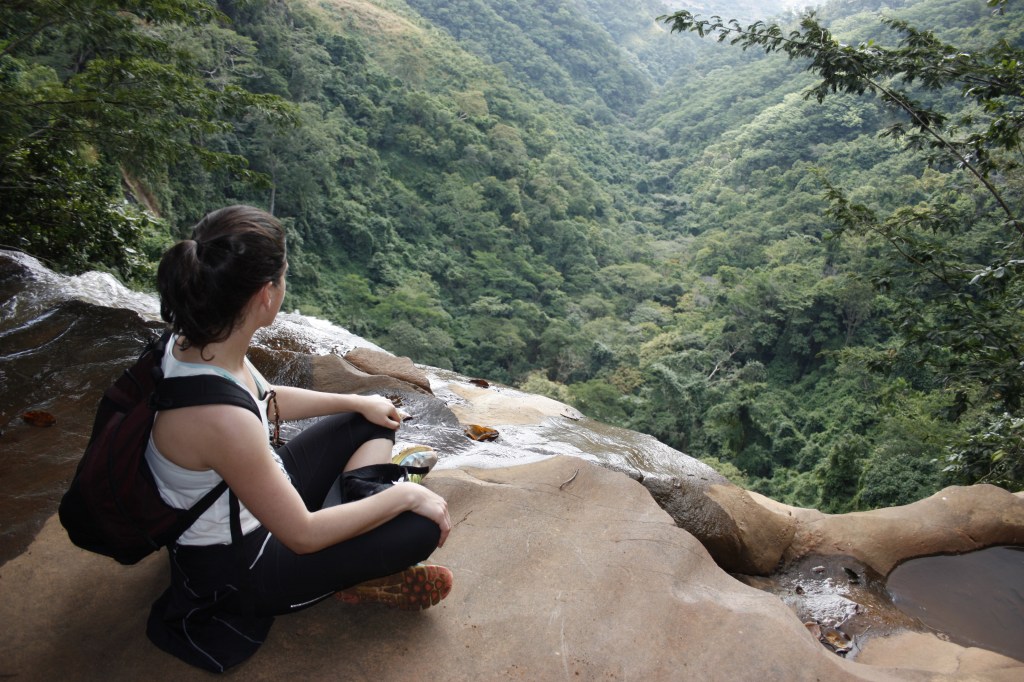
View from the waterfall near Mushroom Farm.

April’s visit was over all too soon as we headed into Tanzania to drop her off for her flight back to Johannesburg. We arrived at Mbeya Airport in good time only to find a distinct lack of planes, buildings or a runway. Instead we were greeted by a long stretch of dirt occupied by a handful of kids playing soccer. After some back and forth with the airline we realized that her flight was actually leaving from a different airport with a completely different name to the one on April’s ticket, located an hour north of Mbeya. We made it, but only just.

Sign Language

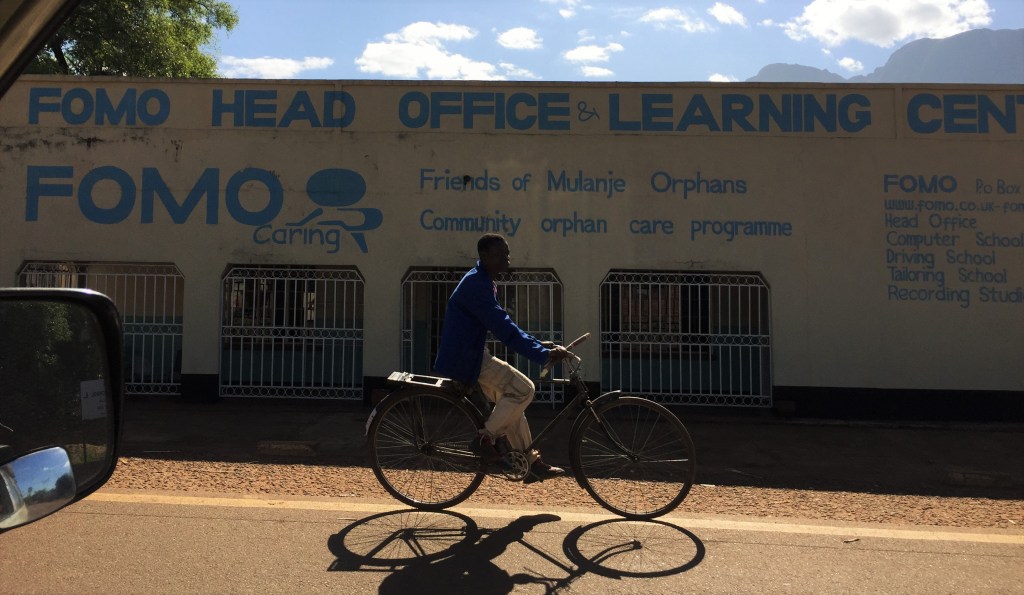
Some things just don’t translate well across languages. Store signage in particular has been a source of much amusement. Aside from the usual combination of inappropriate religious references and obsessive use of the word “uncle”, we’ve come across the “FOMO Children’s Hospital” and a personal favorite of mine: “Difficult to Understand Investments”.

The FOMO Head Office and Learning Centre.
Annual Coffin. Targeted at Vampires perhaps?

Monkeying Around

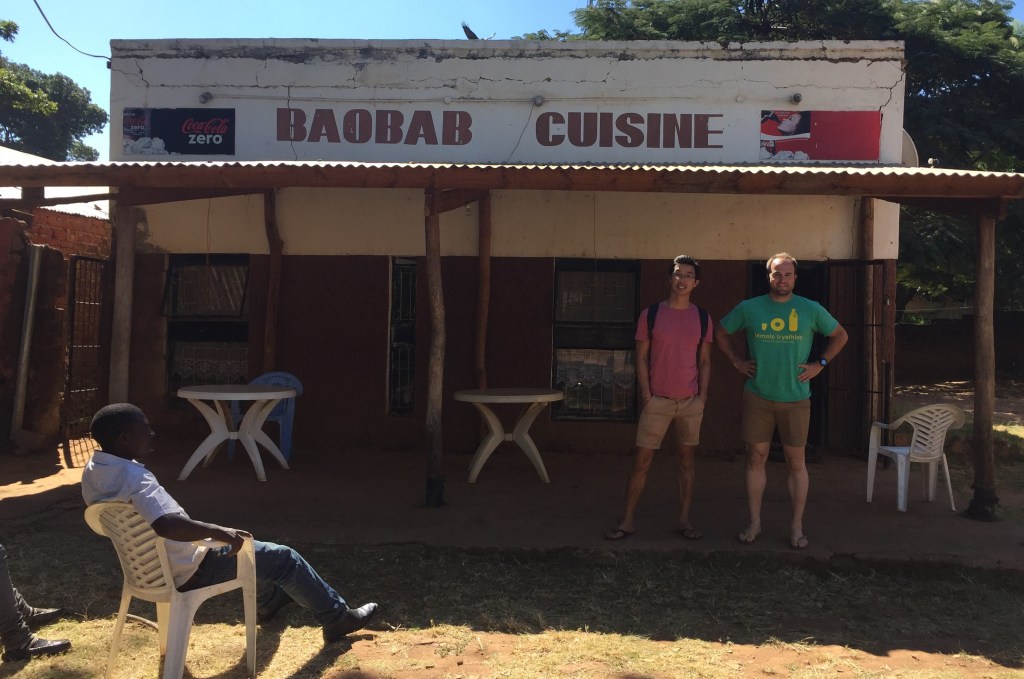
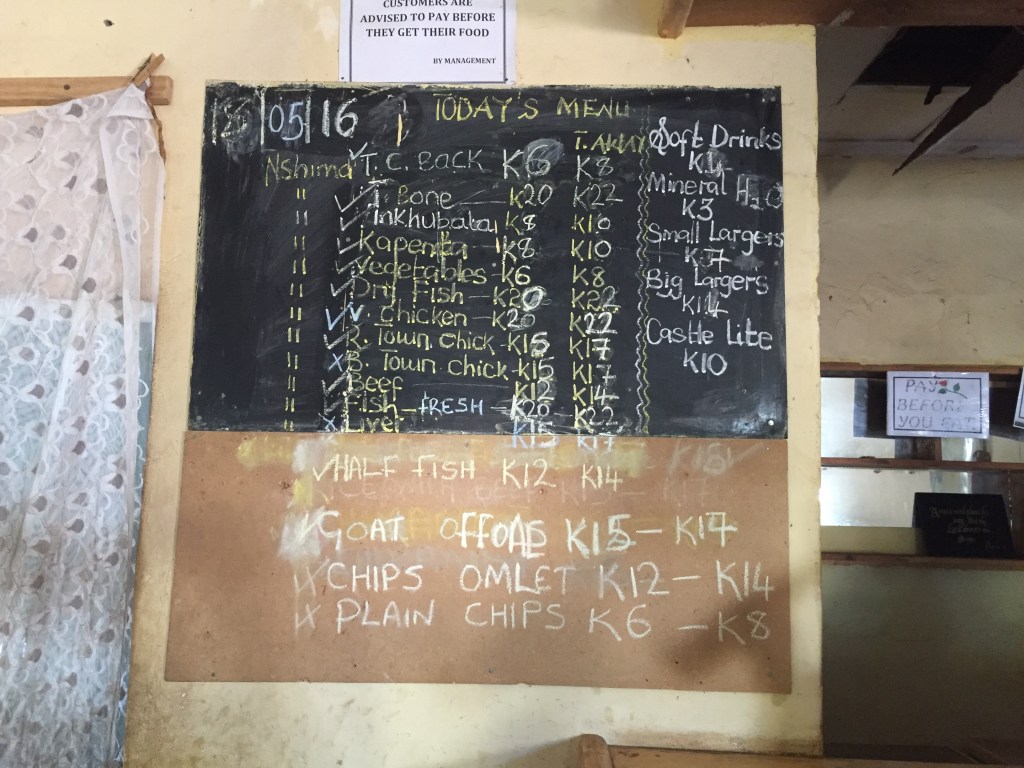
After some great game viewing in South Luangwa the time came to leave Zambia. We found a great lunch spot on the way out, recommended to us by a Petrol attendant. Baobab Cuisine treated us to a distinctly local lunch of chicken, beans and pap with a side of rape. A member of the cabbage family, rapeseed is a vegetable the Zambian’s do particularly well. Commonly abbreviated to “rape” on practically every restaurant menu, the veggie has a habit of provoking terribly inappropriate jokes. Our food was not accompanied by any napkins, only a little bucket of water in the corner of the room for hand-washing, and when I queried about cutlery I got nothing but a confused stare in response.

The fine dining institution of Baobab Cuisine.
The lunch options at Baobab Cuisine. A “V Chicken” refers to locally caught pheasants which demand a premium in comparison to their less athletic “Town Chicken” comrades sourced from the supermarket. Even more evidence that it pays to keep fit.

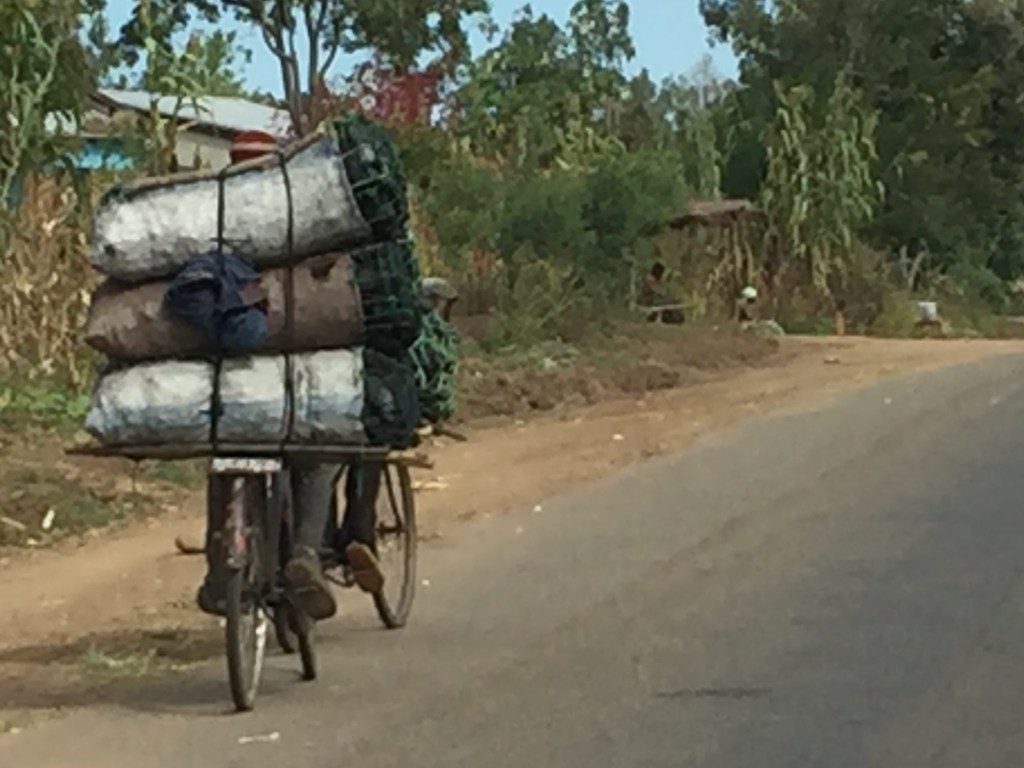
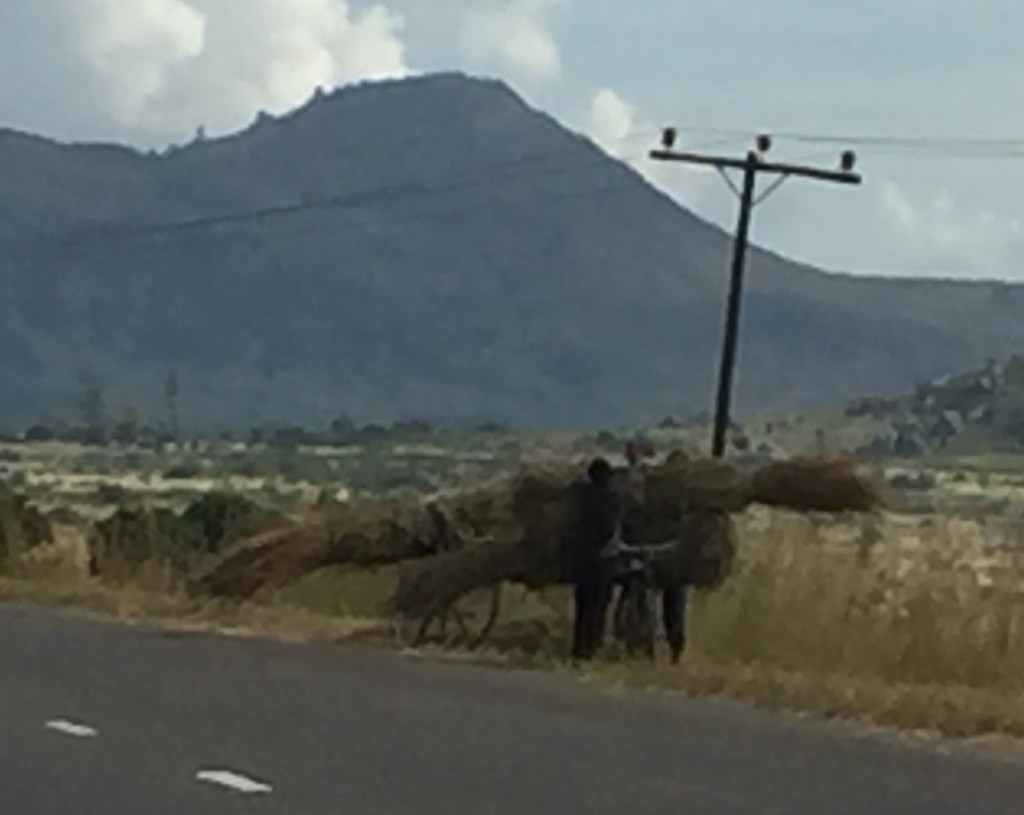
The change is clearly apparent once you cross over the Malawi border. Cars and motorcycles all but disappear, replaced by bicycles carrying everything from maize meal to the entire annual harvest. It is utterly absurd what people decide they can fit on the back of two wheels. My personal favorites…

  1. Twelve canisters of petrol.
  2. A mine cart worth of coal.
  3. 2m long sticks of sugar cane.
  4. A cluster of palm trees.
  5. A front door.
  6. Enough grass to thatch a house.
  7. Human cargo (as in pedal-powered taxis).
A casual ride with three bags of coal.
Carting off enough grass to thatch a house.
A handful of plantain trees.

After a night hanging out with the locals in Lilongwe we headed through to Monkey Bay. Our first stop was Mufasa’s Eco Lodge where we said goodbye to our new friend, Asahi. He had organised a one month job at the lodge before continuing with his travels. We’ve come to learn that the term “Eco Lodge” in Africa often acts as a disclaimer that loosely translates to: We don’t adhere to proper building standards, we don’t have electricity and you can expect to poop in a hole in the ground. This is all sold under the guise of “caring for the environment”. Mufasa’s was true to this stereotype with architecture that reminded me of the kind of structures I built in beach sand as a six year old.

We were famished when we arrived and asked at the restaurant about quick lunch options. The chef eagerly informed us that if we ordered immediately he could put something together for us in under two hours. After about a minute of awkward silence Shea and I recovered from shock and rephrased the question to “what can you make in under 30 minutes”. Mr Chef had a think and proudly announced “Toast!”.

Shea confirming the size of the clothes we were donated for distribution enroute.
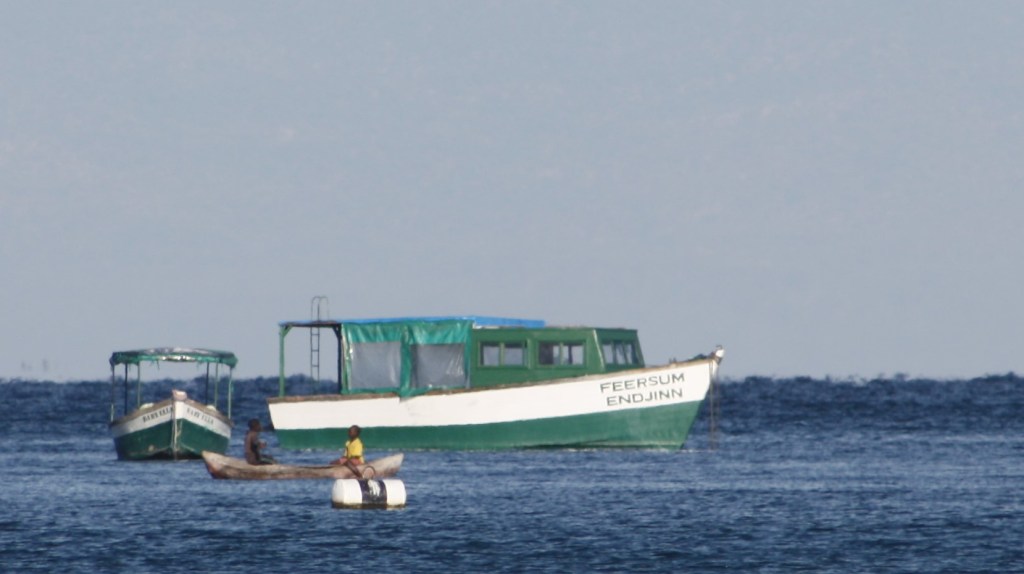
The “Feersum Endjinn” fishing boat parked outside Mgoza Lodge.

Base camp for our time in Monkey Bay was a spot called Mgoza Lodge. It turned out to be the perfect compromise between luxury and price with a pool and a great little restaurant specializing in goat burgers and freshly squeezed passion fruit juice. We bumped into some old friends, Paul and Josie, and joined them for dinner at a restaurant owned by “Snoop Dogg”. The food took ages (to be expected when you are using that many herbs in the kitchen) but it turned out to be worth the wait. Dinner was followed by a drum circle around the beach fire, a great way to settle the stomach. The rest of our stay at Mgoza was a combination of boat trips, fish eagle feeding, kayak paddling and swimming punctuated by beer, wine and gin and tonic. The tonic proved particularly difficult to source with Shea placing an order for said beverage at 11am on one day only to receive the beverage in question at 4:30pm due to a chronic tonic water shortage in the area. Contrary to popular belief drinking water is still an issue in Malawi, especially if your drink is gin and tonic.

Paul and Shea about to devour a passion fruit and vodka “health drink”.
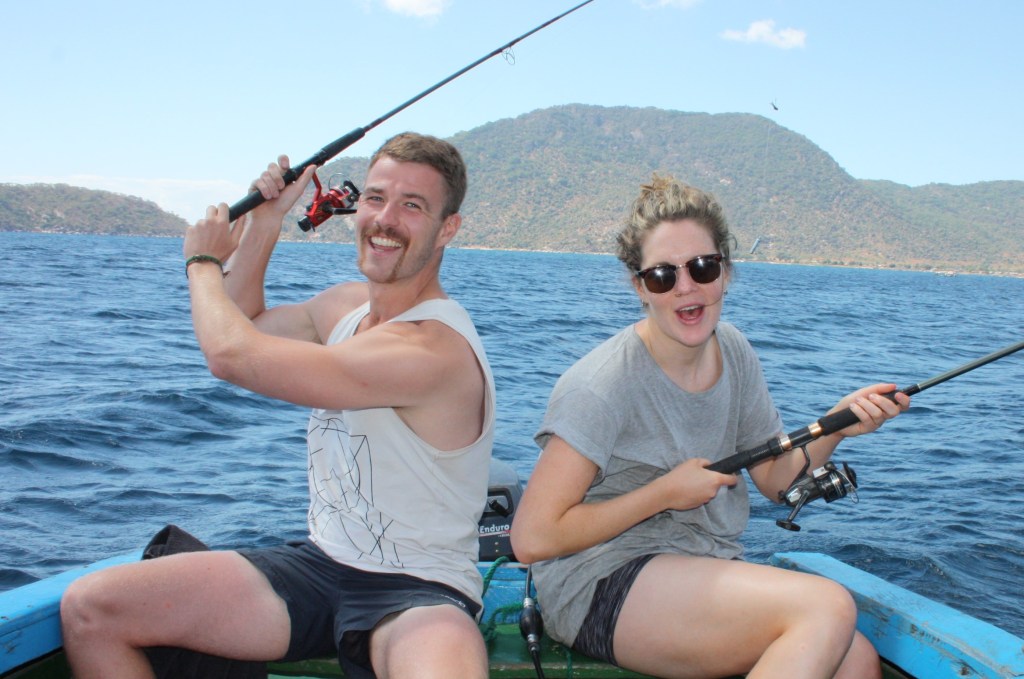
High performance fishing with Paul and Josie.
The evening view from Mgoza Lodge. In the mornings it is chaos with all the locals washing their clothes, crockery and themselves. By sunset there was only one left.

Croc Bashing

We headed next to the Lower Zambezi to connect with an old family friend at Kiambi Safaris Lodge. Across the river from the famous Mana Pools, the area is renowned for its untouched natural beauty. The resort turned out to be a great spot to kick back and relax for a few days.

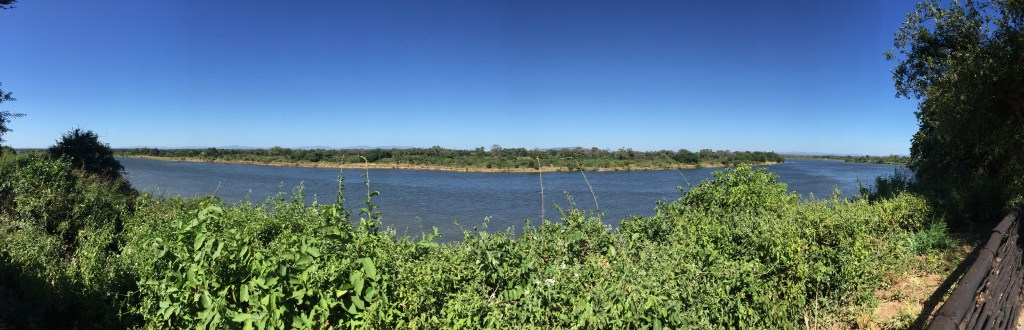
View from the bar.
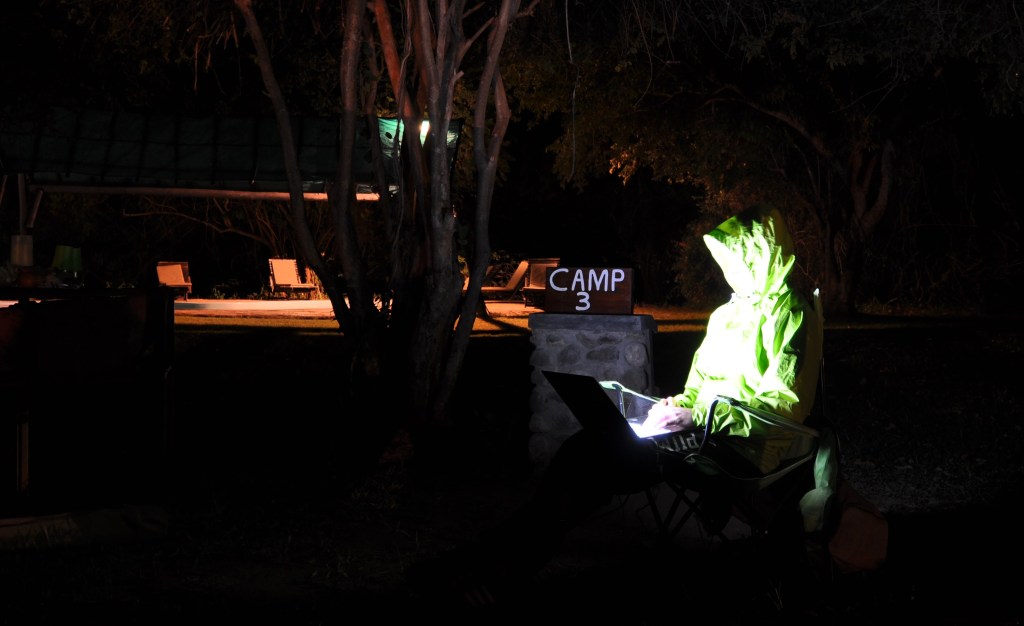
Doing some keyboard yoga at Campsite #3.

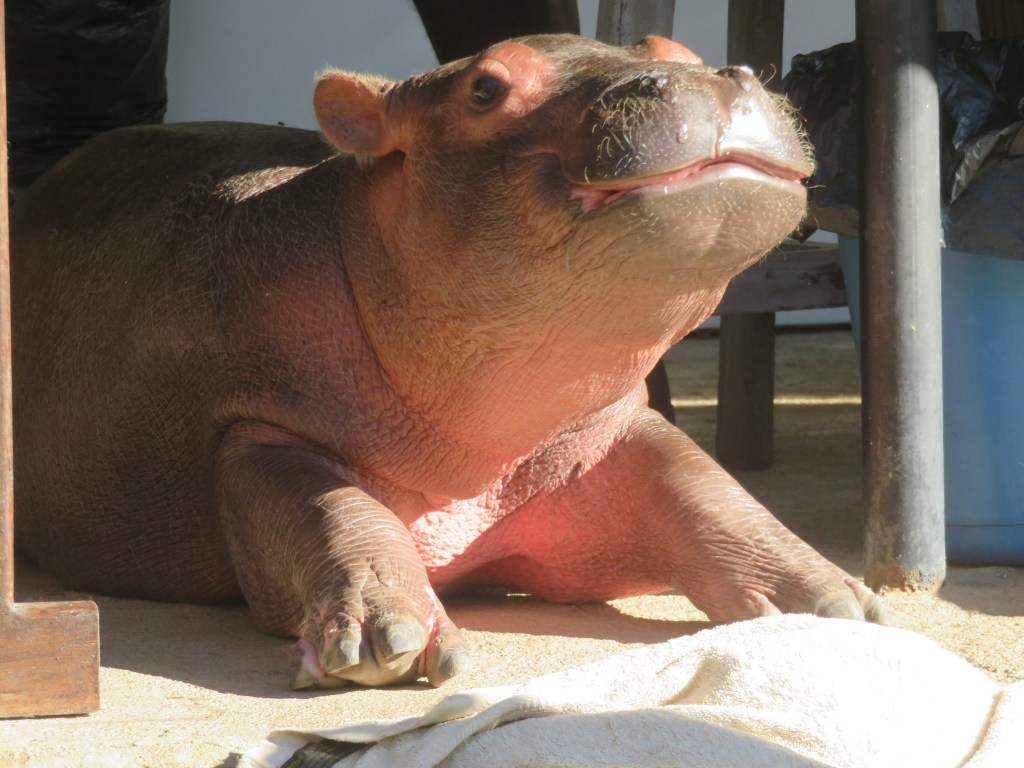
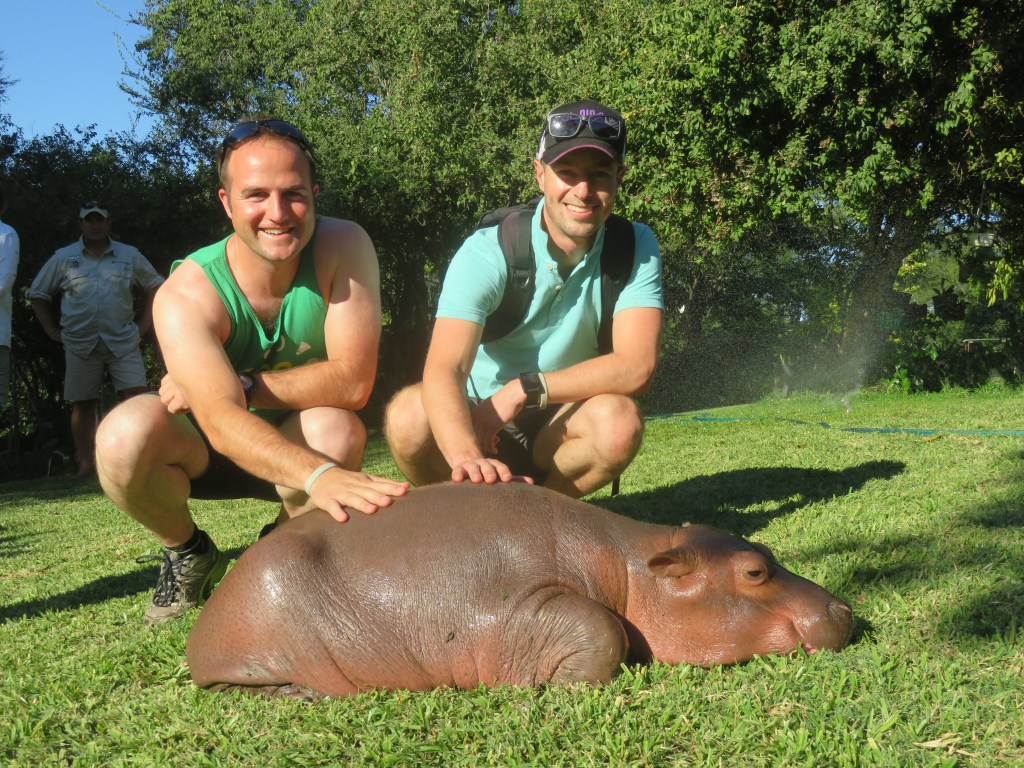
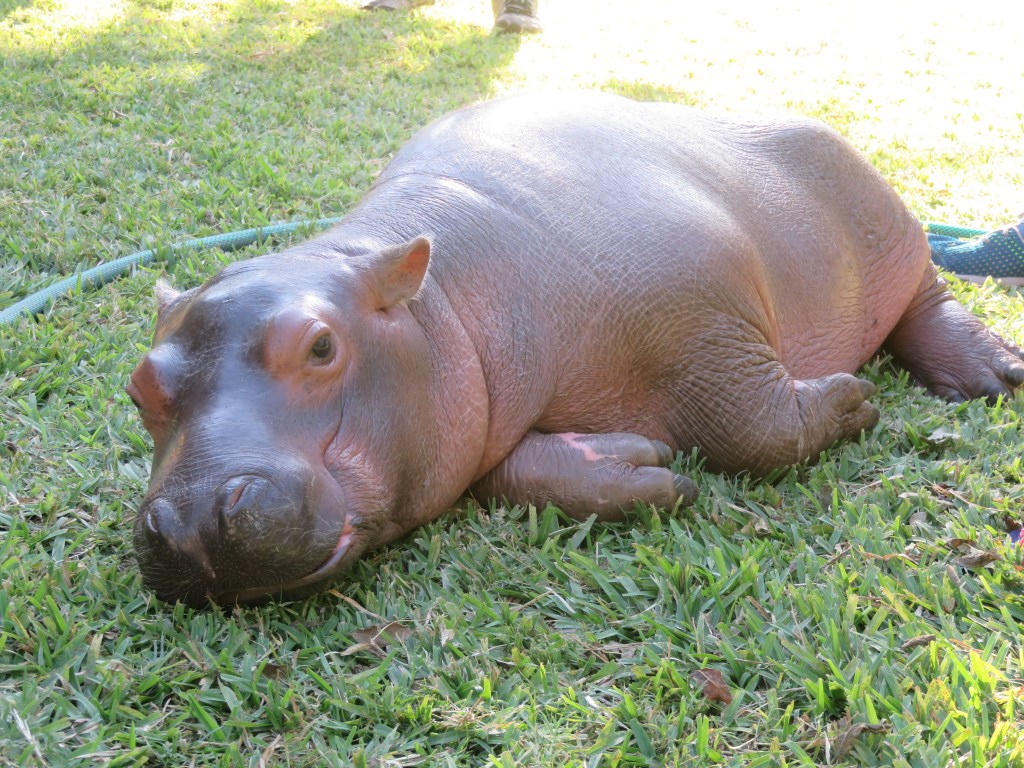
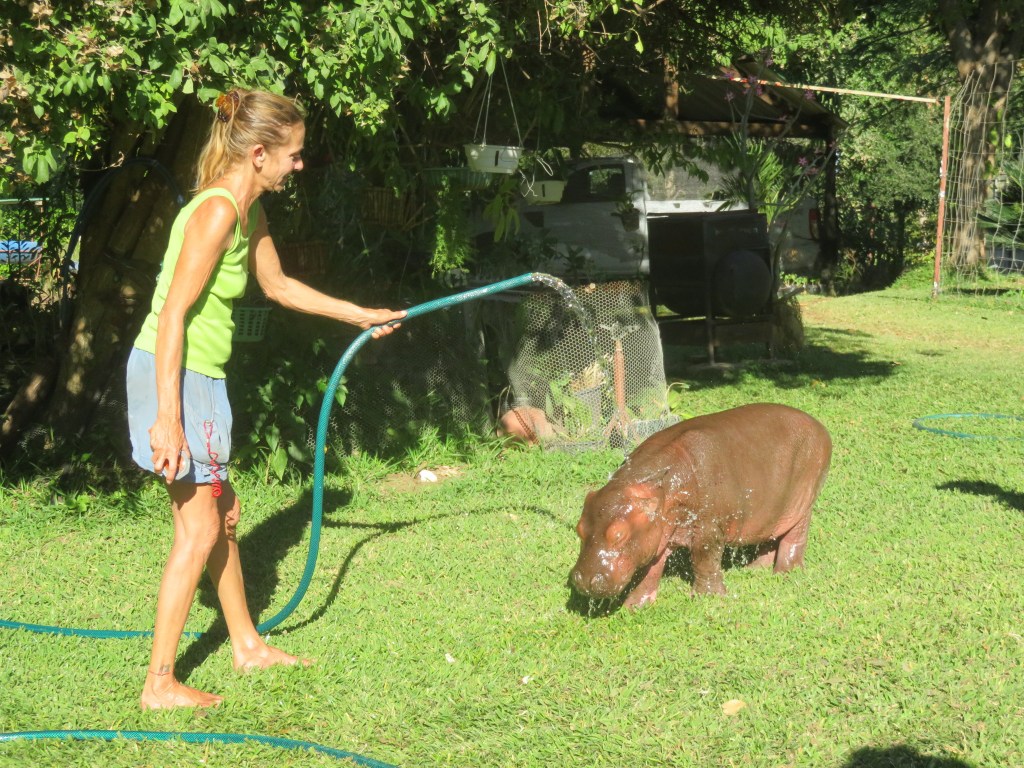
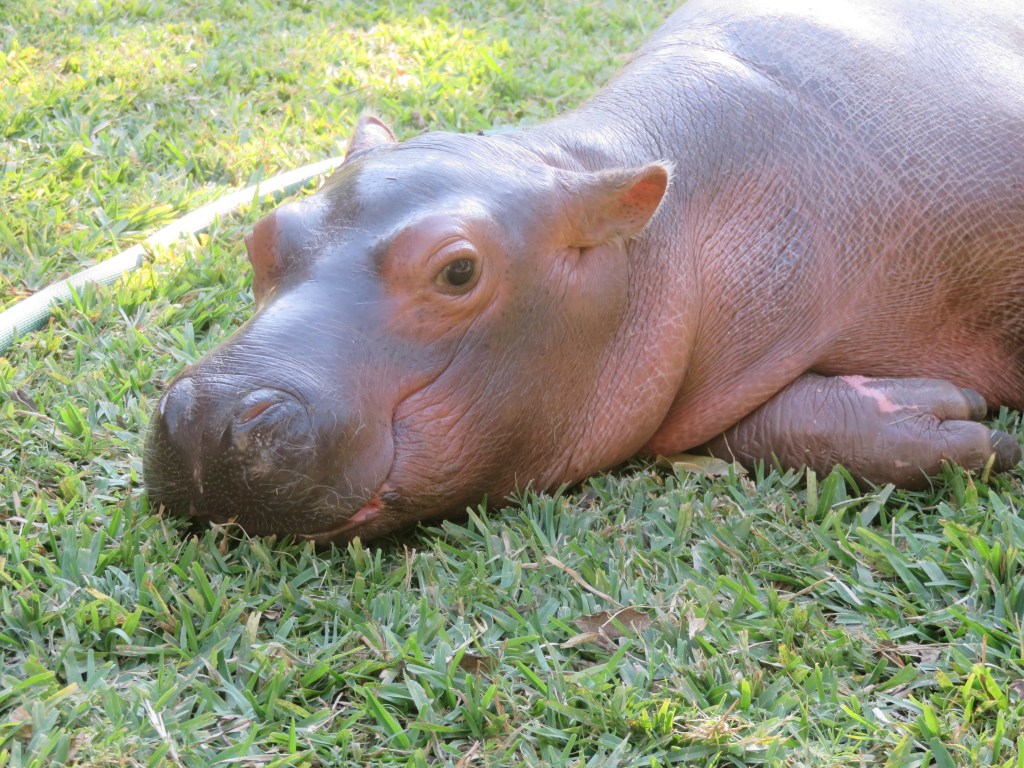
Our adventures at Kiambi included a boat trip up-river to visit a baby hippo which the staff had rescued a few weeks earlier. The little guy was found tumbling down the river in the current, umbilical cord still attached. One of the cutest things you will ever see. Difficult to believe they kill nearly 3,000 people per year [1].

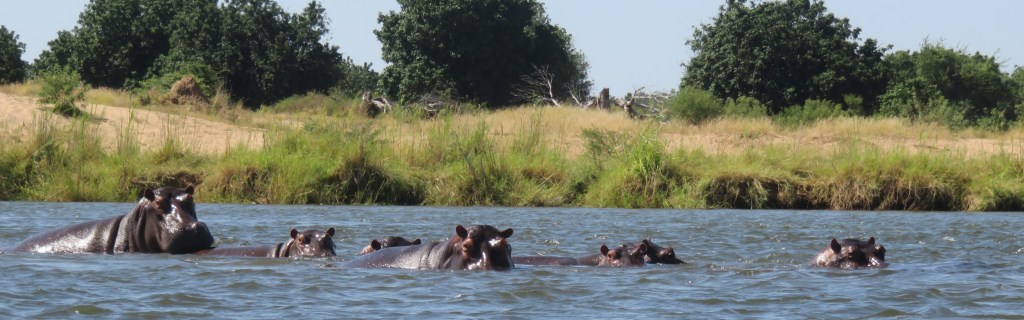
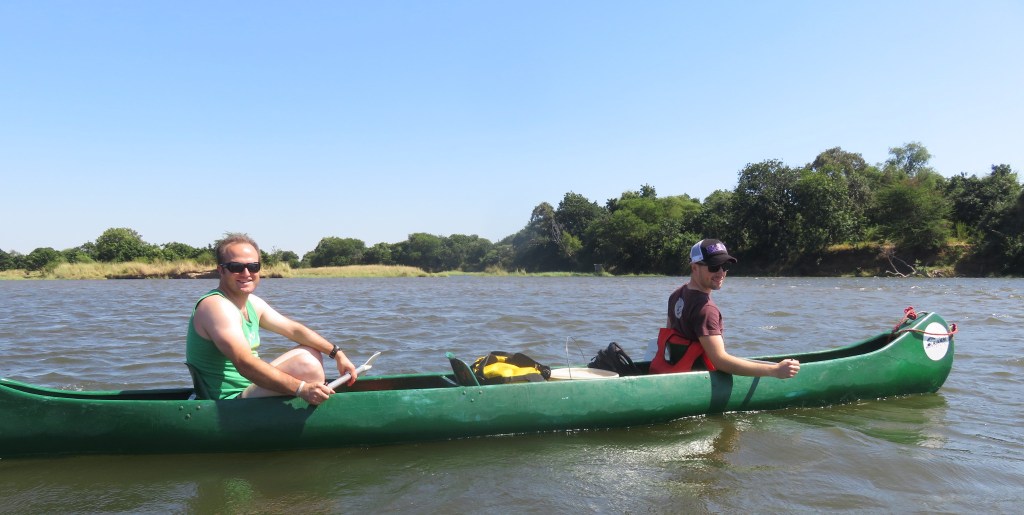
The last two days at Kiambi were spent on a two day canoe trip. At first a bit skeptical about our paddling fitness, Shea and I were relieved to discover that the entire trip was downstream with a boat tow back to the lodge at the end. In spite of Shea’s questionable navigation skills (he steered us directly into a croc at one stage) we completed day one and two unscathed. The night was spent on a sand bank accompanied by a hippo concerto and more stars than you have seen in your life.

Future customer of the Shea Stimac dinner delivery service.
A few of the mobile river obstacles eyeing us out.
The “Croc Bashers” aboard their noble stead.
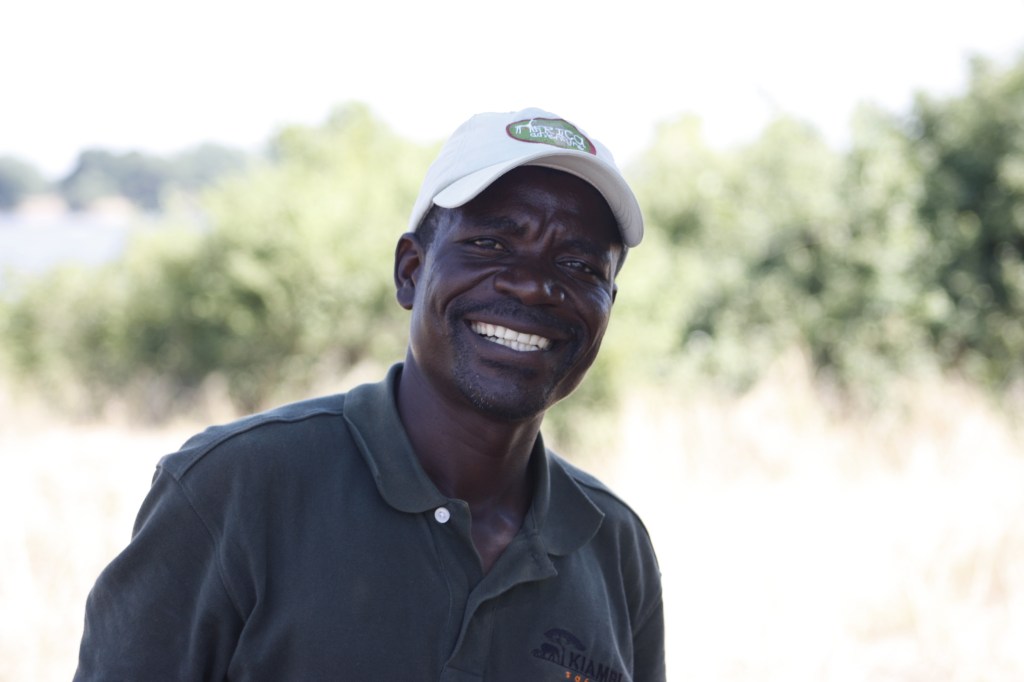
Mr. Colins: Safari guide, canoe paddle coach and expert fisherman.
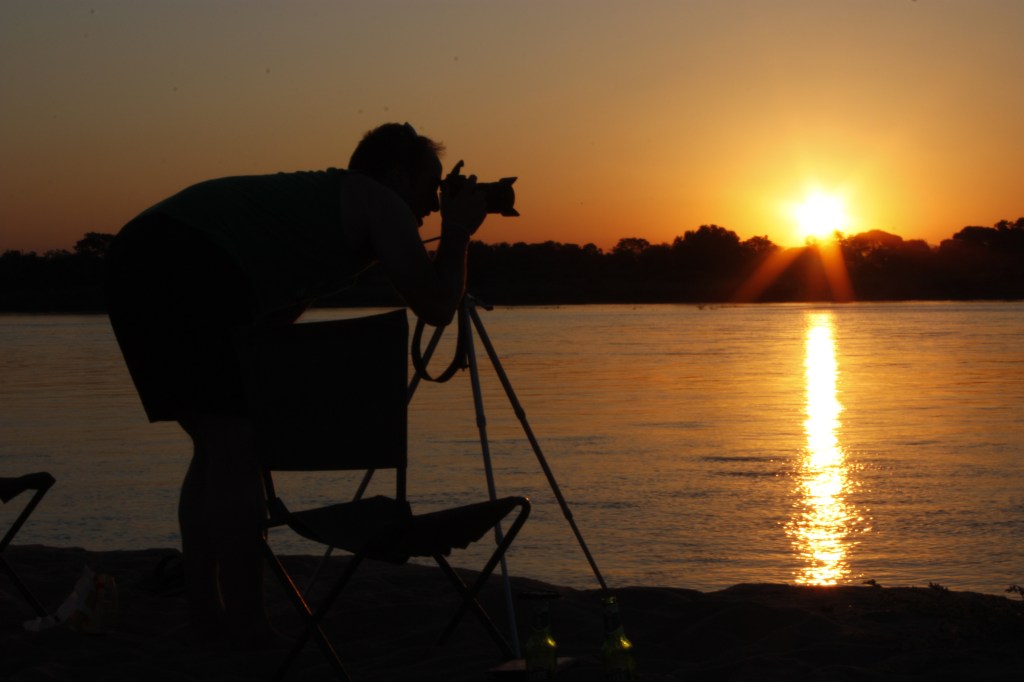
Shea “Wide-Angle Lens” Stimac hard at work with his tool of choice.
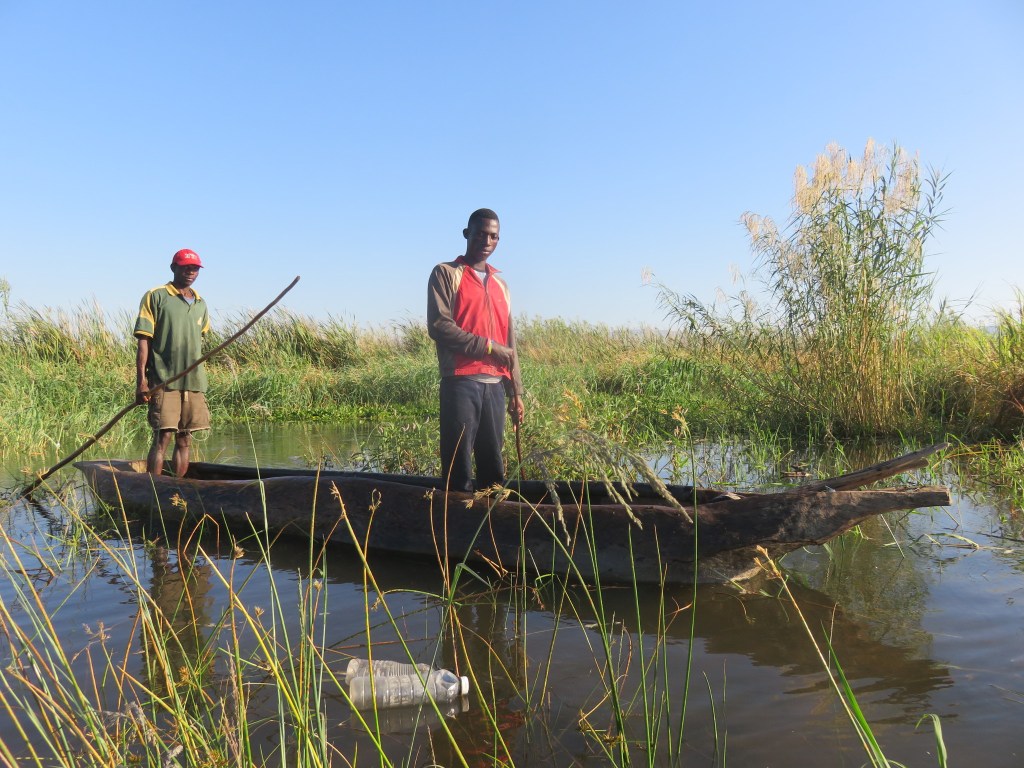
The locals catching some dinner.
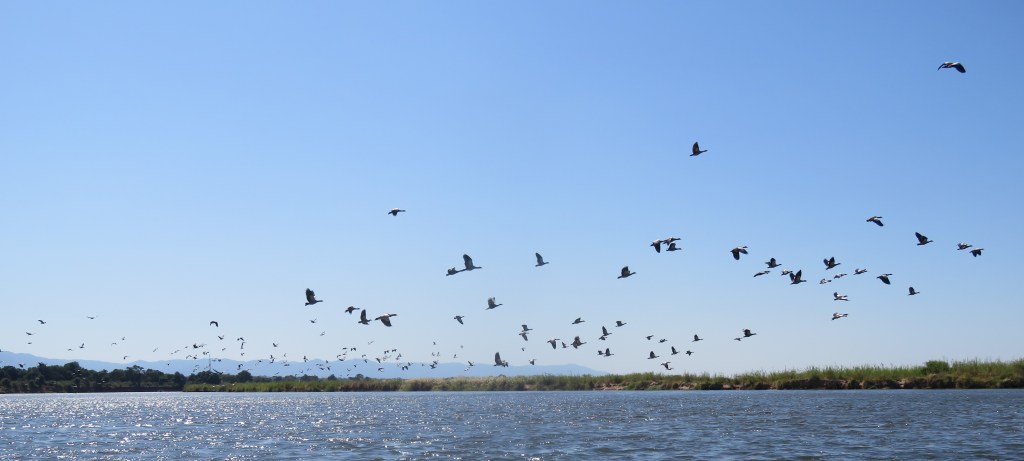
The cast of Fly Away Home.

Cursing in the Big City

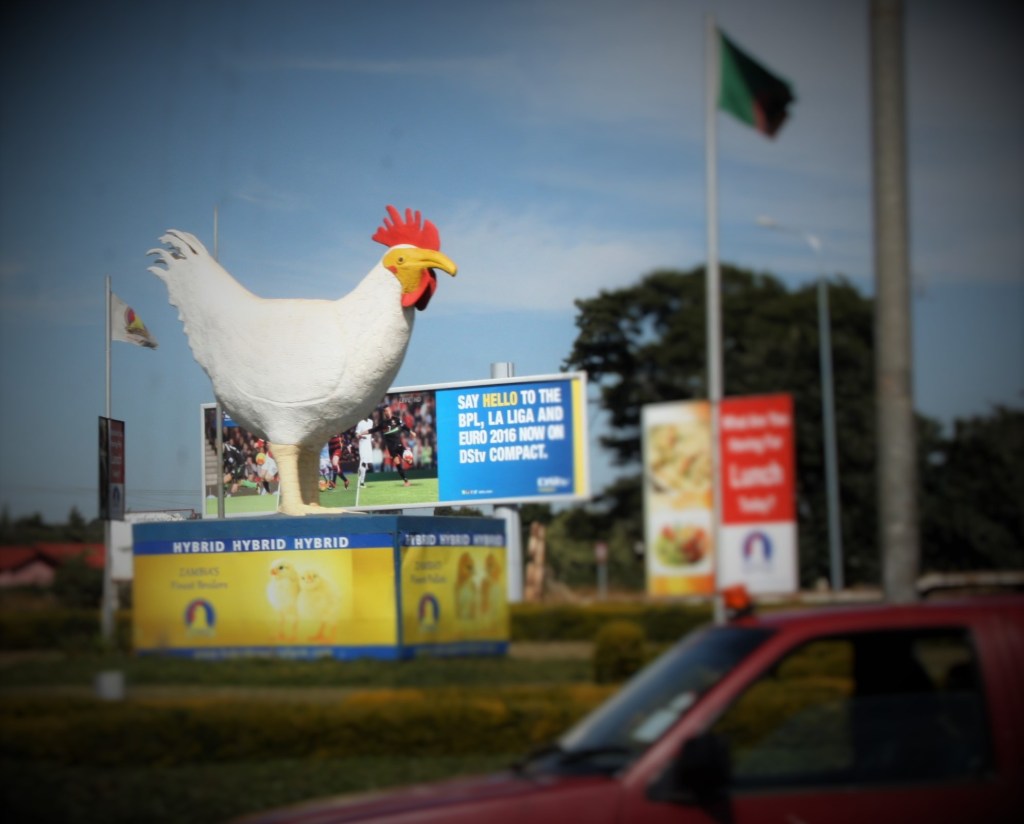
The first thing any local will mention if you bring up Lusaka is the traffic. Despite what they say, we managed to get across Lusaka during rush hour, from Cosmopolitan Mall to Big Chicken Roundabout, in a mere 30 minutes. Not half bad.

Big Chicken Roundabout, the Arc de Triomphe of Lusaka.

Our first day in Lusaka took a toll on Bubbles who suffered from a snapped fan-belt. We managed to find a rally car mechanic at the campsite, Ngunjiri John, who was on his way down from Kenya to a rally in SA. With his help I was able to decrypt the tensioner mechanism and finish the replacement job. Ngunjiri John turned out to be the most awesome of guys, and the youngest looking 50 year old we’ve ever seen. He joined us for a celebratory dinner and accepted his payment in food, although ate next to nothing. Is eating less than Shea and I the secret to looking young? I don’t mention Asahi because it’s not a fair comparison. He has the appetite and metabolism of a Hungarian Mountain Pony.

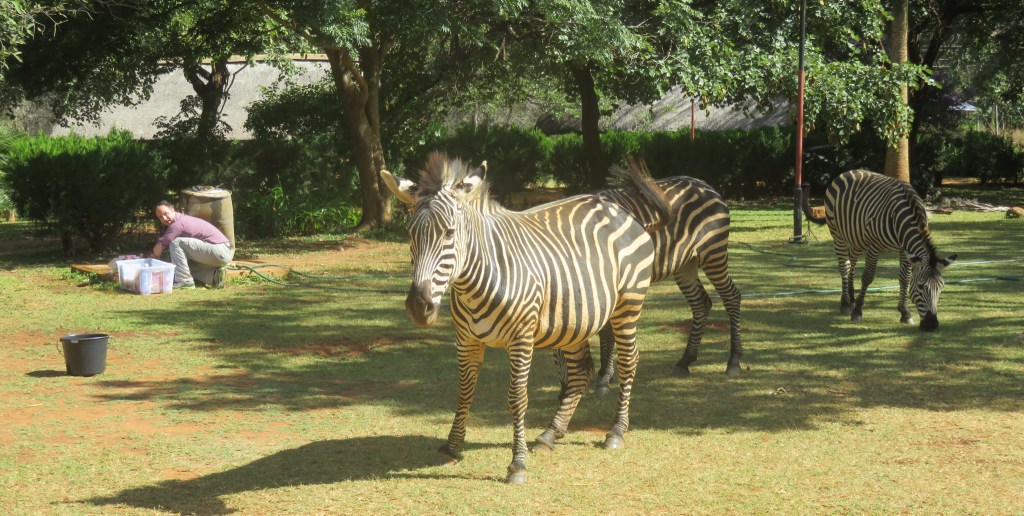
The local wildlife paying us a visit at Eureka Campsite in Lusaka.

In addition to new friends, we also made our first enemy of the trip. As a “permanent resident” of the campsite, the individual in question took offense to Shea’s vocal complaints about his ice-cold shower. I tried at one point to determine the guy’s occupation. Apparently he works for the Zambian Department of Trade and Agriculture and is simultaneously the primary attaché for a wealthy Zambian tribal chief. This coming from a guy living in a camping tent. Hmmm…

Our stay in Lusaka was primarily geared at getting the reserve tank issue fixed. This quest lead us to a workshop in the industrial area of Lusaka named Tork Tek where we met Cursing Cobus who was “the best auto electrician in Lusaka” and “a better auto electrician than we could ever hope to be” according to his wife Sandy (a.k.a. Hypochondria). This nickname makes sense if you consider some of the conversation that happened while Cobus’s team did their initial inspection of the problem.

Ross and Shea: “We’re thinking of popping into the city market while the car is being worked on. What is the easiest way to get there?”

Hypochondria: “Don’t go into the market, the people there have AK-47s. They will kidnap you and steal your organs.”

Ross and Shea: “Can you recommend a good place for lunch.”

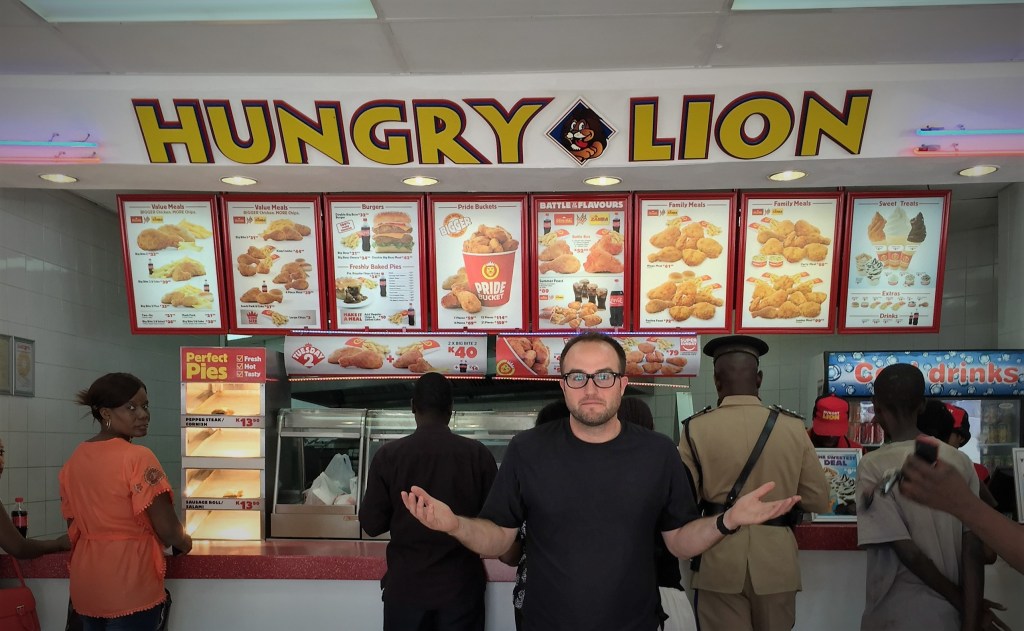
Hypochondria: “Hungry Lion. Don’t eat anything from the locals.”

Note: Shea and I do not always speak in unison like a K-pop boy band, I just can’t remember who actually asked which question.

Hungry Lion. Hypochondria’s recommended lunch spot. We decided to keep looking…

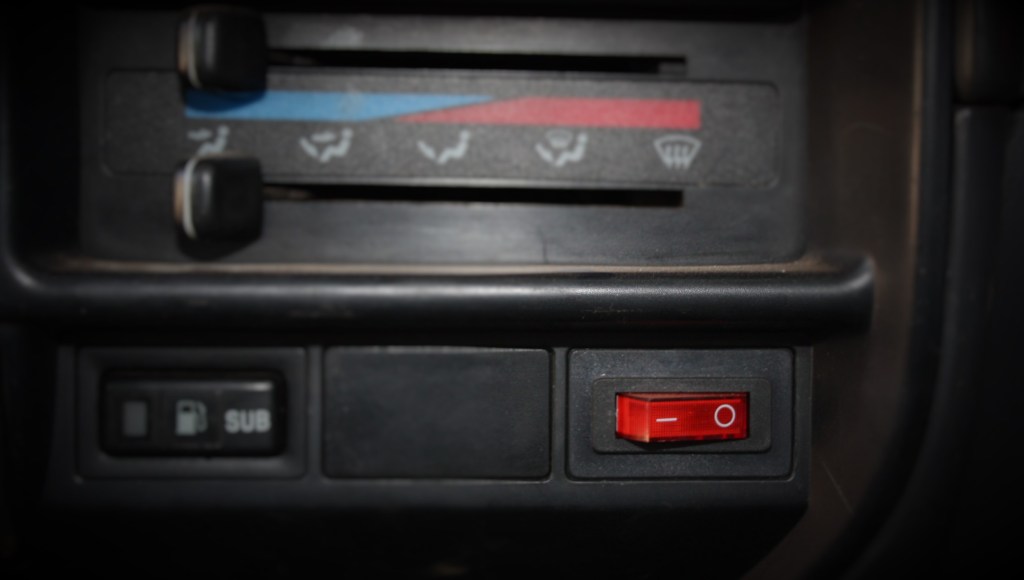
Aside from his selective vocabulary and eternally pessimistic nature, Cursing Cobus and his team turned out to be incredibly good auto electricians, maybe even the best in Lusaka. They organized an “Africa fix” for our fuel tank issue taking the replacement cost from R 10,000 to R 100 and lead time from one month to two hours.

Our new reserve tank switch. One step closer to the fighter pilot cockpit look we’ve always dreamed of for Bubbles.

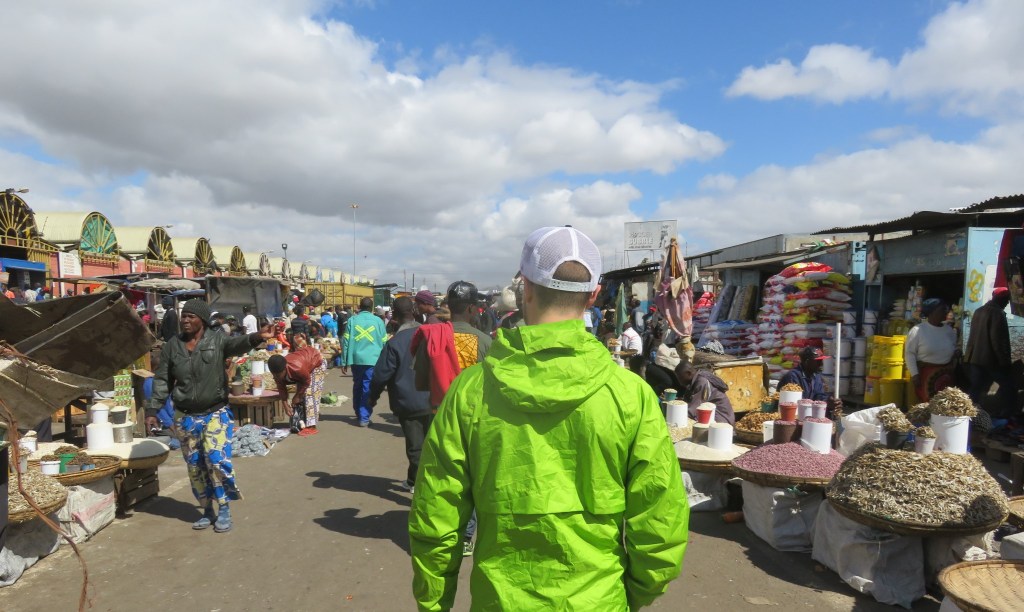
Despite the risk of organ loss we did visit the local market and it was great. The place is alive with people selling everything from repurposed laptops to school uniforms. There are transporters running around with modified wheelbarrows at high speed through spaces you can hardly walk. You can buy everything from freshly cooked dough balls (a kind of fried bread-roll) to raw eel meat. Overall, some very interesting businesses and business models.

Fried dough balls. A great snack when your intestine needs some lubrication.
The vibrant chaos of Lusaka Market.

Asahi

It’s day 16 of the trip and we have our inaugural first guest traveler that has joined the team. His name is Asahi, he’s Australian and likes long walks on the beach and flower arranging. He is named after a Japanese beer. Is the universe trying to tell us something?

Asahi, our new Australian comrade.

Earning Your Ferry Wings

A guide to crossing into Zambia at the Kazungula border crossing.

Rule #1: You are not a truck driver. Do not join the truck queue!
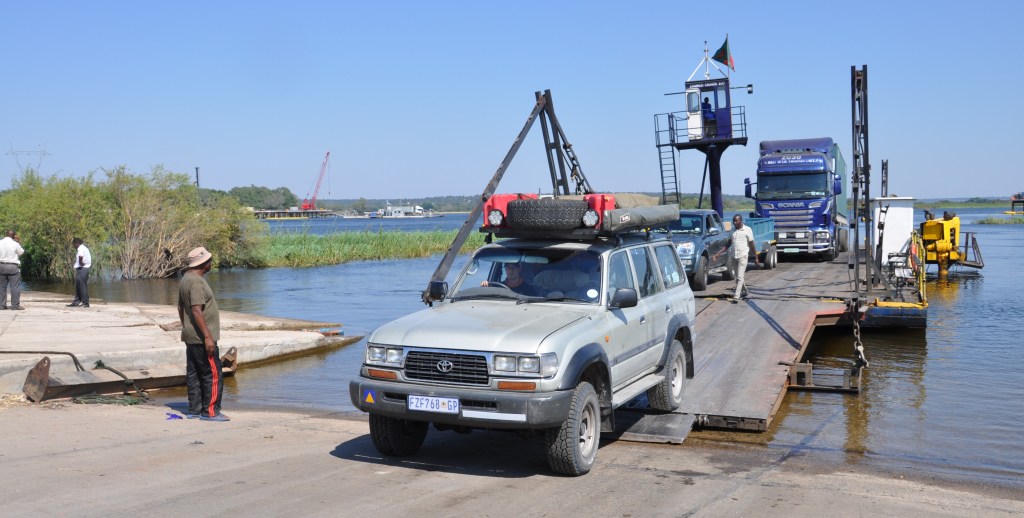
This beastly queue extends for kilometers. The ferry’s can only manage one truck at a time and preference is given to passenger vehicles. A truck driver can easily sit over a week in the queue waiting to cross. The locals have claimed ownership over the communal water tap and will sell you government water by the glass.

Rule #2: In the event of a sudden loss of buoyancy, swim down.
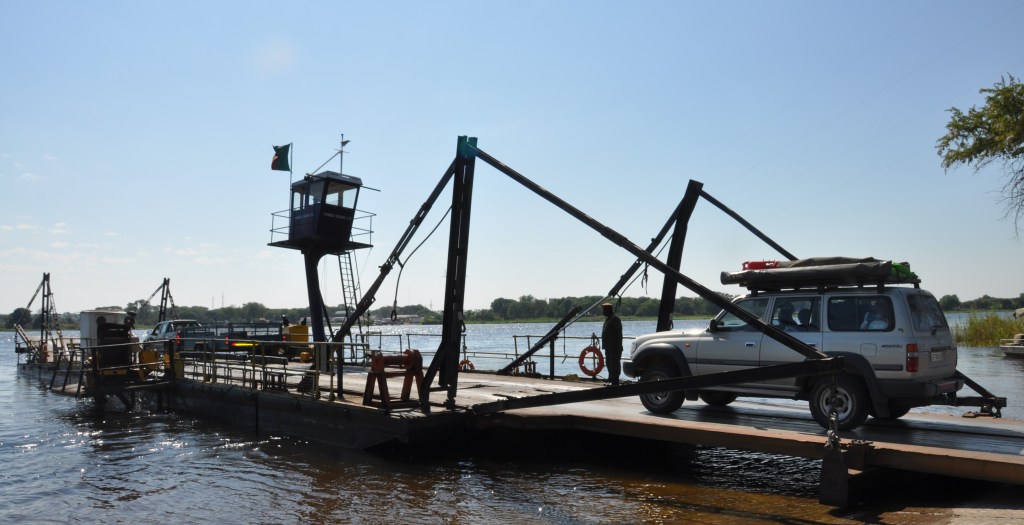
The Kazungula Ferries themselves are not SABS* approved and a couple have sunk in the past. Many of the locals are unable to swim making the death toll for a sinking vessel deplorably high. In the event of a catastrophe, swim down first and away from the non-swimmers who would drag you under.

Rule #3: Be bad at making friends.
You will be overwhelmed with scamsters trying to “assist” you with the border crossing process and drunkards offering to protect your car. In general, a healthy degree of disengagement from the individual you are dealing with is a good sign that you are in the right place, dealing with a legitimate border official.

Rule #4: Wear your fitbit (you’ll be doing some walking).
There are a total of four different vehicle related fees you need to pay at the border. Each of these payments are facilitated by a different person, sitting at the end of a different queue, in a different building / shipping container. A great example of government leading in job creation.

Rule #5: Cover your ass-ets.
It is compulsory to purchase third party insurance in Zambia. We insured at the border with General Alliance Insurance Limited. They have no contact number for claims. They don’t even have a pretend one. As futile an exercise as this may seem it is well worth doing. There is a permanent police roadbock 2km down the road from the border and they will fine you heavily if you do not have a piece of paper bearing the words “Third Party Insurance”.

Rule #6: Grab a Mielie.
There are local gogos** walking around selling boiled mielies for 5 kwacha a pop. They are delicious and make for a great snack food while you wait in the queues.

Rule #7: Keep the right change.
There are more money changers at the border than you can count and some with questionable ethics. If you want piece of mind find a place with a permanent shelter and the exchange rate written down on a board. You need a combination of USD and Zambian Kwacha for the border fees.

*SABS: The South African Bureau of Standards
**Gogo: The zulu word for granny.

Boarding the vessel at Kazungula border crossing.
A perfect dismount for Bubbles. 10/10.

Crossing Waters

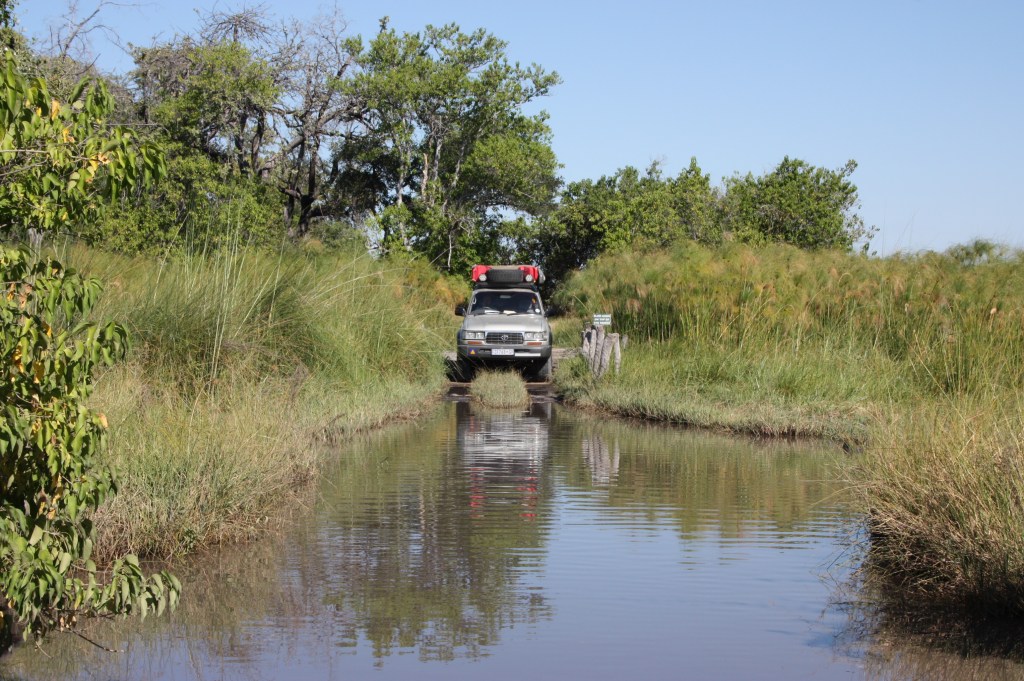
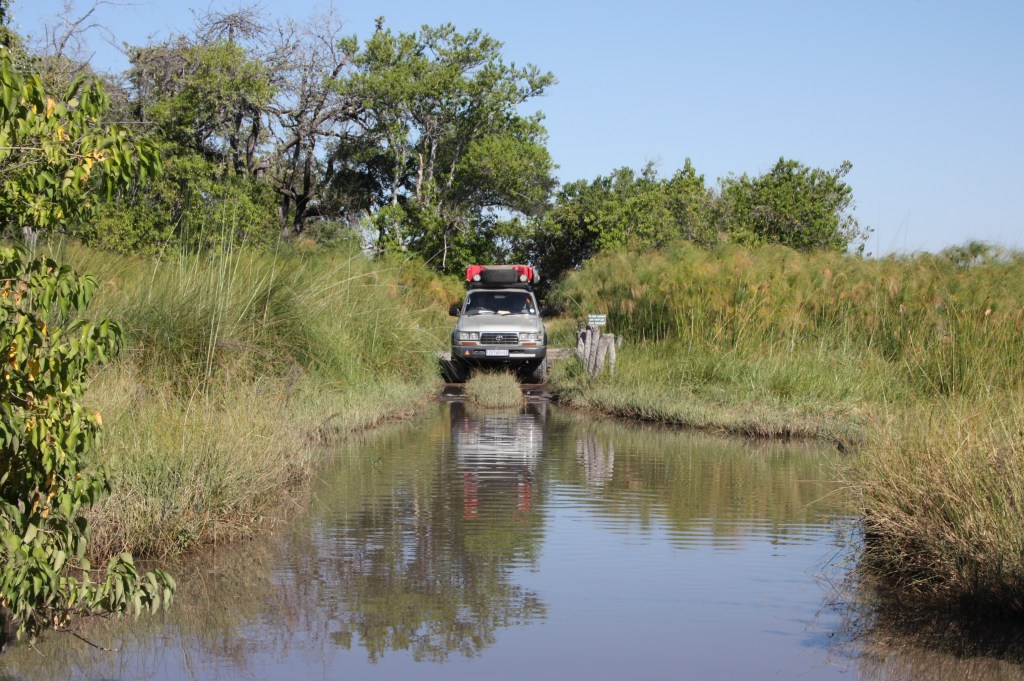
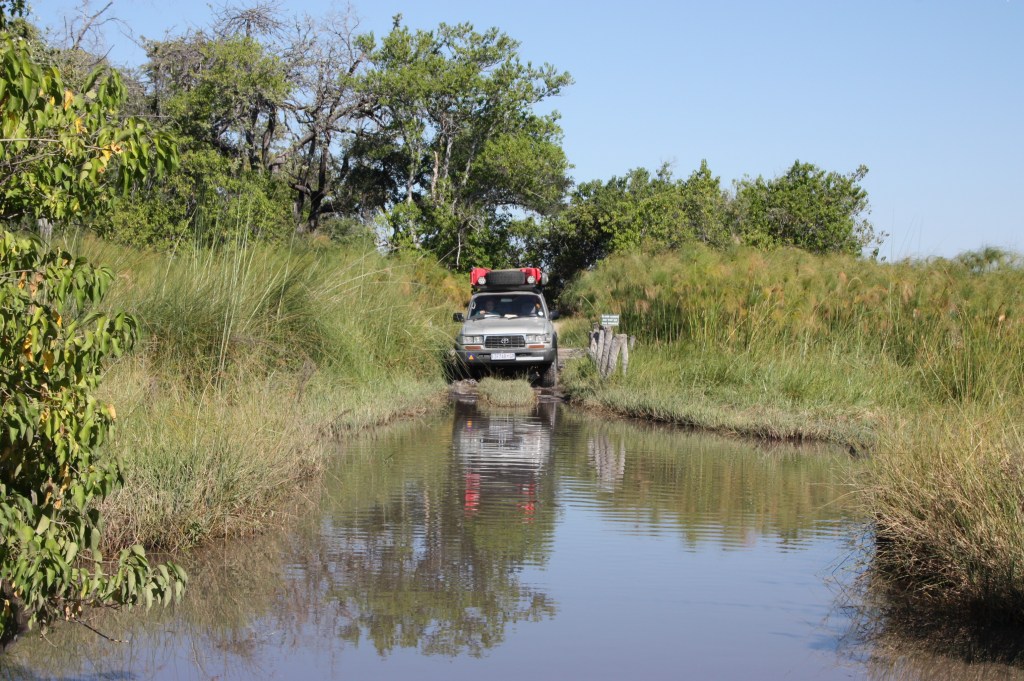
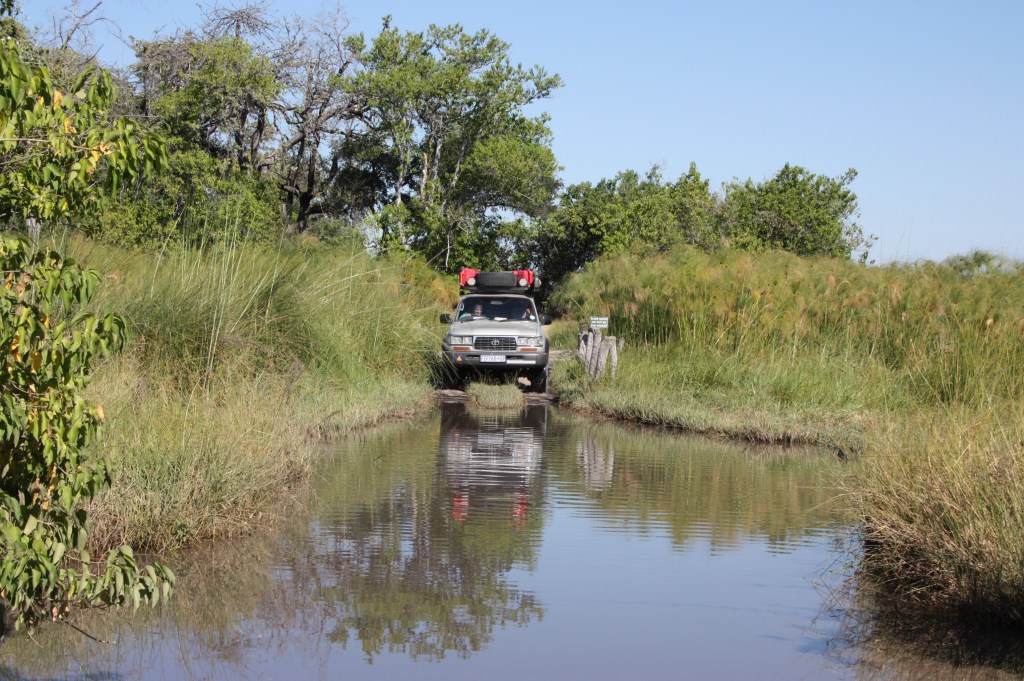
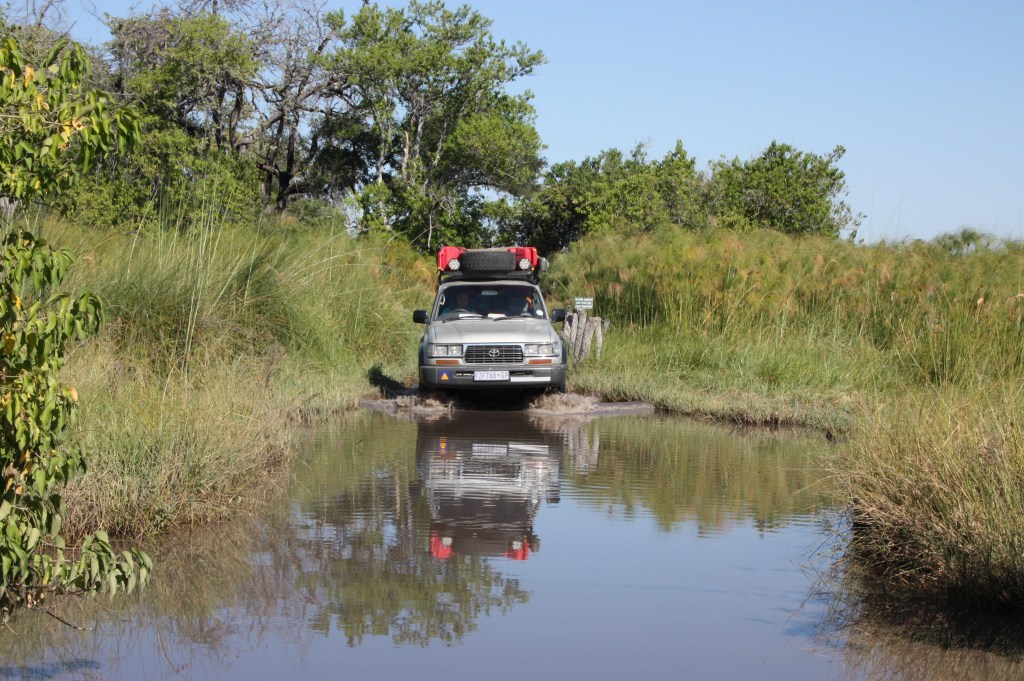
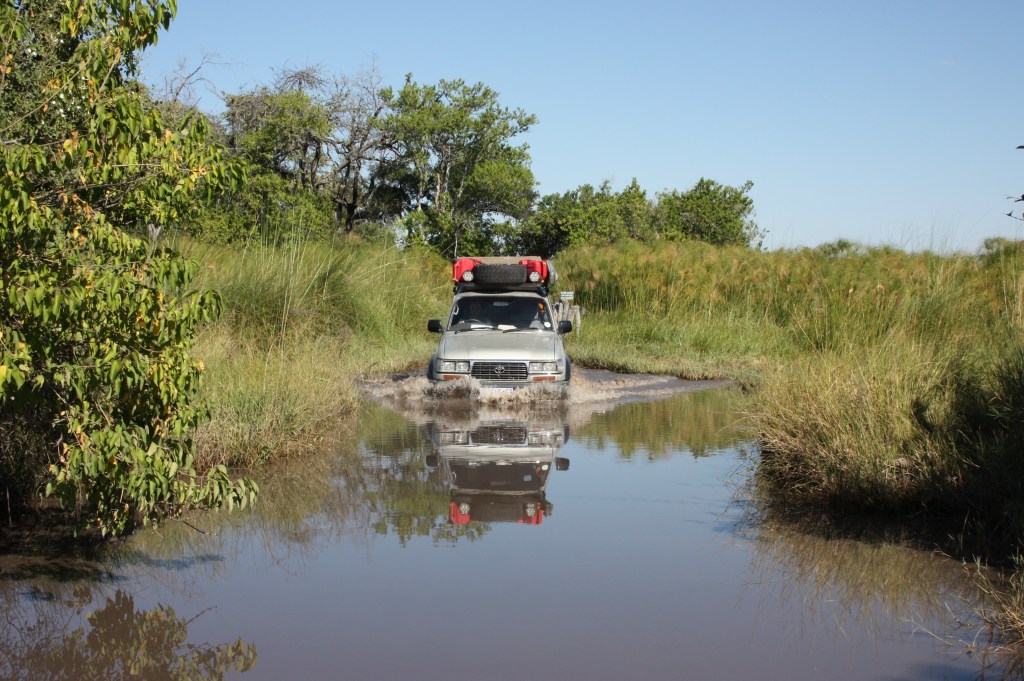
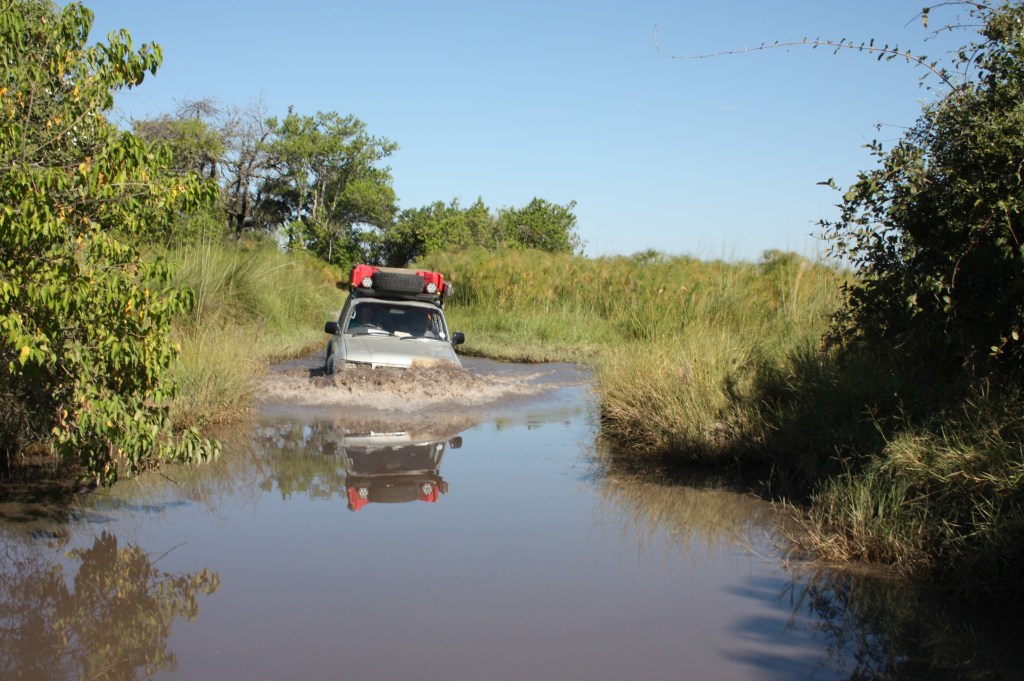
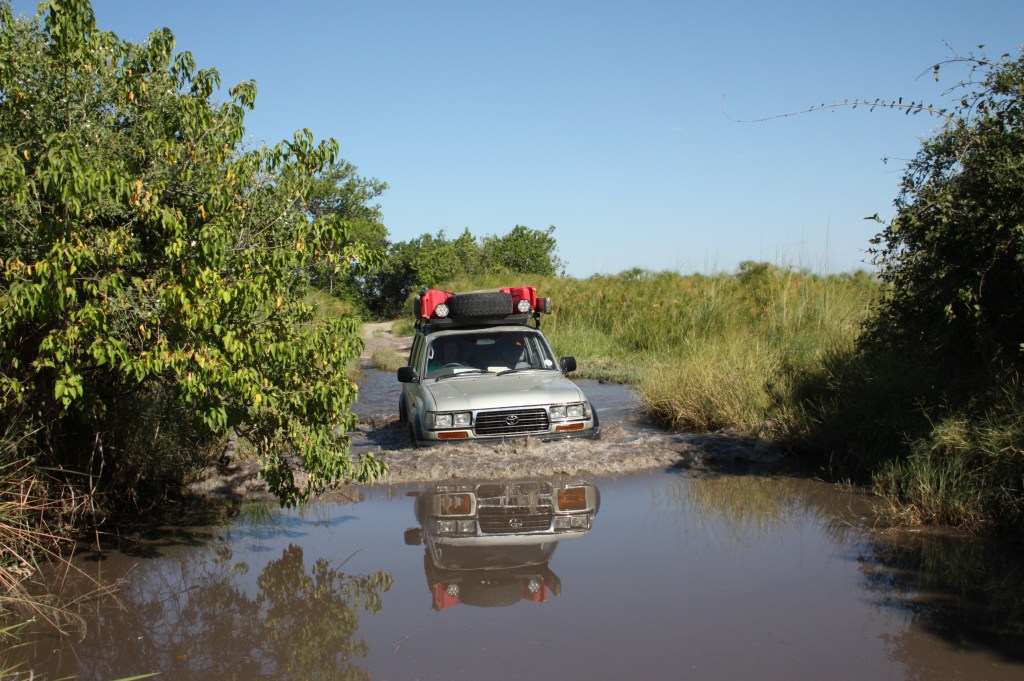
Our lion ordeal spurred on our drive to spot a big cat. From that point forward every impala, wildebeest and zebra was nothing more than future cat food with Shea and I fantasizing about lion attacks unfolding before our eyes. We headed west into the heart of the Moremi Wildlife Reserve to a spot known as Third Bridge (Botswanans are very good at counting). We’d been told there were a pride of lions in the area and were lusting for a big cat sighting. It turns out the “Bridge” part of Third Bridge is a bit of an embellishment. Getting into the camp requires either a vehicle with a snorkel or an extra high clearance Land Cruiser with a lunatic American at the wheel.

Our trip to Third Bridge was the closest we’ve come to rally driving with more sand-track than we could have imagined, but still not a single lion spotting. It was time to head back to Maun for a breather and a shower. We’d lost the element of surprise. The lions could smell us coming.

Considering the strength of our man-musk by the time we got back to Maun, it is probably no wonder that we could not escape detection by Lion nostrils.

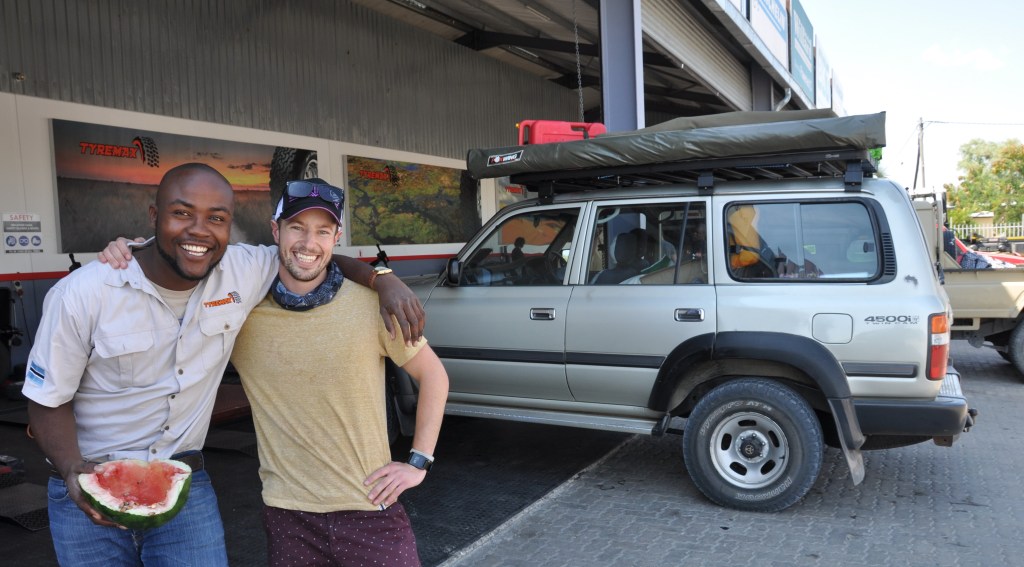
Bubbles was in need of a bit of TLC* by the time we got back to civilization. We had blown a couple fuses, a spark plug cable had come loose under the bonnet, one of the engine hoses was looking dicey and the exhaust needed a bit of a weld. Luckily we found a great bunch of mechanics at Fika Trading Automotive Mechanics that sorted us out. We also acquired a rim for our rooftop spare tyre from the guys at TyreMax.

The guys at Fika Trading receiving a few thank-you T-shirts.
Chilling with the crew at TyreMax.

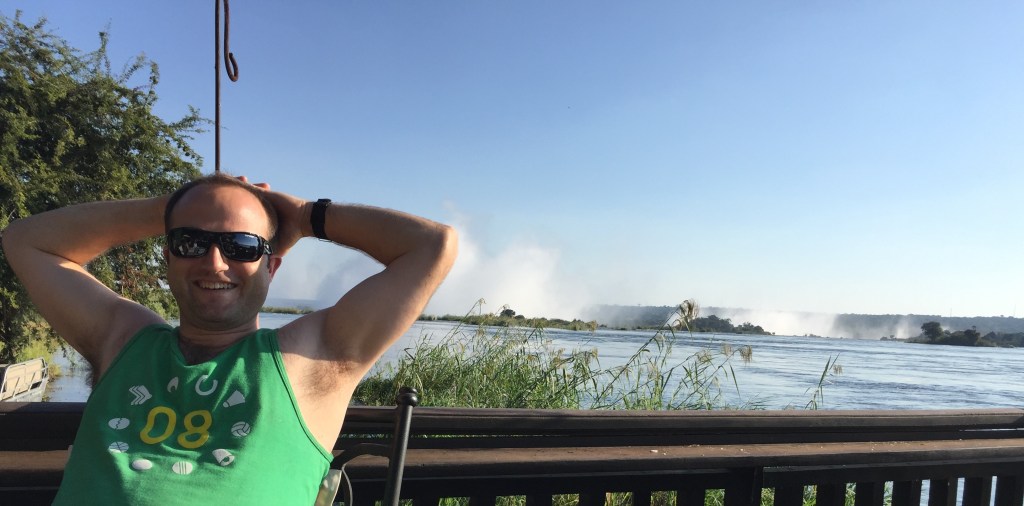
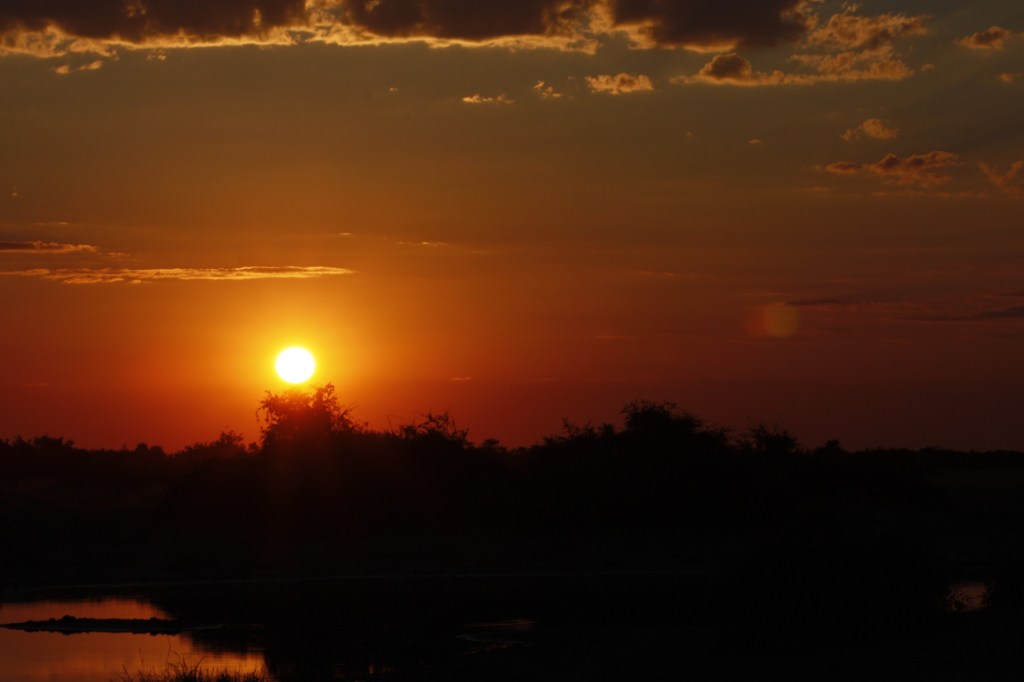
The next stop was Savuti campsite where we befriended a pair of Doctors (Paul and Beck) from Germany and Netherlands, respectively. They joined us for a late evening game drive where we tested the spotlights, the most epic thing short of the apocalypse. Still no cats but two hyena sightings and a puff-adder. It was on this trip to Savuti that the issues with Bubbles’ wiring started. By the time we got to Chobe Safari Lodge we had lost our fuel gauge, the radio and the ability to engage the reserve fuel tank. We tried to patch the issue with a bush mechanic in Kasane but only managed to conclude that diagnosing the cause of the problem was going to be a much bigger job. We’d been told Jolly Boys Backpackers, in Livingstone, was an oasis of sorts so we decided to push through into Zambia in search of a proper mechanic that could help us out.

Sunset at Savuti.
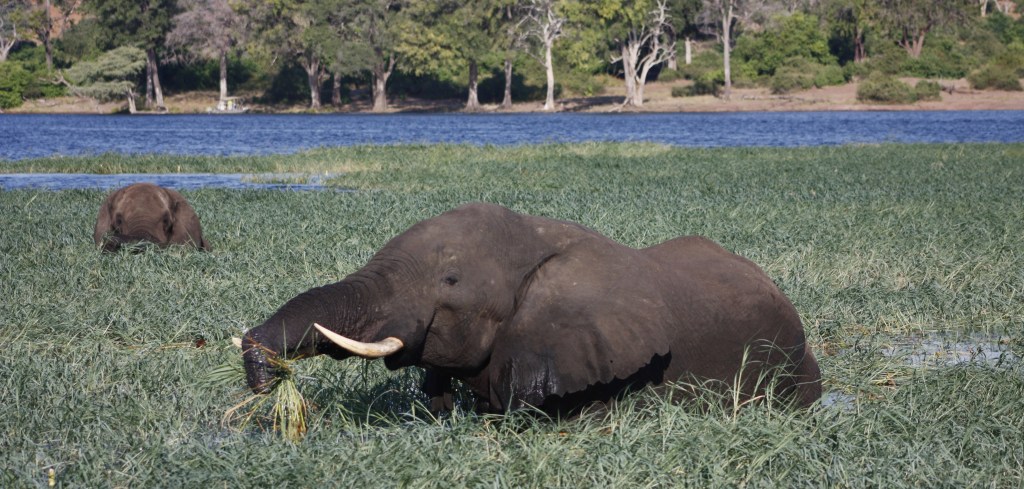
Some of the many elephant’s at Chobe Safari Lodge. Didn’t their mother’s teach them not to swim straight after a meal?

*TLC: Tender Love and Care