It’s hard to believe I said goodbye to Ross and Bubbles 10 days ago. Without either of us being too sentimental, we shared what an epic ride it had been. This had always been Ross’s trip, I was simply fortunate to have been made redundant at just the right time in order to join. Given that we hadn’t spent that much time together before departure, we both considered it remarkably lucky to have been most excellent travel partners for this adventure. With a flight and a post Cairo travel itinerary that couldn’t be delayed, I said goodbye to Ross and Bubbles on the streets of Alexandria and took the train back south to Cairo.
Final team selfie. What an adventure!!
My train landed late on Tuesday night and Cairo traffic being the disaster that it is, my uber took another 45 minutes to arrive. By the time I got to The Australian Hostel, they had given my room away. Fortunately, they provided an alternative room at a sister hostel a few blocks away. All things not being equal, what mattered at that point was a bed. I woke early the next morning and organized my pyramid tour.
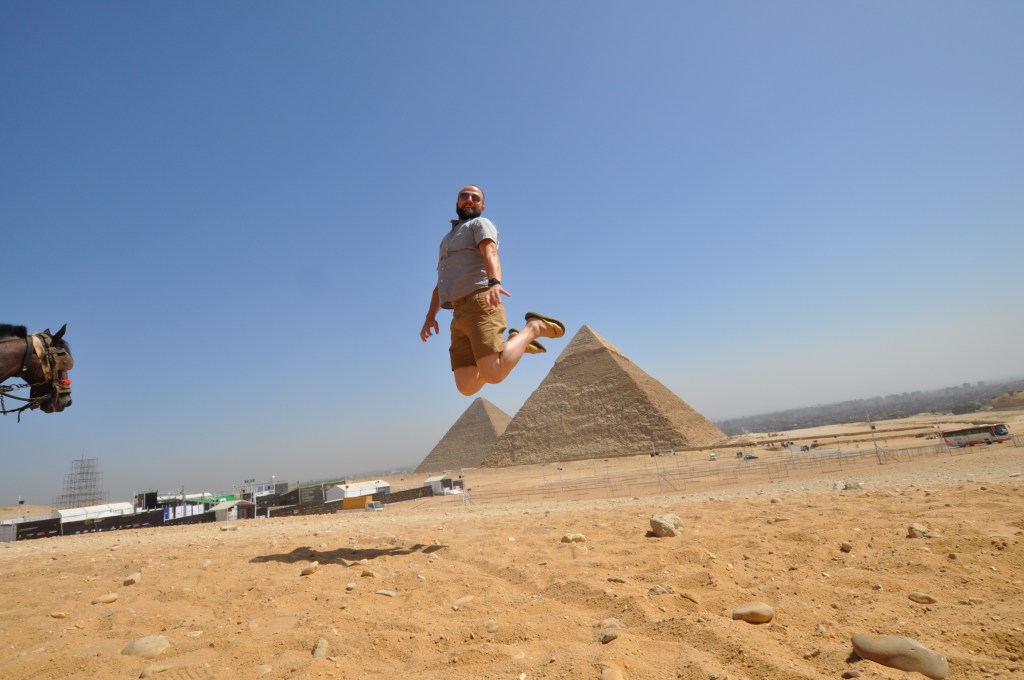
Cape to Cairo – I made it!Mission accomplished – jumping for joy!
The next morning, I was on my flight to Dubai. The elevator music Emirates plays when you board was truly music to my ears. It was a quick 15-hour layover where I exchanged road trip clothes for European adventure clothes from a couple suitcases I keep stashed there. Then I exchanged some Dubai Duty Free wine I purchased for a couch to crash on for the night. In the morning it was off early for Munich and Oktoberfest.
Oktoberfesting with old and new friends.
My plan now is a long tour through Eastern Europe before heading back to Seattle permanently at the end of the year. After Oktoberfest I made it to Prague, then Krakow, and write this from Chisinau, Moldova having just returned from the breakaway province of Transnistria. So my fun adventure continues using planes, trains, cars and buses. Though I can’t help but feel a bit remiss hurtling through Bavaria and the Balkans without Ross and Bubbles.
It took us half a day of calm breathing after our challenging arrival to Aswan before we were ready to explore. Settled comfortably at the Ekadolli Nubian Guesthouse, we started hatching plans to make the most of what this sleepy resort town had to offer. Planning and coordinating took a little extra effort because the backpackers was located outside of town and while the rooftop offered a picturesque vista of the Nile and the Old Dam, the surrounding village was an old Nubian village, leaving us confused throughout our stay as many people we encountered had Arabic vocabularies as large as our own due to Nubian being their first and only language.
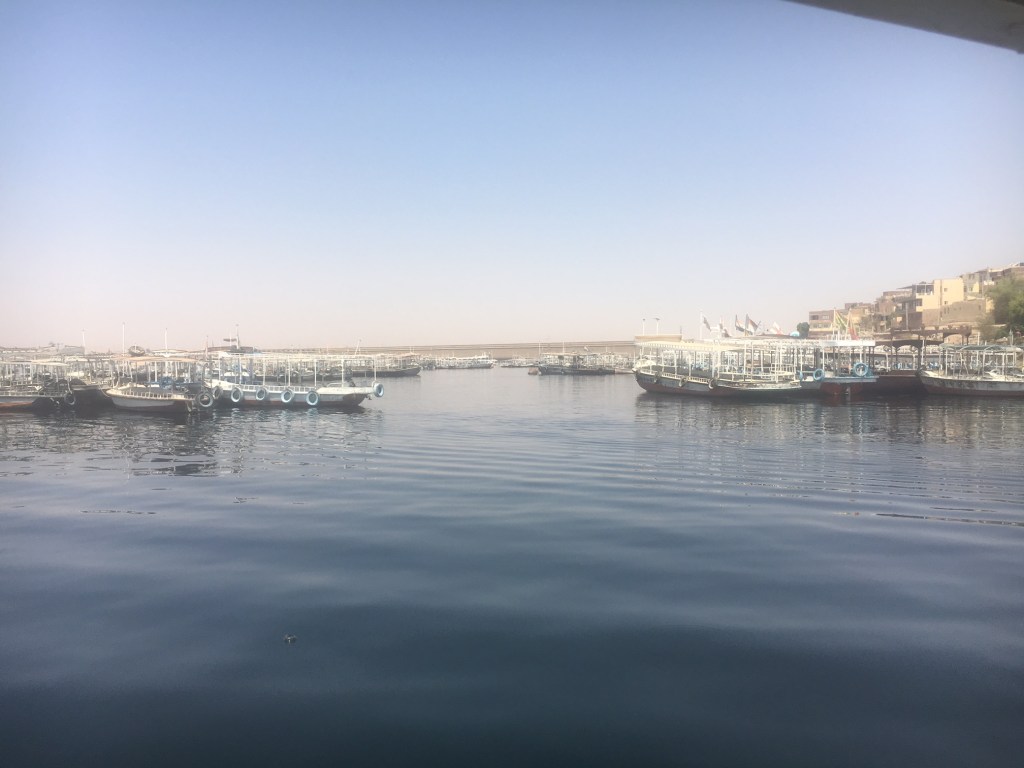
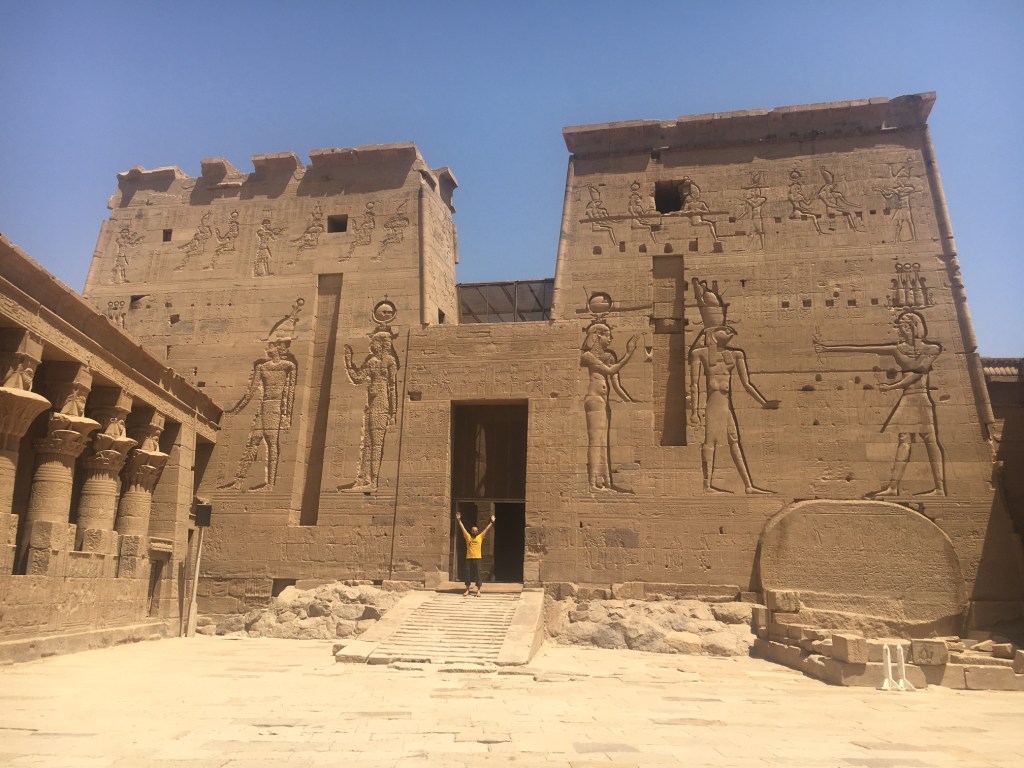
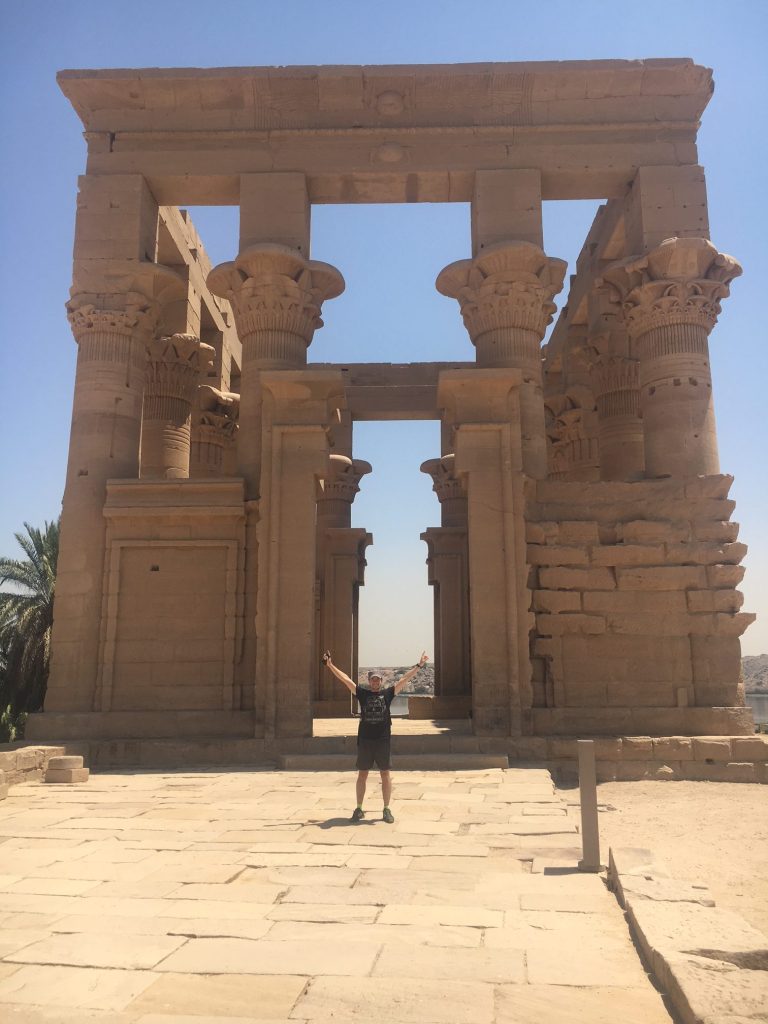
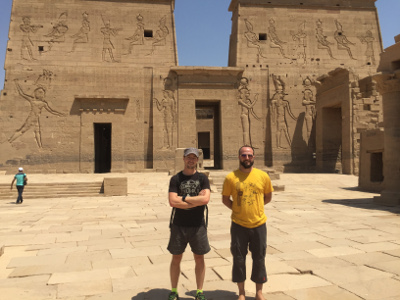
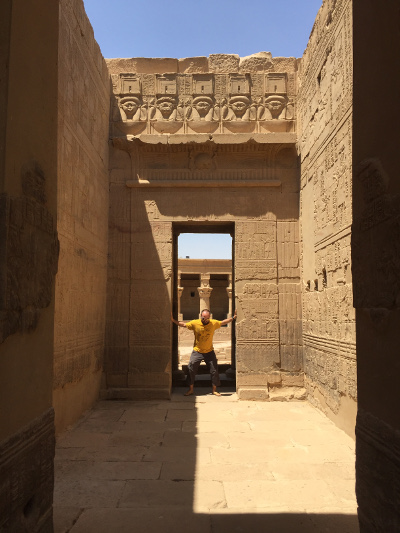
Arranging a tour guide to start our second day in Aswan seemed a safe bet and so we set off relatively early to explore the Temple of Philae on Philae Island. The boat ride out to the island was very peaceful in the mid-morning sunshine, but despite this, the scene was a little bit depressing. Only 3 or 4 boats were operating with more than 1,000 tied up along the shoreline. Prior to the Arab Spring, all those boats would have been jam packed with tourists. Our guide opted to leave Church mid service when he heard we wanted a tour and was very happy to be working after not having had a job for several months. We definitely benefited on pricing for most of our time in Aswan because the supply of tourist were few and demand for our dollars was desperate. He did a fantastic job walking us through the Philae Temple and explaining a myriad of small details we could have never picked up on our own. Additionally he was smart, funny, engaging and spoke some of the best English we had encountered in a while. For more tours like this, check out their website.
Probably the most impressive part of the Philae Temple is that the whole thing was 75% underwater after the British completed the first dam (Old Dam) in 1902. Philae was destined to be completely submerged with the construction of the new dam (High Dam) which started in 1960. With the help from the US, EU and other assorted countries, the entire temple, even the submerged parts, were dismantled into 47,000 pieces and then reassembled on a different island. It is a fascinating story of engineering and determination to preserve a site from the Ptolemaic Period.
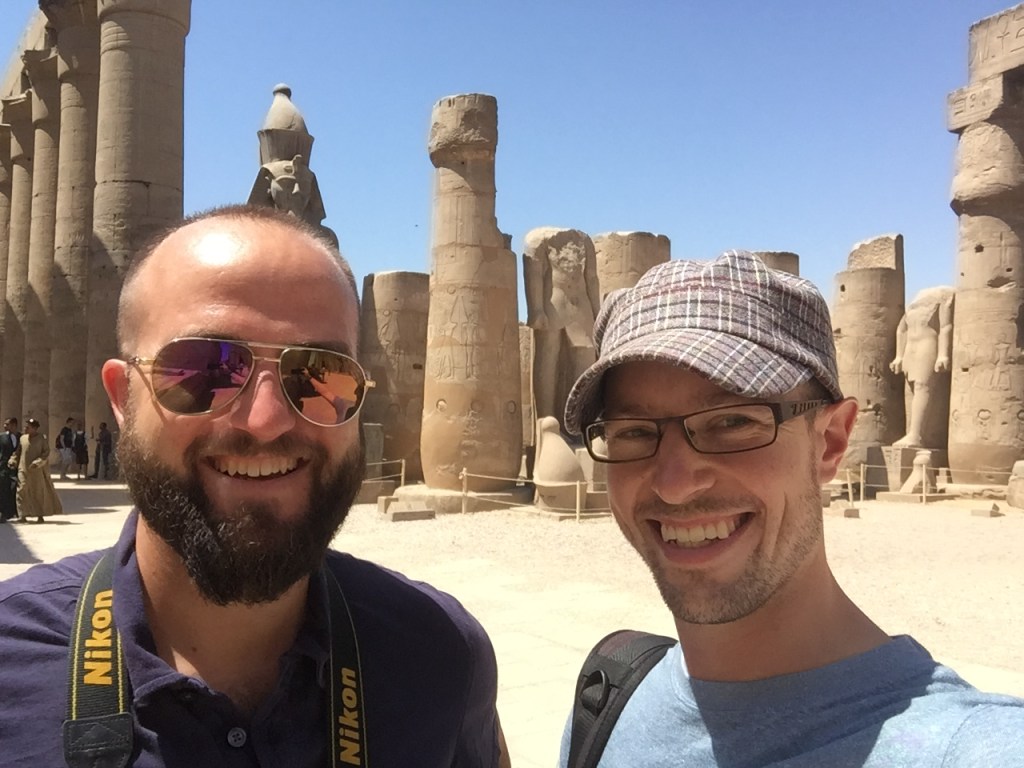
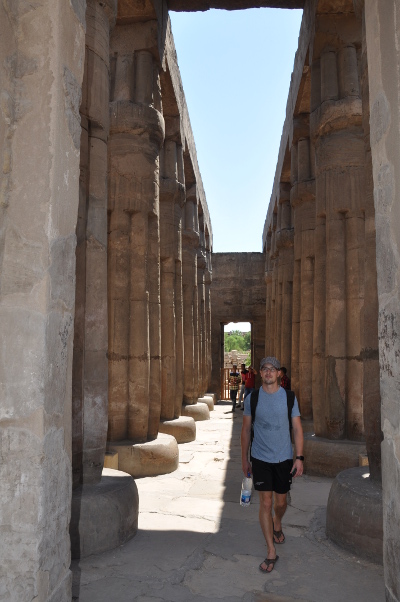
In Luxor, we stayed at the top rated Nefertiti Hotel, which in addition to being in our budget had a great restaurant downstairs and a rooftop lounge for breakfast, lunch, dinner, evening shisha or games of Scrabble. The nighttime view from the rooftop while crushing Ross at Scrabble again was particularly beautiful. The tourist sites in Luxor were also fun. The Luxor Temple was practically across the street so it was an easy morning of exploring. Luxor Temple was also remarkable for how few foreign tourists we encountered. In fact, the Egyptians visiting started asking to take pictures with us. Either dirty sweaty pan-African journeying backpackers are the new celebrity or foreign tourists really were a rare commodity.
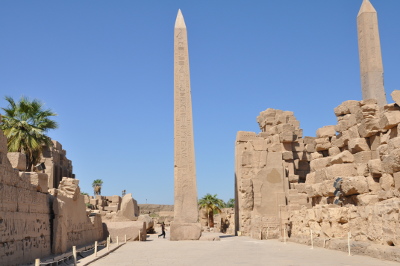
Three kilometers straight north on the “Spinx Road” from the Luxor temple lies the Karnak Temple. We thought it would be an easy walk but our superior navigation skills led us on a 4 km detour through the midday heat. We arrived at the ticket office exhausted with the first symptoms of dehydration. Karnak temple grounds are more than 60 acres built by 30 different Egyptian Pharoes. It’s simply too large to see everything we told ourselves as we recovered from our arrival hike in the air conditioned entrance hall. We pushed through for another hour of walking around the grounds and it was well worth it.
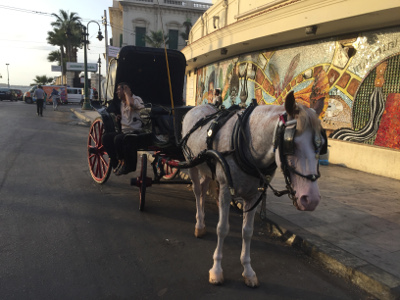
After finishing Karnak, our hubris about walking in the heat was diminished enough to negotiate with taxis out front. It wasn’t a long trip but the best price came from an old man who offered us a ride in his Ferrari. It wasn’t the fastest Ferrari I’ve seen but we arrived back to the hotel refreshed from sitting down with wind on our faces.
Luxor Ferrari.
The next day we toured the Valley of the Kings. This is an amazing group of tombs, including King Tut, that are burrowed into the rocky hillsides across from the main city of Luxor. It was HOT again but well worth the hike to see these ancient sights.
I forgot to mention how we got 215 km from Aswan to Luxor with broken Bubbles. Tune in next time.
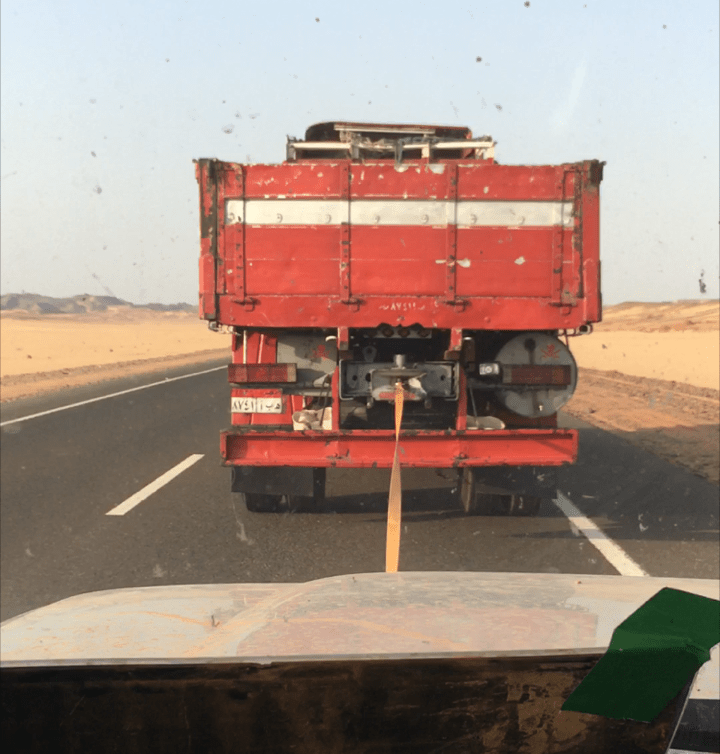
The stressfest had started when Bubble’s radiator first seized up and the bizarre border bureaucracy had been icing on the crazy cake. But everyone knows cakes need more than just icing and so Bubbles drove her obligatory 5km north from the border and gave us another round of overheating. We had our cherry. We didn’t have too much time to consider solutions before a friendly trucker stopped to assist. We knew we needed to get another 30km north to the ferry across the lake to Abu Simble and so without much hesitation we pulled out the tow rope and were away.
Math problem : 80km per hour + 4m tow rope x zero visibility = ? [A] Fear [B] Euphoria [C] TIA [D] All of the above.
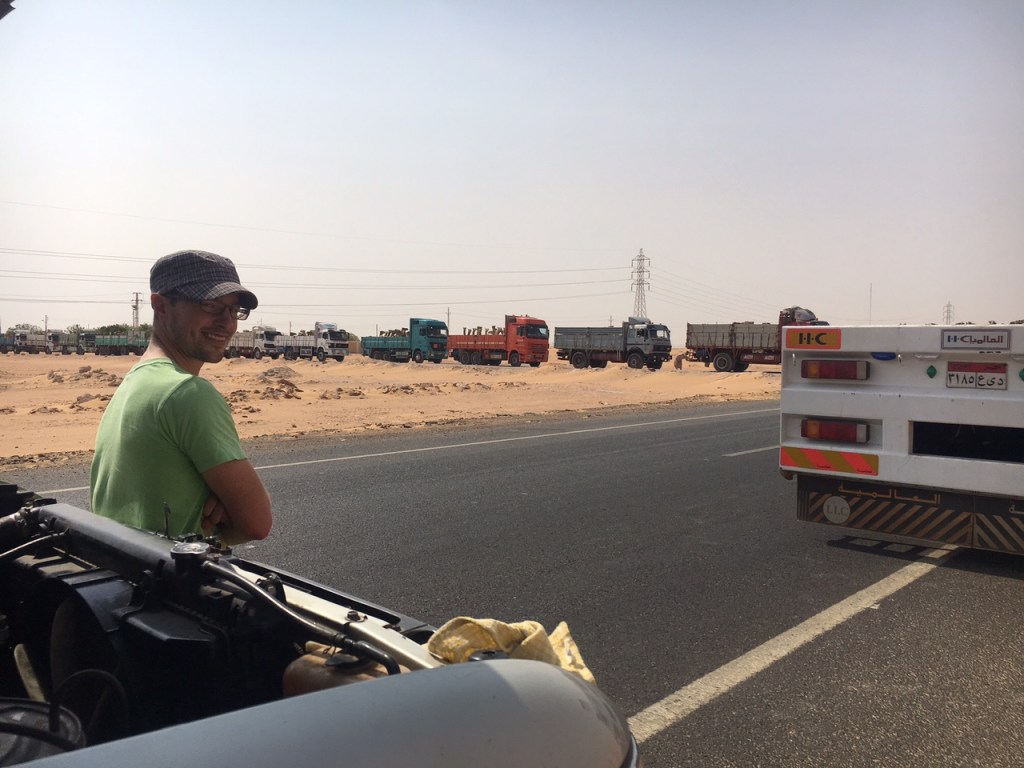
Being alive at the ferry line gave us time to say prayers of thanksgiving and wonder if there was a medium paced speed of progress north, something between 0.25km per hour at the border and 80km per hour towed behind a semi-truck. It also gave time to speak* with various truck drivers as they climbed all over Bubble’s engine and gave us clear** explanations on her damage and what repairs must be made. We knew she needed to get to Aswan and we knew we didn’t have 10 days to hobble her there in 5km stints. We managed to initiate a bidding war with the drivers offering to deliver us to Aswan as they all had empty flatbed trailers post Sudan deliveries. The price started at 5,000 LE but we shook hands 10 minutes later with a large unshaven and toothless older gentlemen who spoke absolutely no English for 1,800 LE. You get what you pay for.
Ferry rides across Lake Nasser are perfect for either a shady drug deal or negotiating a tow to Aswan.
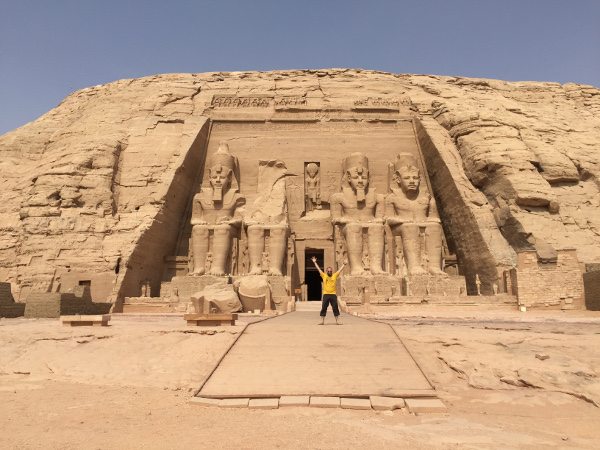
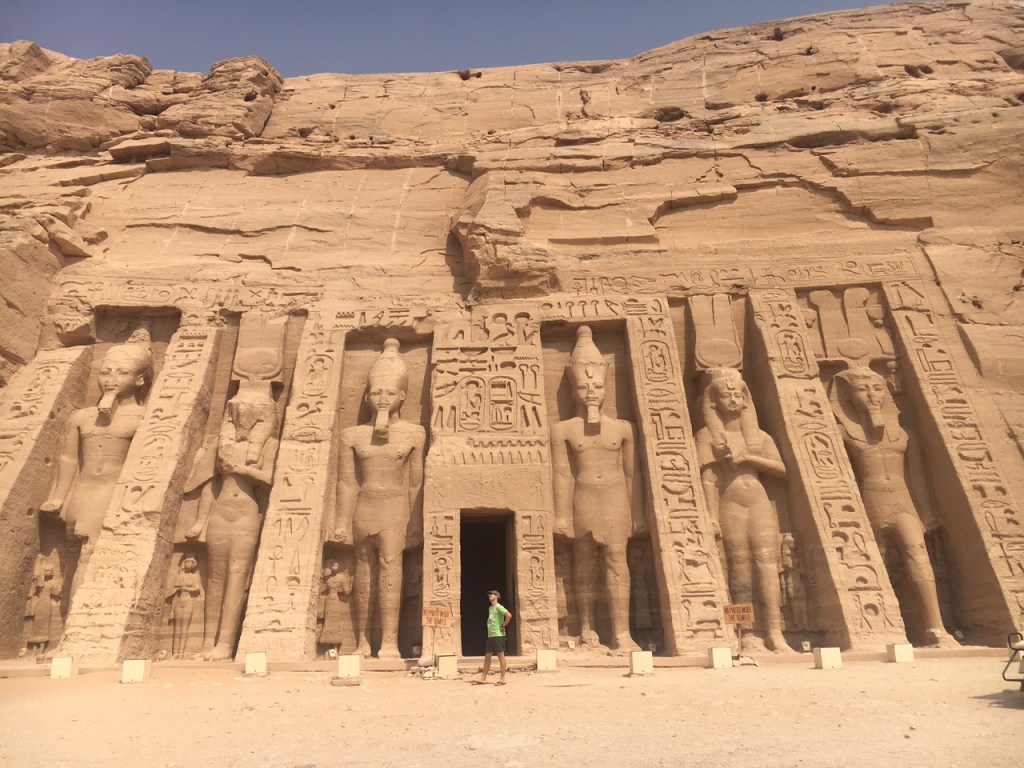
Arriving to Abu Simble that night, we checked into a hotel and had one of the best tasting beers of our life. The hotel was built in the early 90’s and had pictures of the King and Queen of Sweden’s visit in 1991. The hotel hadn’t been updated since but the swimming pool overlooking the Nile and AC in our room meant we had arrived in a Garden of Eden. Rising early, we dashed to the Temple of Rameses II to take in our first Egyptian sites, literally jogging through them to see it all before meeting our driver.
Shea is thrilled to be in Egypt.Ross wonders if there is space on the wall for a statue of him?
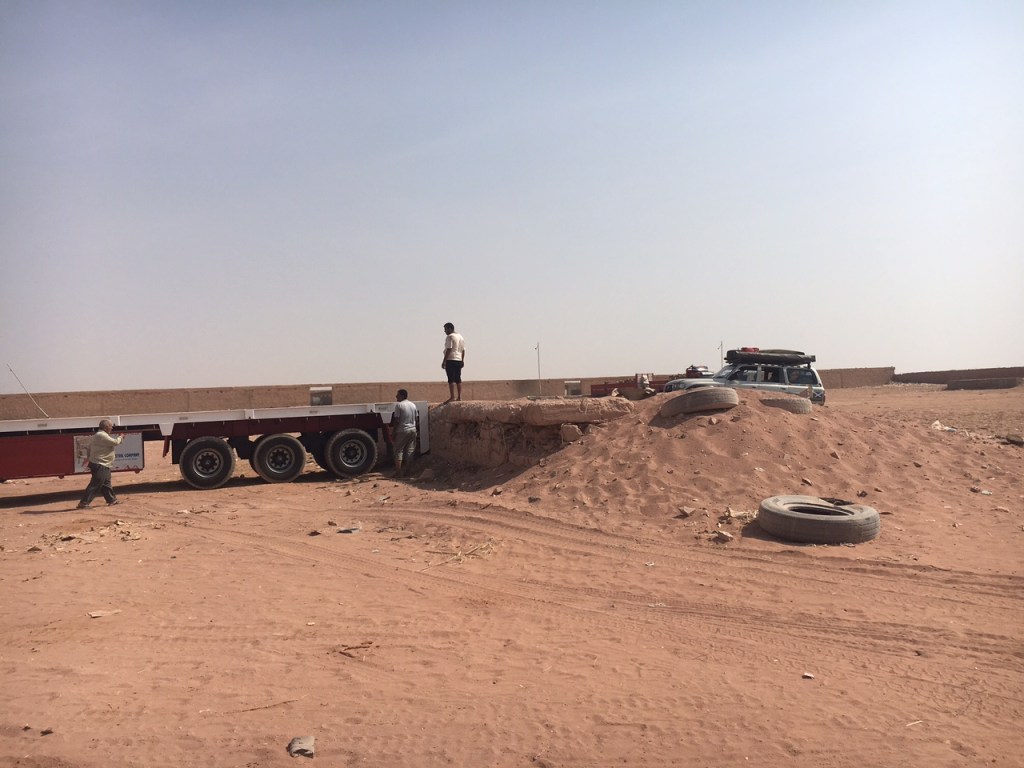
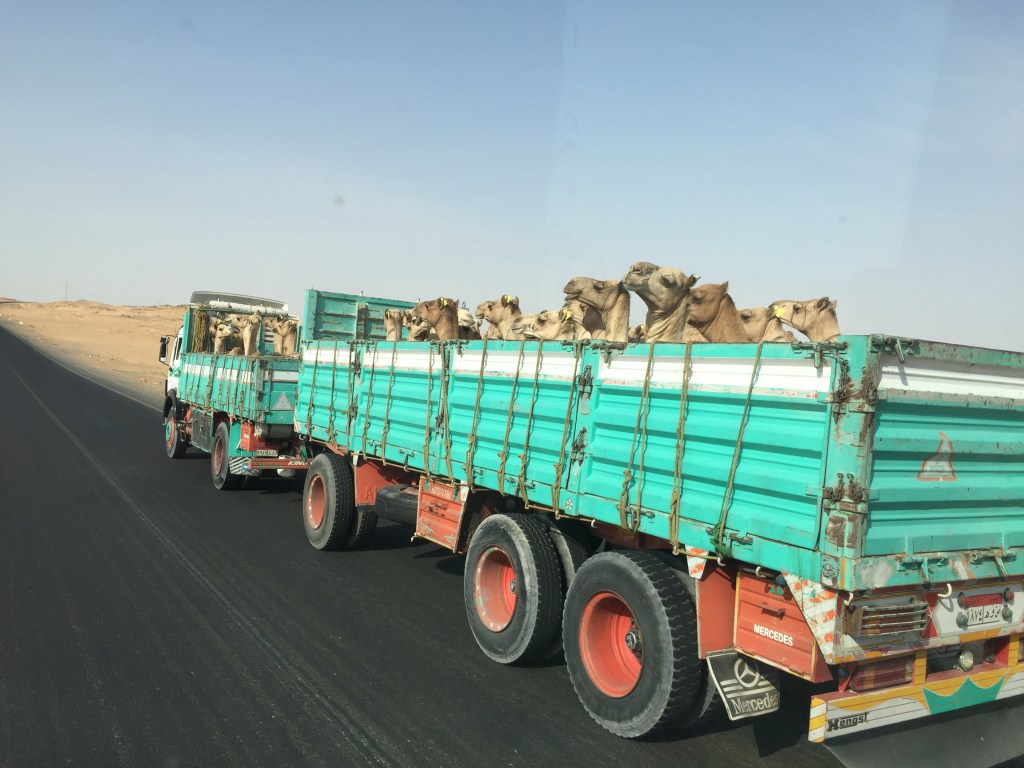
Meeting the driver at the appointed time, we wondered what his plan was to get Bubbles loaded. Like much of the trip so far, this also was destined to be ad hoc. First it was tea, then prayers at the Mosque (him, not us) and then an hour driving through the wasteland of a large abandoned construction site hoping that a random pile of dirt would work as a loading ramp. Finally, the police showed up and told the driver to get out of town. Fortuitously, outside of town was a camel farm where 2,500 camels had just been loaded onto 104 trucks (Ross counted) for delivery to Cairo where they were destined to be slaughtered for the upcoming Islamic holiday of Eid al Adha. The strategy quickly became clear, ask for forgiveness and not permission. Precisely as the last camel van left we raced through the farm gate before it closed and used a camel loading ramp to get Bubbles on the trailer, driving back out of the farm and down the road 10km before even stopping to secure her with straps.
Ross, making sure he doesn’t lose count.Our skilled driver, attempting to back up to the loading ramp without busting a taillight.She’s on! Now DRIVE!!
With Bubbles lashed sort of securely on the back, we relaxed in the air conditioned cab of the relatively new semi-truck. The driver spoke* to us in Arabic for the first 30 minutes but eventually ignored us allowing 3 hours of quiet driving time for me to beat Ross at Scrabble and both of us to work on blog updates.
Our nameless driver.Passing camels on the road.Shea dominating at Scrabble once again.
Upon arriving in Aswan, unloading Bubbles became our next mission. Finally the truck driver and three friends he picked up drove to an empty industrial area with no lights or other vehicles around. We assumed it was either another obscure loading ramp or a good place to dispose of our bodies. Unloading Bubbles and driving 8km down the road to a hotel took some time but it seemed as if the hardest part may have been over.
Unloading Bubbles in Aswan.
* language barrier remained in full effect ** they only spoke Arabic
Previous border crossings had taken some finesse and patience. It seems those crossings were just the warm up for Sudan. We arrived at 7AM and had to fend of money changers and beggars on the Ethiopian side for two hours until Ethiopian customs showed up for work around 9:00. Once out of Ethiopia, the real fun started. We had photocopies of passports, but not photocopies of Sudan visas and so the immigration officials set us up with a “fixer” to go make copies. Unfortunately, there was no power anywhere on the Sudan side so the fixer had to find a shop with a generator, and then we assume bribe the shop owner to start the generator so that copies could be made. With this finally sorted and having exchanged some remaining Ethiopian Burr for Sudanese pounds (at what we thought was a great exchange rate; ie: above the official rate) we returned to customs. Next step was convincing customs that our visas had already been paid for and we didn’t need to pay again. They asked us for registration and we told them the visa counted as registration. True story: visa does not equal registration, just ask the police in Khartoum! Finally our passports were stamped and we only needed to process Bubbles paperwork. Unfortunately, the man with the power (ie: the official stamp) was on lunch break. Let me remind you it was 10:30 in the morning at this point. We sat. And sat. And waited. And then waited some more. We were served complimentary Sudanese tea but this did not speed up the process at all. Finally on the road in the early afternoon, we aimed for Wadi Madani which was the ½ way point between the border and Khartoum.
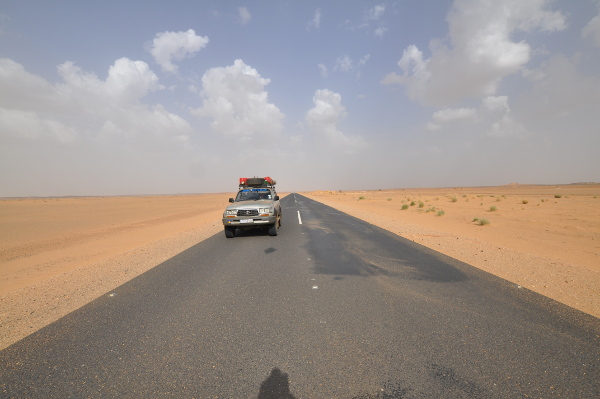
A rare stretch of open road en route to Khartoum.
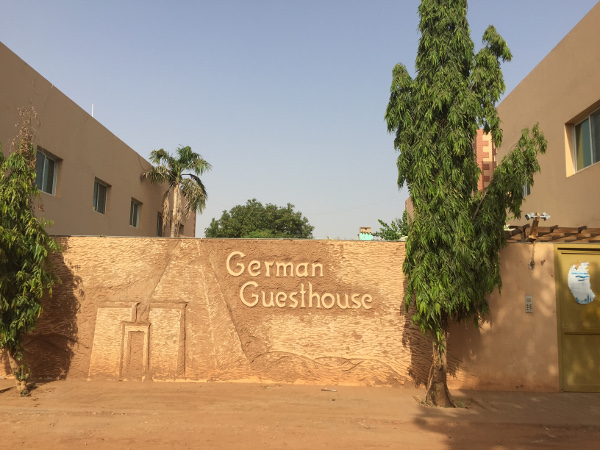
Only upon arriving and discovering the challenge of financial transactions in a sanctioned country did the issues start to pile up. Our dollars were limited and so the choice was food + hotel or gasoline and hope to make a plan in Khartoum. My appetite has been taking an oversized leadership role in my life lately, but fortunately Ross’s cool logic prevailed and we drove to the gas station to fill up. Here is where Bubbles gave us her first signal that she is getting tired of this little adventure. The cover for the gas tank cap did not want to release and we ended up having to use a screw driver to pry it loose in order to top off with our remaining 200 Sudanese pounds. With the top off we estimated we could make Khartoum, just barely, before 10PM and so we were off. The nice part about driving in Sudan at night is that the police seem to go home and no longer operate road blocks in the dark. The less pleasant part is the large passenger busses driven by maniacs at reckless speeds. We were able to get the flow of traffic eventually, but by then were arriving to Khartoum. We had extremely limited data connection heading into Khartoum and would have been lost without the iOverlander app on our phone. Fortunately it directed us to the German Guest House and we were able to arrange a “stay now, pay later” agreement with Norbert the owner. It had been a long day but we were thrilled to find dinner still available and cold bottles of water in the fridge. Masha’Allah we were out of Ethiopia and safe in Khartoum!! (said no one ever before!!!)
In Addis Ababa, other travelers we met indicated the drive to Lalibela was 14-24 hours, depending on ones mode of transport. We departed casually around 8:30 AM with the intention to camp on the side of the road when we got tired and arrive refreshed the next day. As the day wore on, we seemed to make much better progress than anticipated and so with the goal post shifted to making Lalibela in one day we pressed on through the mountain roads in the dark. We turned off the main highway with less than 100 km to go but the secondary road to Lalibela was struggling to be a road in the midst of ongoing construction upgrades. After only 5km along we ran into a logjam of semi-trucks and dump trucks stuck in the mud. The trucks were double parked blocking almost the whole road. Almost is the operative phrase. While Ross negotiated Bubbles down into the ditch and around the first set of double parked/stuck in the mud trucks, I used all the Amharic* skills at my disposal to convince two sleepy truck drivers not caught in the mud to back up 10m each so Ross and Bubbles could re-enter the main road before the ditch became impassible. With cheers from the gathered group of stuck truck drivers, Ross navigated Bubbles through the gap and back onto the open road. Only 80km to Lalibela on muddy roads in the dark to go!
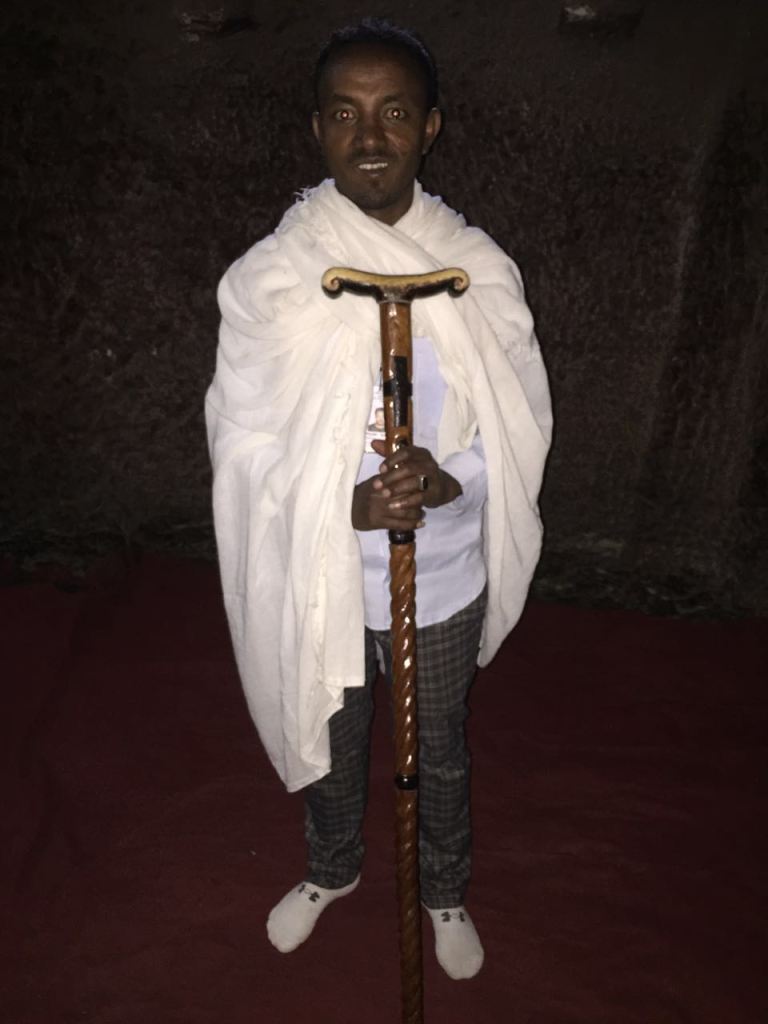
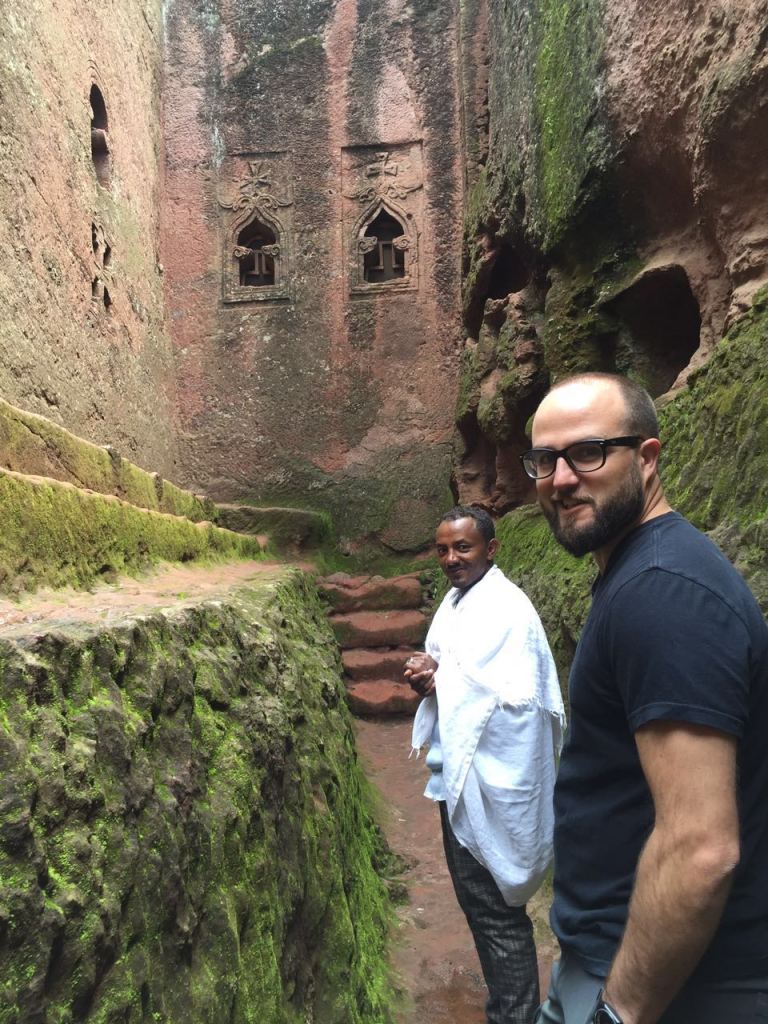
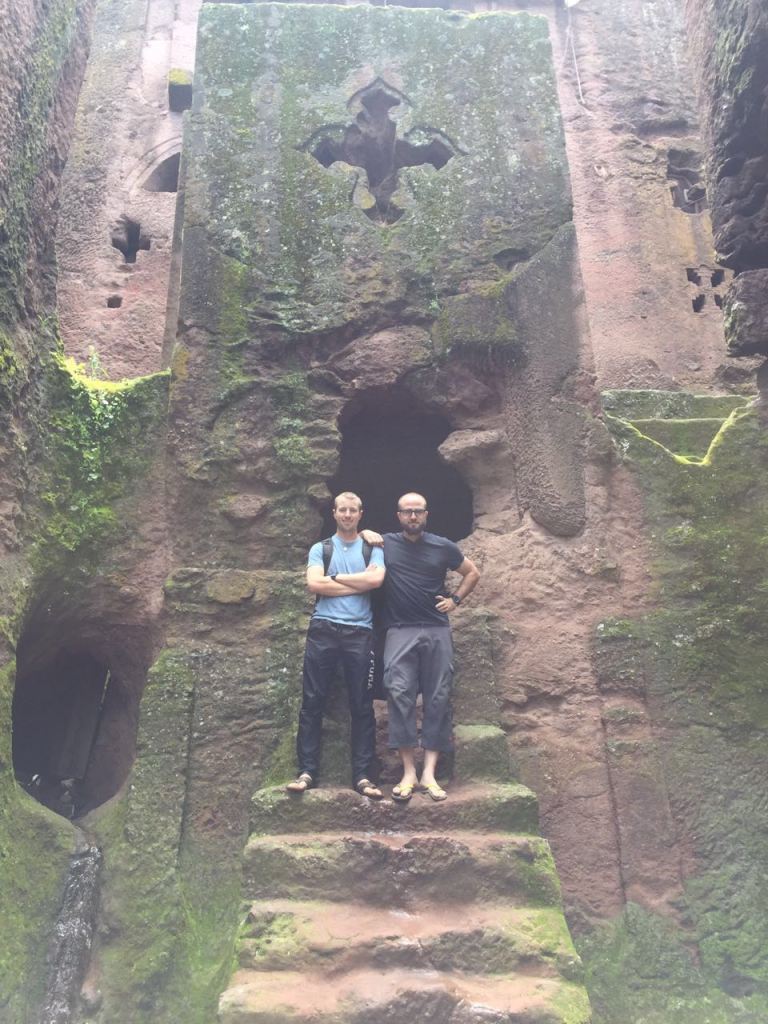
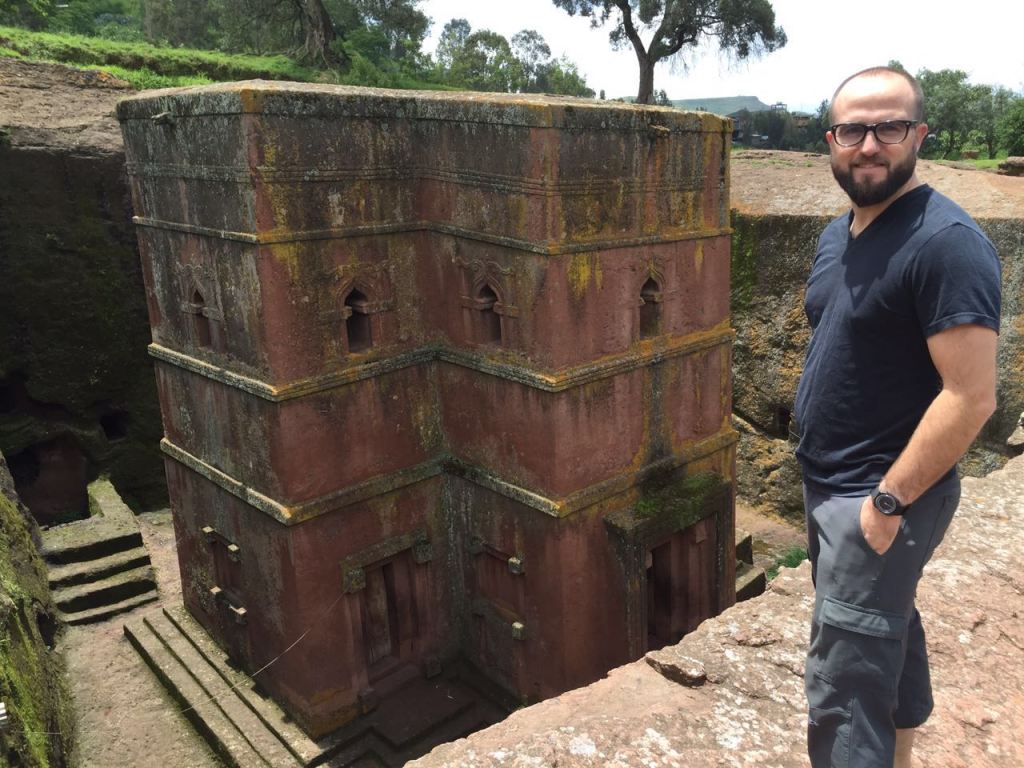
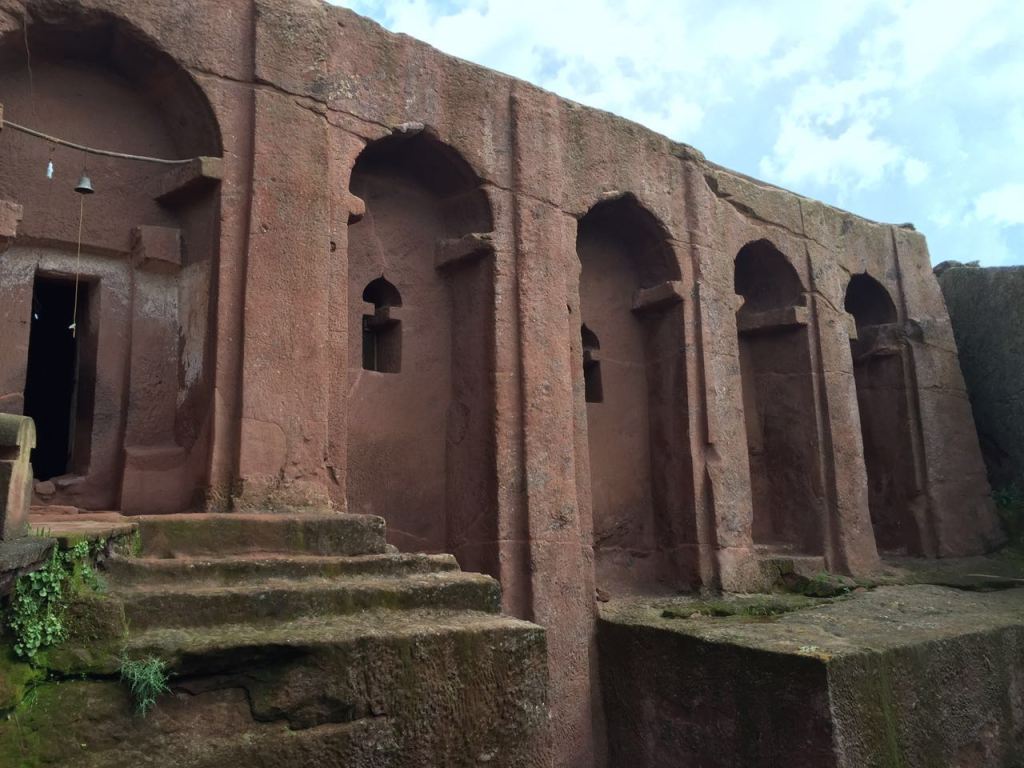
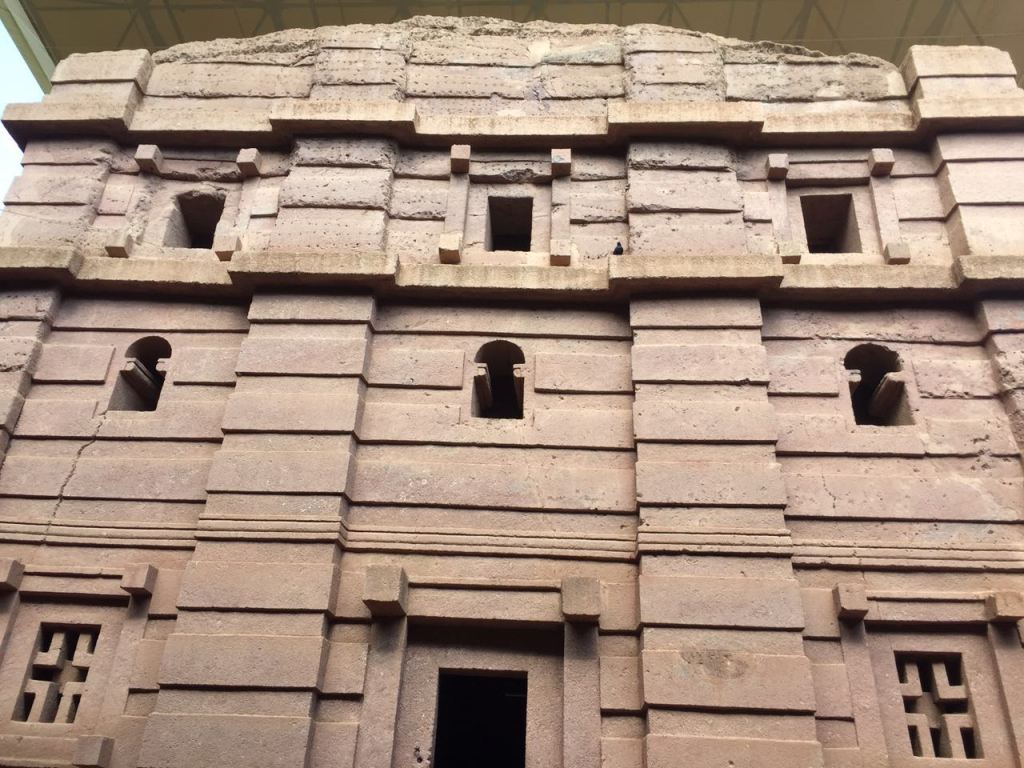
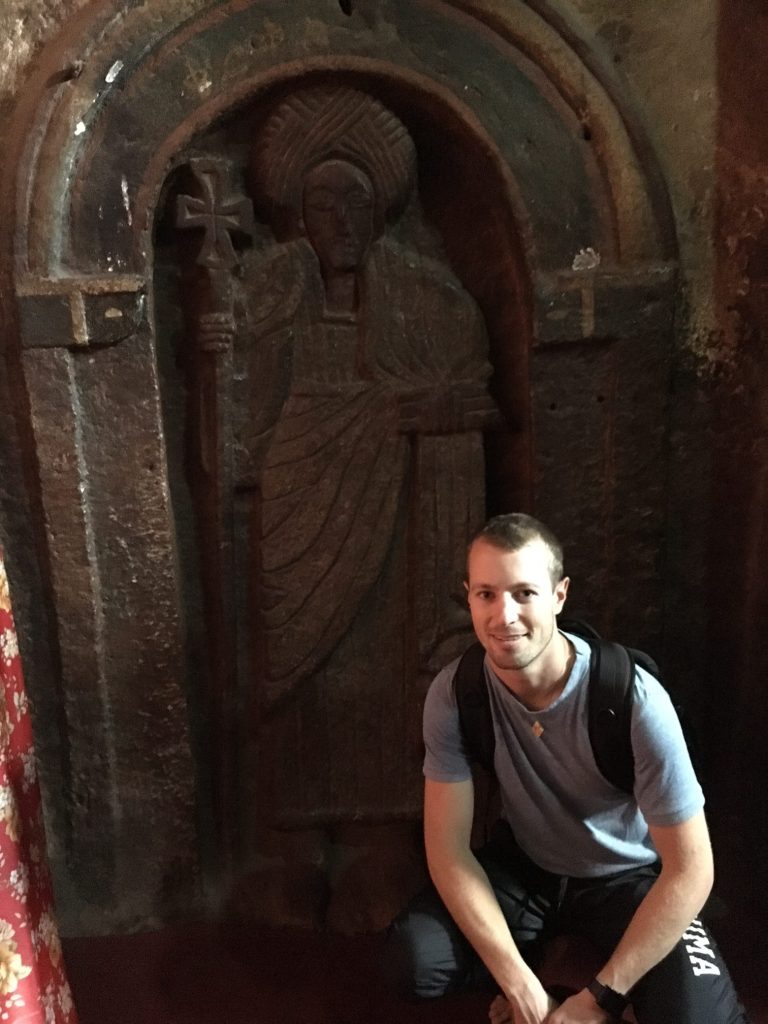
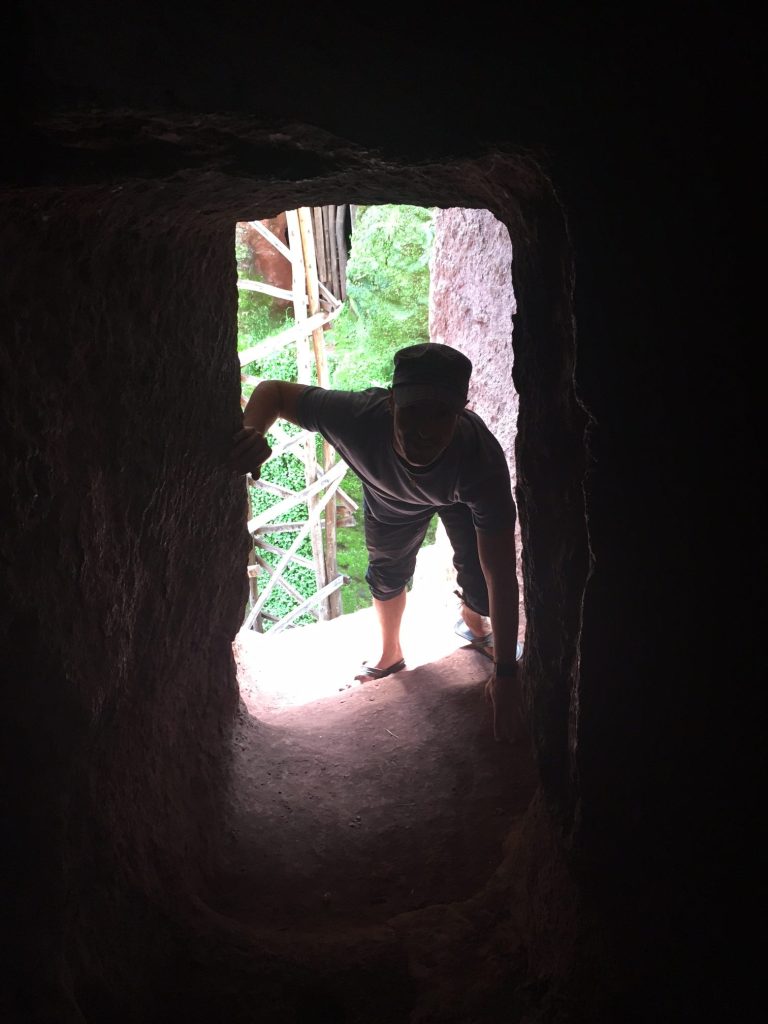
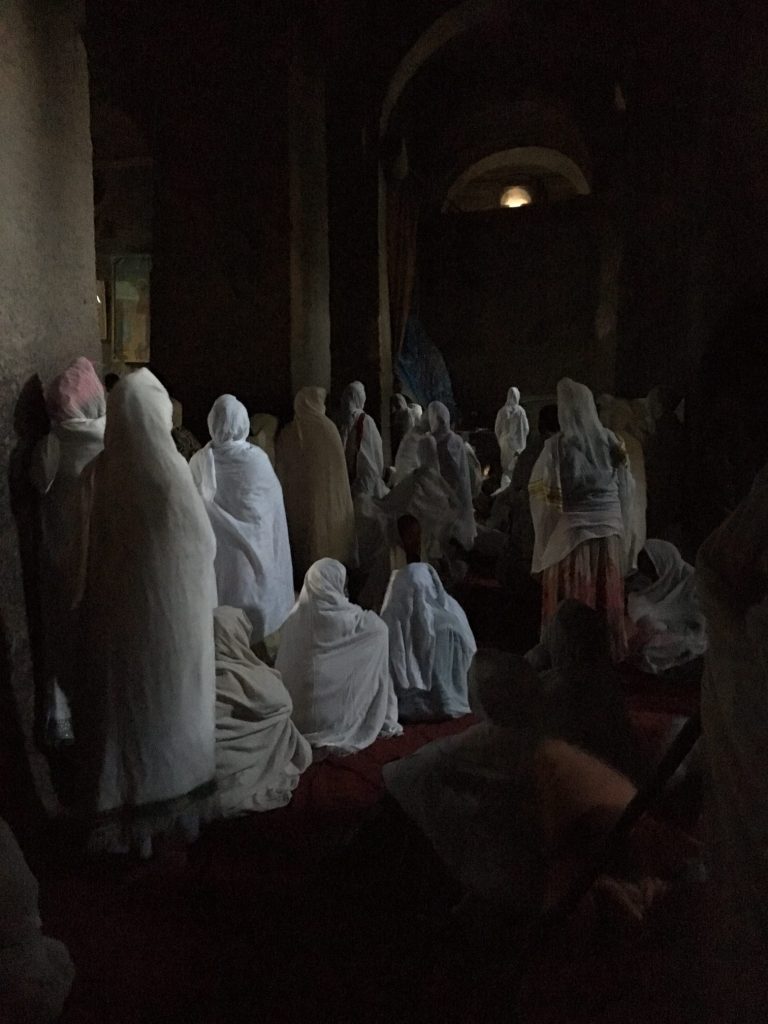
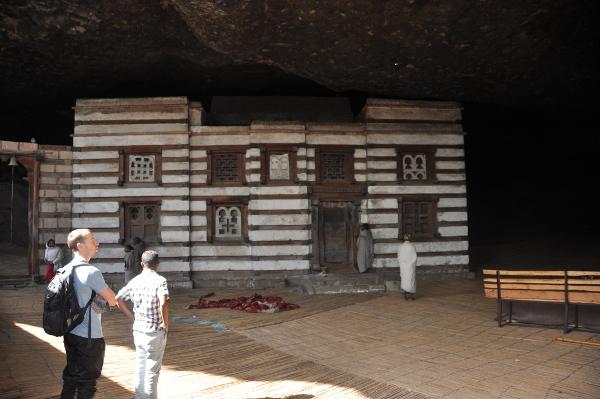
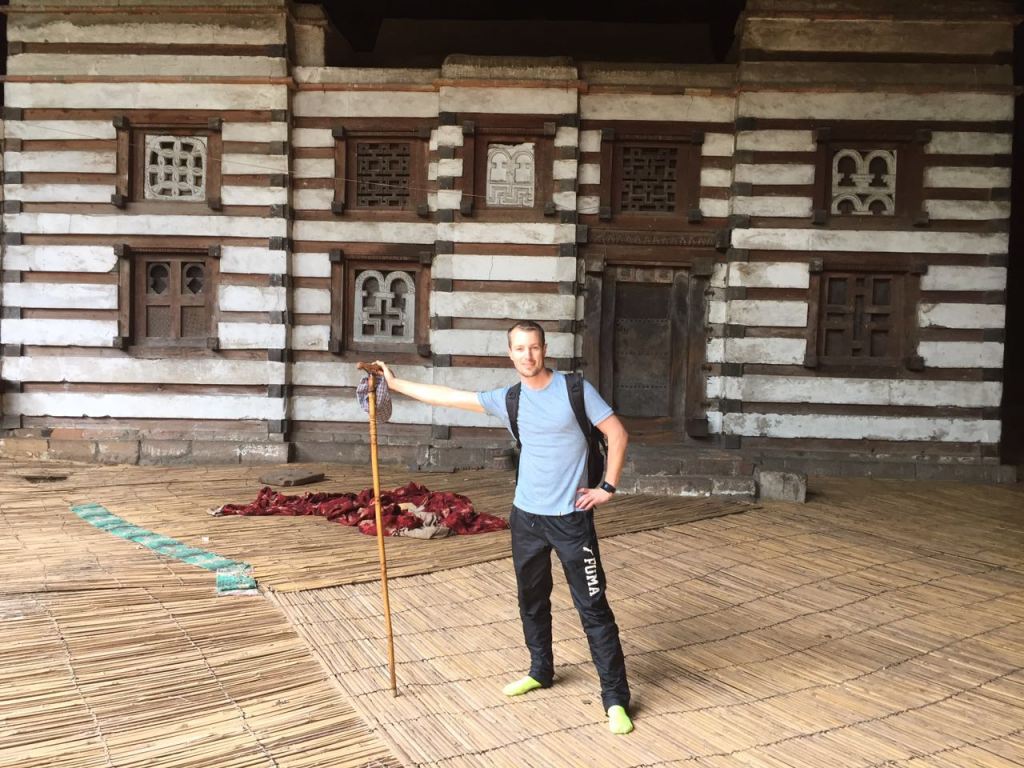
Despite the challenge in arriving at 12:30AM, we found a hotel near the traditional tourist sites still open with a room for weary travelers. We asked them to organize a guide for us in the morning and so after 6 hours of sleep we woke up to find Mr. Melise waiting for us. We toured all 11 stone churches of Lalibela which were built in the 4th century, most carved out of solid pieces of rock. Through tunnels, across bridges and up and down many stairs, these ancient houses of worship were a marvel to behold. Filled with priests, incense, pilgrims and worshipers it was a fascinating tour through Africa’s oldest churches and Ethiopian pride of their long standing Christian traditions.
Our second day touring brought us to another set of churches built into caves outside of Lalibela. It was a beautiful drive with the sun out. We spent the afternoon back in Lalibela enjoying a leisurely lunch and books in the sun. It was good to have a break after our long drive up from Addis. And also good because of what was to come . . . .
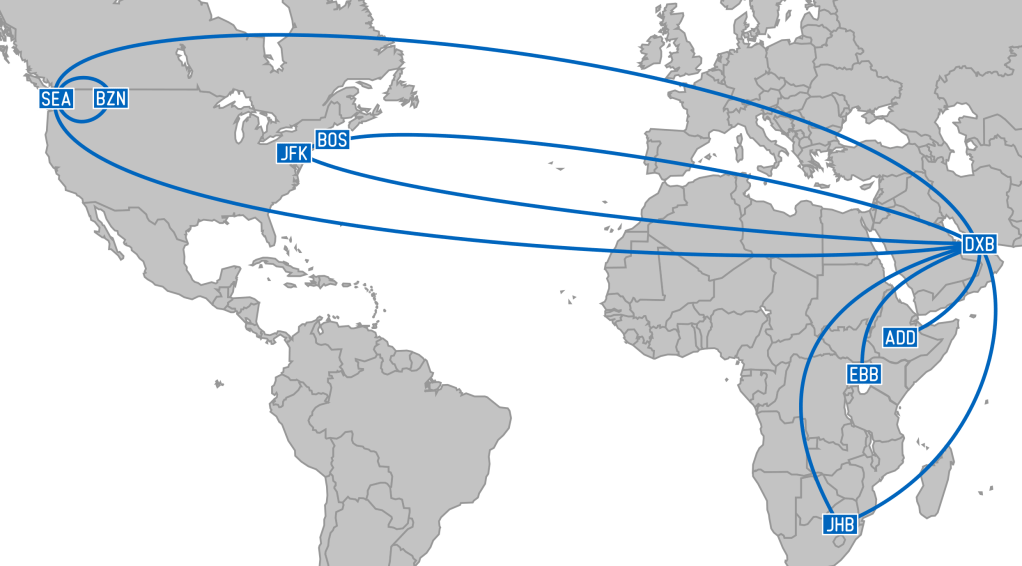
The plan was simple. A short drive from Cape Town to Cairo with a small break in the middle to attend a few weddings back home in America. Well, due to some visa complications with the UAE, Sudan, Kenya and Ethiopia I basically flew around the world at least once orbiting Bubbles as she progressed through Kenya. If you speak airport code, it went something like this: EBB-DXB-SEA-BZN-SEA-DXB-JNB-DXB-JFK-BOS-DXB-ADD. If you don’t speak airport code, see below:
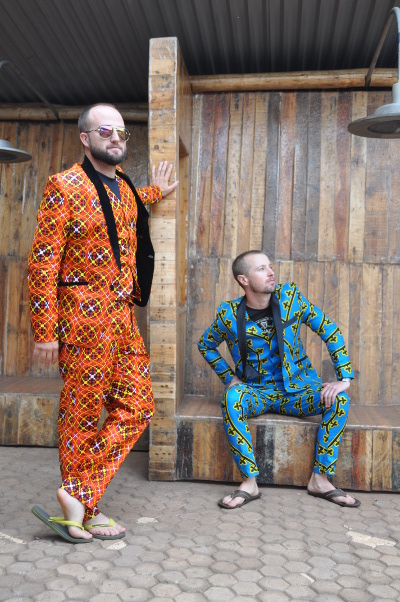
Highlights of course were: seeing nieces and nephews in Seattle; seeing JT and AGC get hitched in Bozeman; catching up with great friends in Dubai; collecting Sudan visa in Pretoria and then skiing in Lesotho with great friends from Joburg; a great catch up in NYC with my Dominican Family and most excellent friends from Dubai; suiting up in my best Ugandan tux for LA and CJ wedding in New Hampshire. It was a whirlwind. And totally worth it.
Now that I’m in southern Ethiopia waiting to meet up with Ross, I am ready again for a simple life on the road. But gosh, I will miss the champagne on those Emirates flights.
After getting passed the equator it was time to start thinking about our planned “gap” in the trip. I had agreed to join Ross with the caveat that I needed to go on a North American wedding tour in July and this seemed to correspond with Ross’s need to renew health insurance in South Africa after almost three months away. Though we had made plans to park the car at Kakira Sugar in Jinja we had not sorted out some of the final details, for example: after eleven weeks driving across Africa, did we have any remaining clothes respectable enough to wear on an airplane? Also, after re-reading one wedding invitation I realized the event was a black tie event and none of my current suits would work. It was time to make a plan.
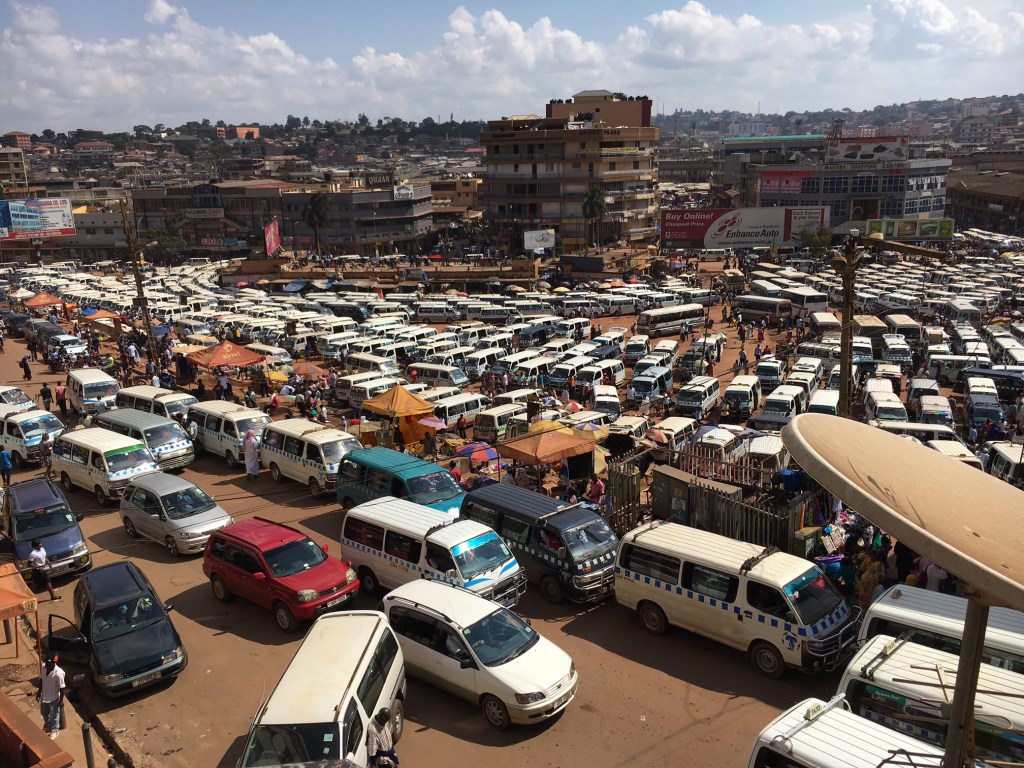
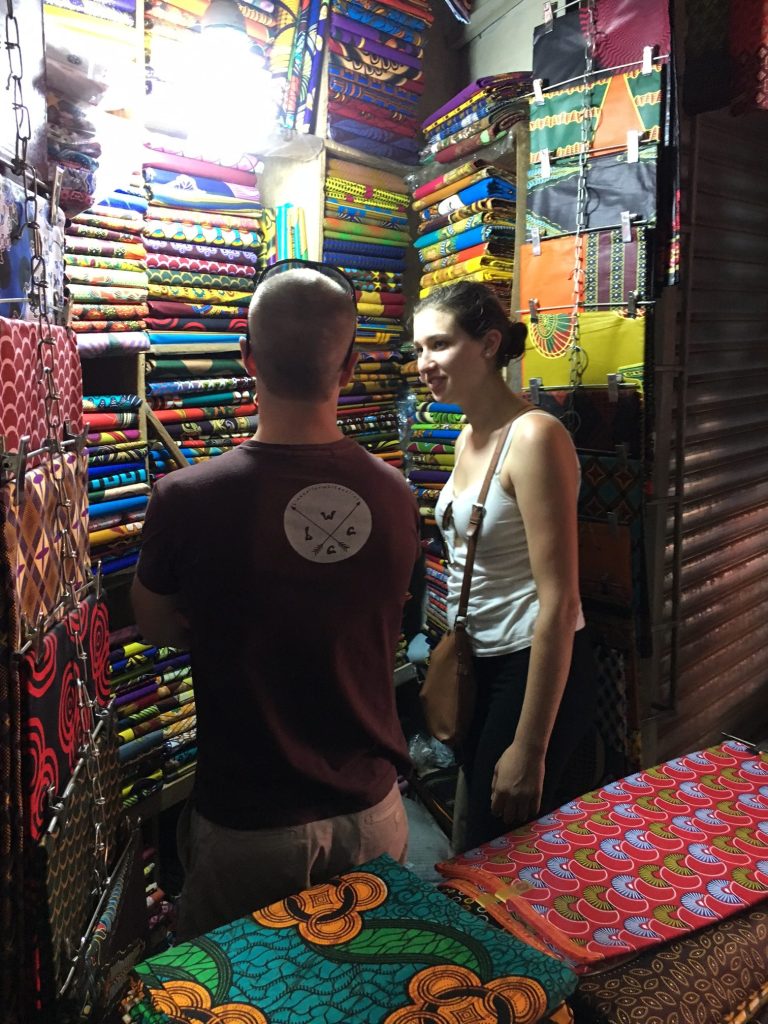
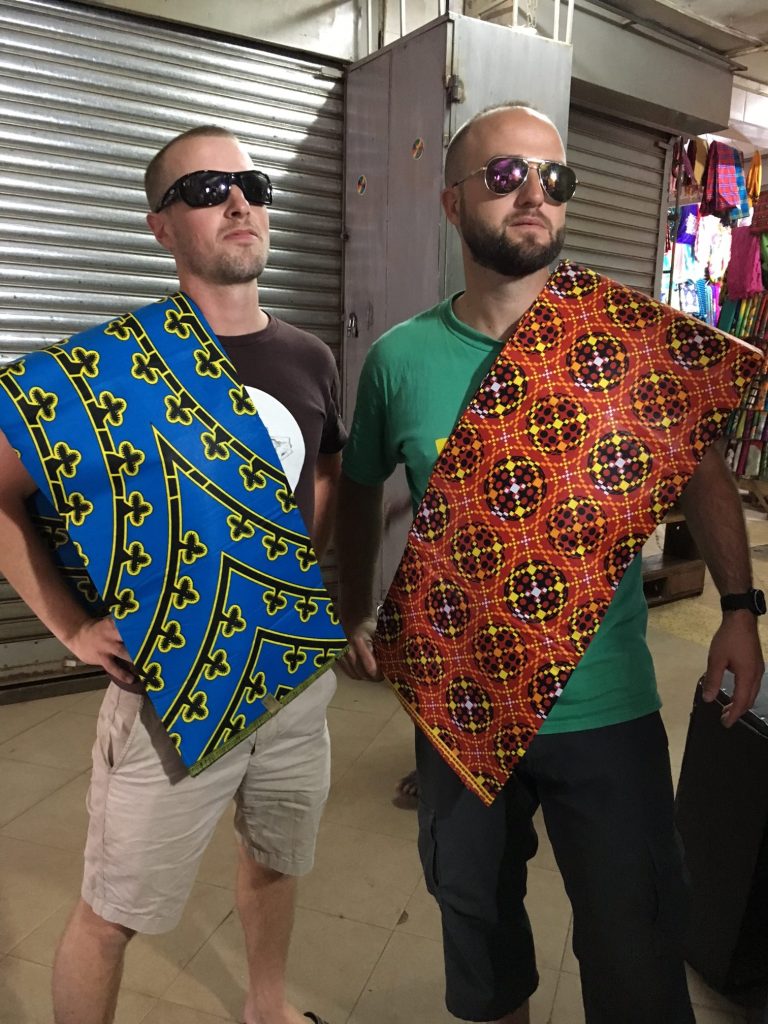
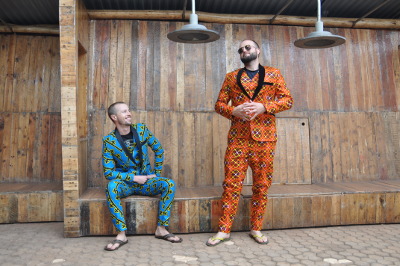
We had always had it in the back of our minds that fine bespoke tailoring of unique African fabric would be a nice souvenir from our trip. But now, with my wedding tour so formalized and Ross determined to dress to impress during a few MBA scholarship interviews, it became an imperative that we locate a fabric shop and find the finest tailor in all the land. The fabric shopping was easy enough – we only had to cross the “Great Barrier Reef Taxi Stand” without being maimed or robbed and then choose from one of the 100+ fabric shops selling a variety of homespun (read: from China) and other unique (read: wax paper clothes?) fabrics to choose from. Fortunately, we had help from our Vets Without Borders friends from Mbarara.
Carefully choosing a route to the fabric markets.So many colors, how can we possibly choose?Finding something we can work with.
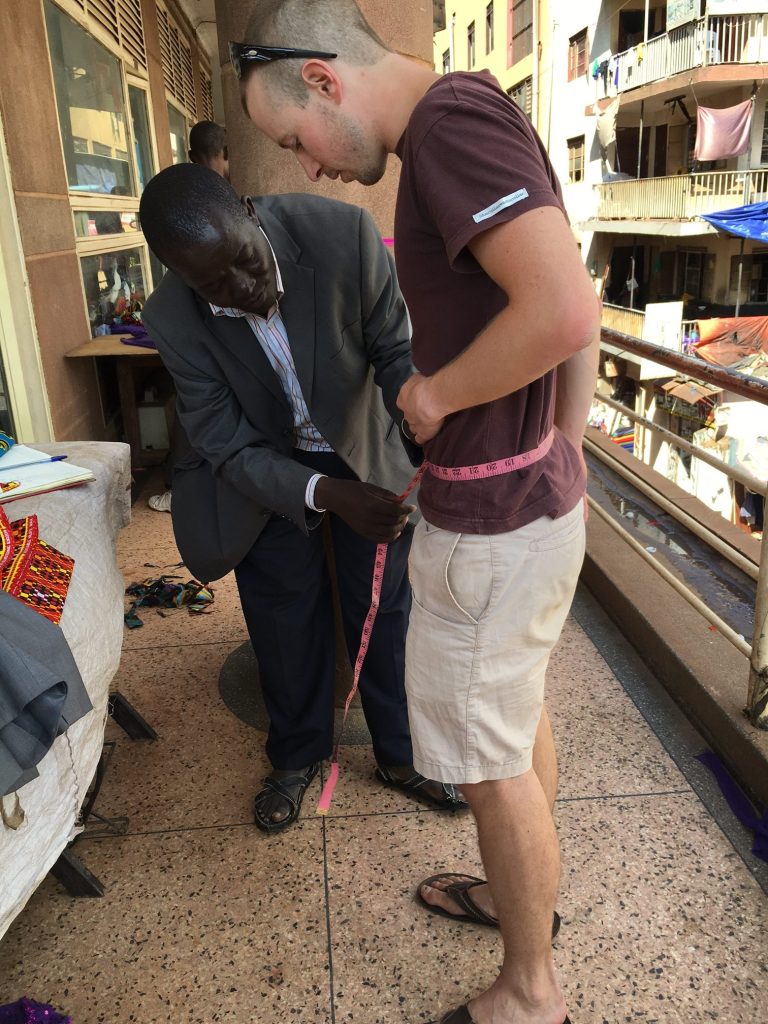
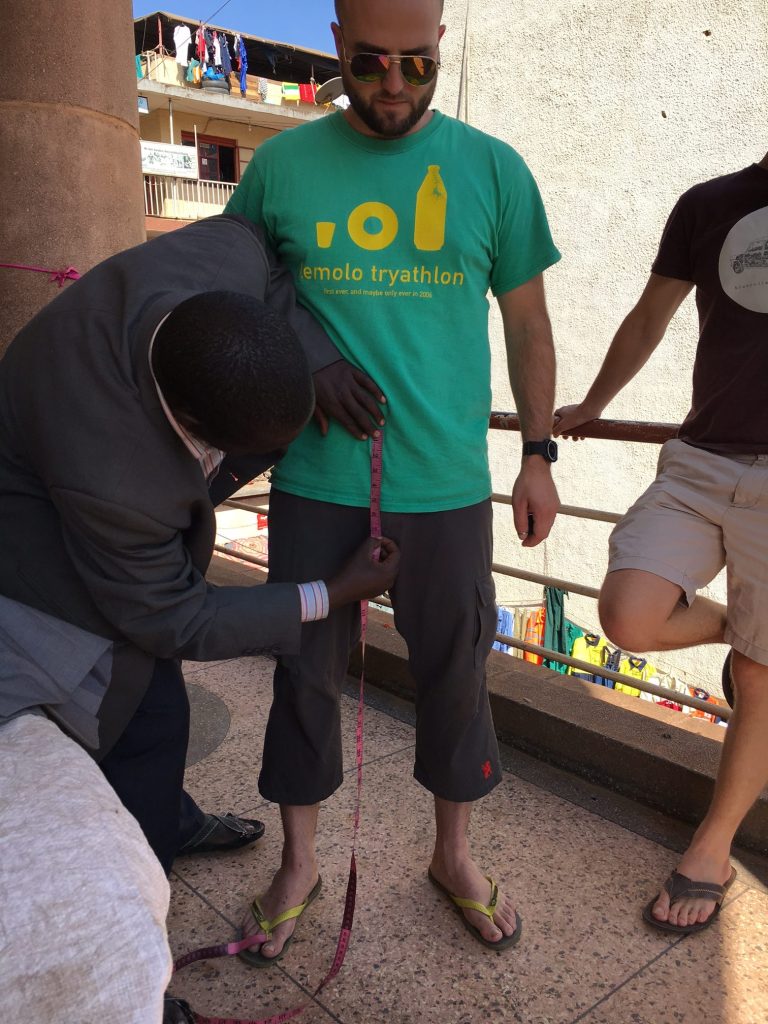
Fabrics selected, we again crossed the taxi terminal (and again made it financially whole) to initiate the process of selecting the best tailor we could find. One particular street close to the main market in Kampala seemed to be where all tailors congregate. The muddy half-paved half-pothole filled street was lined on both sidewalks with rickety tables holding precariously balanced sewing machines. Behind each machine a man worked the electric foot pedal sewing furiously to stitch together shirts, dresses, trousers, suit coats and more. Behind the tailor, ropes and wire were strung along the wall bearing hangers of finished wares. We walked the entire street talking to assorted tailors and inspecting their finished merchandise. After some discussion between Ross and I debating the finer finishing details of one such tailor, we determined that we would move forward with him to the next stage. Our chosen tailor, Mr. Mathias, was happy to then show us his actual shop which was on the top floor of an adjacent building. It seems the tailors on the street are only the front man for a business that has an entire back end structure. Before we could ask too many questions, it was time to get measured up.
Ross confirms extra slim fit style.I confirm: left.
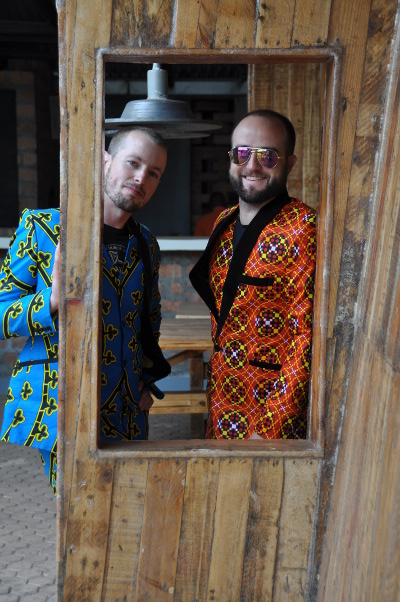
With measurements completed, we only had to finalize pricing. With no printed price list it took around ten minutes of tough negotiation in order for Mr. Mathias to agree to 90,000 UGX per suit. Considering we paid 35,000 UGX each for the fabric it was starting to add up. Neither Ross or I had owned a six figure piece of clothing before. And so we departed ways with our money and Mr. Mathias with instructions to return in one week for the finished ensembles hoping the new fashion collection would be finished prior to our planned trip break. He did not disappoint and we are happy to show a few stills from our first trip fashion show.
Surviving the DRC meant a return to some more basic objectives of our trip: maintaining dating bliss between Ross and April. I’m not aware of all the nuances of their relationship but the phone was on speaker when I heard April say “Ross, if you don’t go see the gorillas I’m breaking up with you!” Before our successful volcano summit we had attempted to see mountain gorillas in the Parc Nationals des Volcans in Rwanda but the tours were very crowded which left little room to negotiate down the $750 list price. And so as we crossed the border into Uganda it became imperative that we make a plan.
Lake Bunyoni Overland Camp, Southern Uganda.
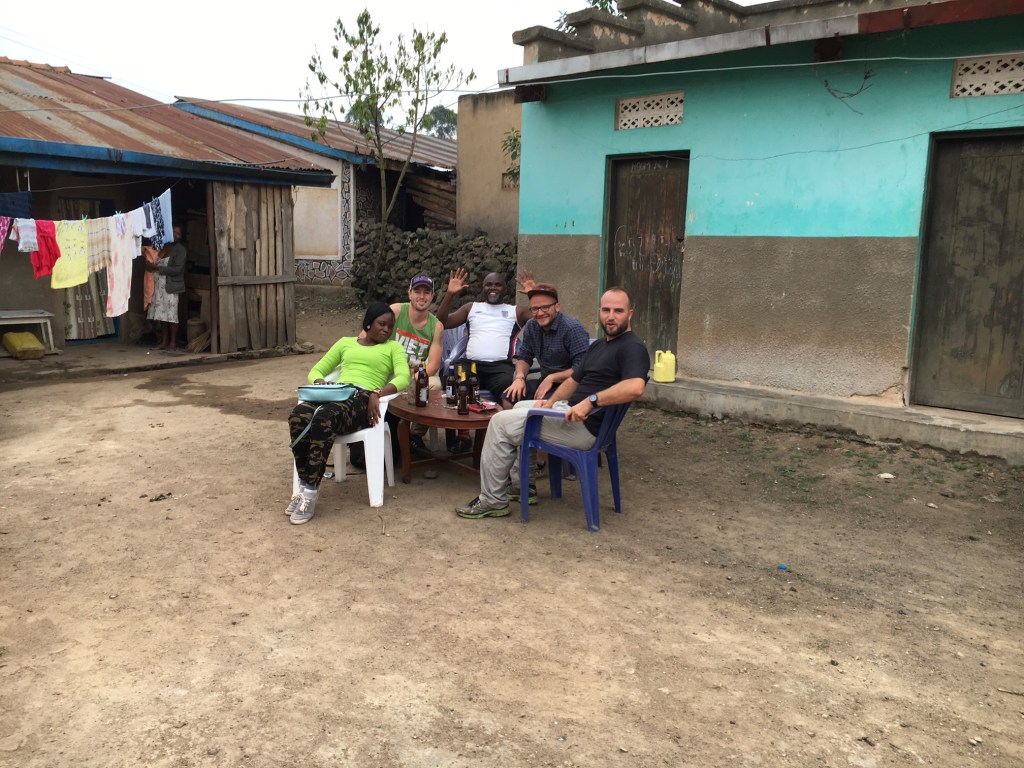
After getting our camping organized at Lake Bunyoni Overland Resort, a beautiful and lusciously green campground with great facilities, we started networking with the locals to organize a gorilla tour. A sneaky tour was organized with payment contingent upon seeing actual mountain gorillas. The next day we met our driver and two other tourists, a gentleman named Eve from Switzerland and his friend Aaliyah from Kampala. The nature of their friendship/relationship was unclear. We set off for the Bwindi Impenetrable Forest National Park about 25km down the road. It was unclear why we left at 9:30 AM because most other drivers we had seen thus far in our journey followed the “hurry up and wait” method of pedal to the metal acceleration followed by screeching brakes. It was an unusual surprise to have a driver so committed to leaving early in the morning but extending the driving time by maintaining steady pace of 5kph on the road. It turns out, our time slot for the gorillas wasn’t until the afternoon and the driver had nowhere to take us so was determined to just kill time by driving slowly. We put a stop to this by demanding to be driven to a bar. As there were no bars alongside the road, we found a shop selling beer, organized some tables and chairs and started our own bar.
Bar D.I.Y.
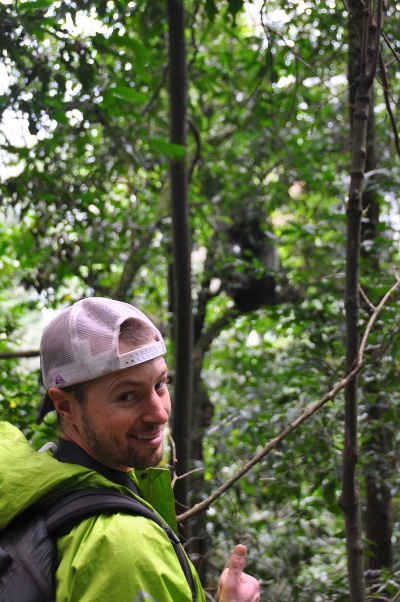
After 3 or 4 beers, we got the call that our gorilla tour was ready to start so we drove the 30 minutes into the park and met our ranger guide. It was a quick 15 minute bushwhack through dense jungle and when I narrowly missed stepping into some steaming feces, I knew we were getting close. We entered a gap in the dense jungle and could suddenly see the gorillas. Coming within 10 meters of the creatures was amazing, until the flatulence started. I suppose if you ate leaves all day everyday, you would also have pretty bad gas. We watched for an hour or so as they climbed the trees around us eating leaves and bugs. It was a once in a lifetime viewing experience and I was relieved that Ross and April would be able to maintain their relationship going forward.
Mission accomplished.
Unlike the drive to the park, the drive home was done as fast as possible. Unfortunately, the third tier tour company we choose was determined our tour should include the entire park and so instead of the 30-45 minute return journey after seeing the gorillas, we spent the next 3.5 hours winding through the hills around the Bwindi Impenetrable forest on our way home. When we finally exited the vehicle 10 hours after entering, we reflected on time spent in the car versus cost saved through alternative tour methods. Happy to have saved Ross and April, we are further committed to official tours and efficient uses of time going forward.
After cruising the empty rural stretches of western Tanzania, crossing the border into Rwanda provided a stark contrast. People were everywhere! Pedestrians and bicycles were filling every conceivable gap on the side of the road. Known as the Land of 1000 Hills, Ross and I are considering a re-branding campaign to make it the “Land of Excessive Pedestrians and Bicycles in the Roadway.” The 156km between the Rusumo Border Crossing and Kigali had a speed limit of 40kph, and determined to not get another traffic fine that week, I made Ross drive most of the 3.5 hours. It was a joy and relief to climb out of the car in Kigali at Discover Rwanda to a stocked bar of cold beers waiting.
Biker hitching a ride to Kigali.
Managed by Aegis Trust, an NGO and charity which manages the Rwanda Genocide Memorial and Museum, all proceeds from the hostel go back into supporting those impacted by the 1994 genocide. We visited the memorial museum the day after our arrival and found it informative yet distressing. Hutu and Tutsi labels are not used anymore with all citizens referring to themselves as Rwandan only. The museum explains that this distinction was not ethnic, tribal or language based but instituted by the original European colonizers deeming anyone with less than 10 cows as Hutu while wealthy cow rich natives became Tutsi thus codifying economic classes into “distinct” ethnic groups. It is confusing, shocking and heartbreaking that hatred, murder and “ethnic” cleansing was only 100 years in the making.
After the museum we desperately needed a positive energy boost. Fortunately through a Dubai connection, we networked our way into a Thursday night gathering at the Inema Arts Center. Packed with mostly expats drawn to a happy hour of buy one get one free beer, we met a plethora of interesting people ranging from business school interns at various NGO projects to entrepreneurs who have relocated to Rwanda from Finland, United States and South Africa (to name a few) to start and grow businesses. It was a fun and inspiring night to be around creative, smart and interesting people. The party only stopped due to load shedding but sufficient levels of beer-induced euphoria meant we braved our first non-traditional taxi’s home.
Ross survives his first Boda-Boda/moto ride.
The original plan was to depart Kigali for additional Rwanda exploring on Friday but having met so many interesting people on Thursday night, we couldn’t turn down the chance to attend a Saturday private villa pool party we had been invited too. Ross spent Saturday writing essays for b-school admissions and scholarships while I chatted up four cute veterinary students from Vets Without Borders at the hostel. As a lover* of all animals, it became imperative they these four ladies join us. As pool parties go, it was pretty typical and everyone was having a fun time and it was no surprise when 40+ people determined it was time to head for dinner at the trendiest Kigali supper club. Drinks were flowing, food ordered and dancing had started when the surge of suited up security detail entered the restaurant and the staff suddenly became much more serious putting an end to our dance party. It turned out, we had stumbled our way into the exact same supper club that Rwanda President Paul Kagame was to dine out that evening. Our evening continued somewhat less conspicuously after he arrived but it was still a great night and gave us pause about ever leaving Kigali.
With the trio down to two after dropping April at the Mbeya Airport, it seemed prudent to work through our grief on the road. We planned to leave early the next morning driving up the west side of the country along the east coast of Lake Tanganyika. It was a short 1,250 kilometers so the plan was to camp one night at the top of Katavi National Park and another night on the lake in Kigoma.
The plan pretty much worked. The roads were horrendous but Bubbles endured. The hardest part was keeping her within the legal limits when we actually hit tarmac. Despite our best efforts, we suffered two setbacks which we could not talk our way out of.
Welcome to Tanzania.Thank you for visiting Tanzania.
Following our mom’s advice, we will not say anything else about Tanzania.




















 Joburg to Scotland