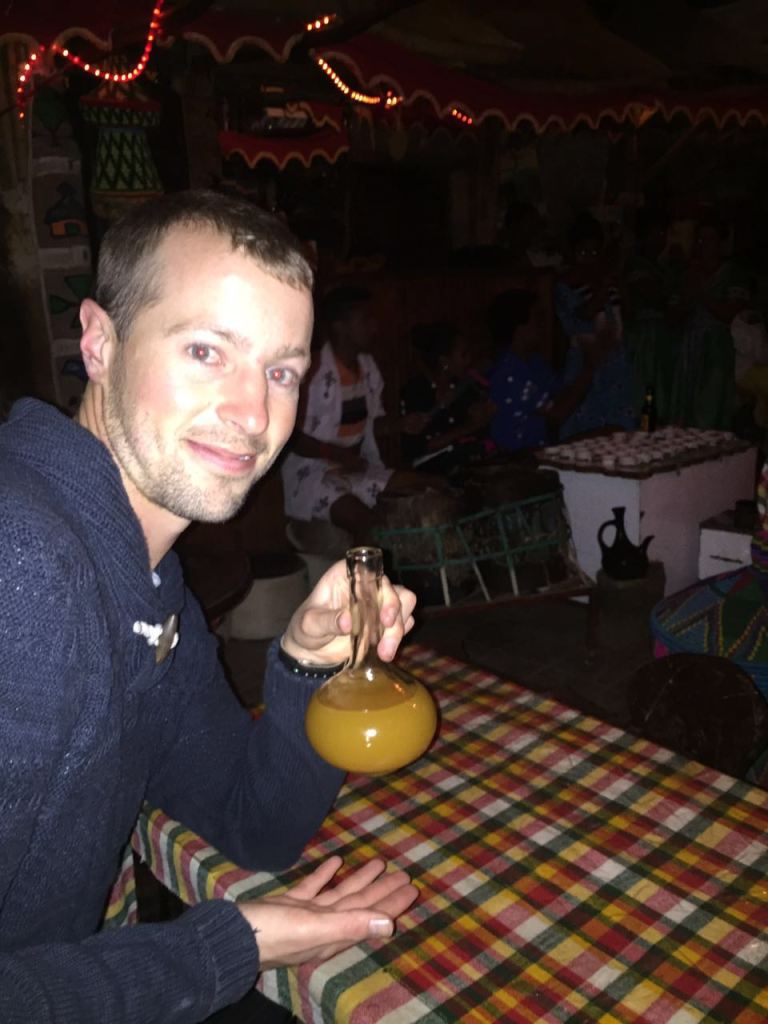
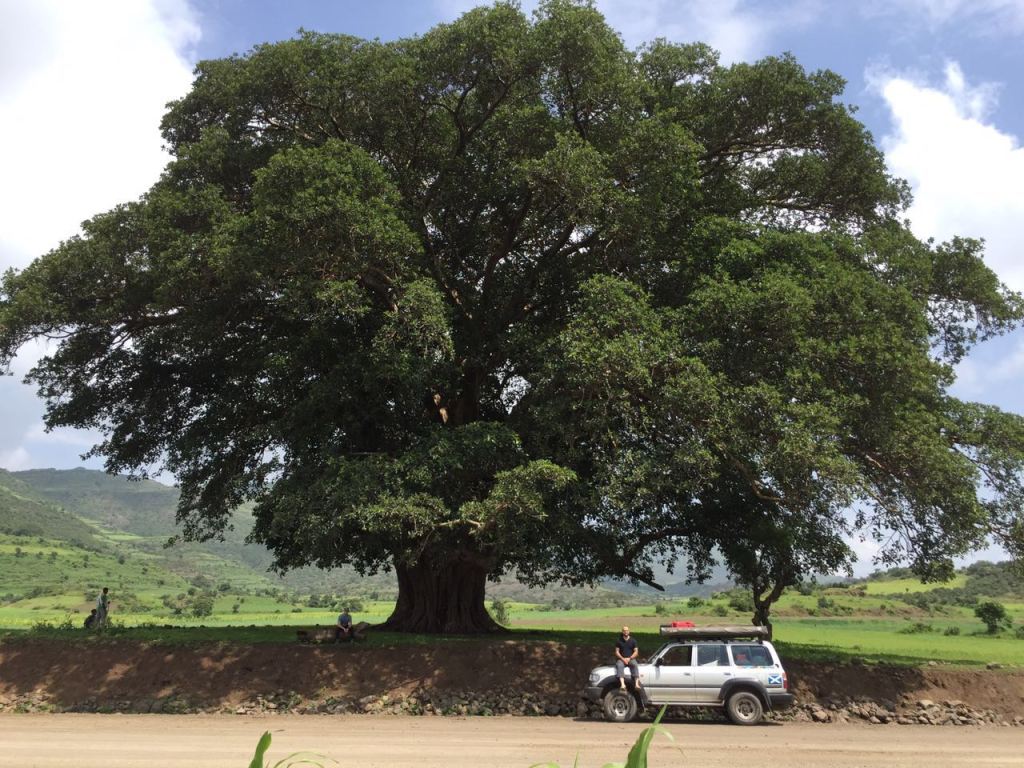
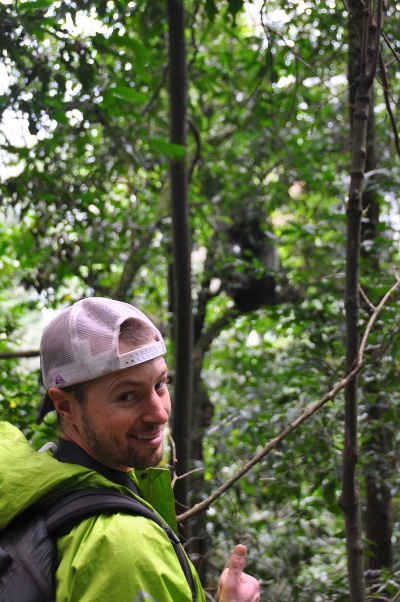
Forenji! Forenji!

After some cultural enrichment at Lalibela, Shea and I headed toward the Sudan border. We’d heard news of riots in Northern Ethiopia but hadn’t thought much of it. After all, we are young enough to still be invincible.

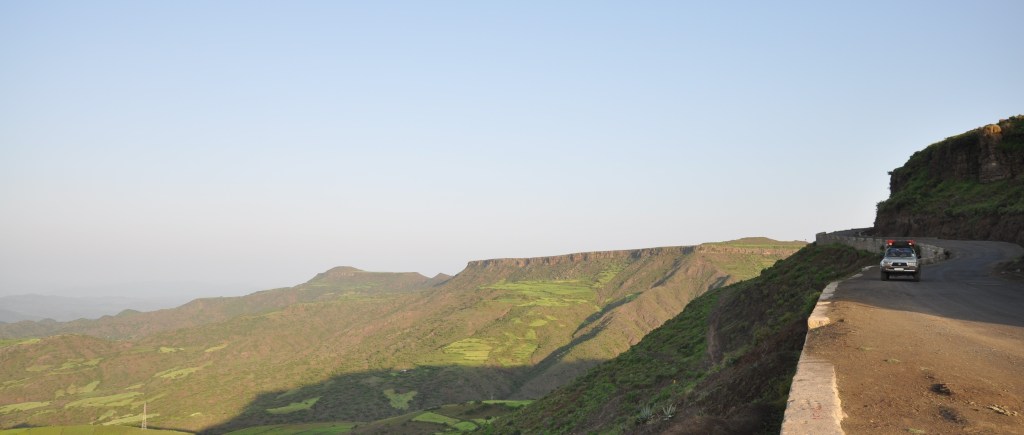
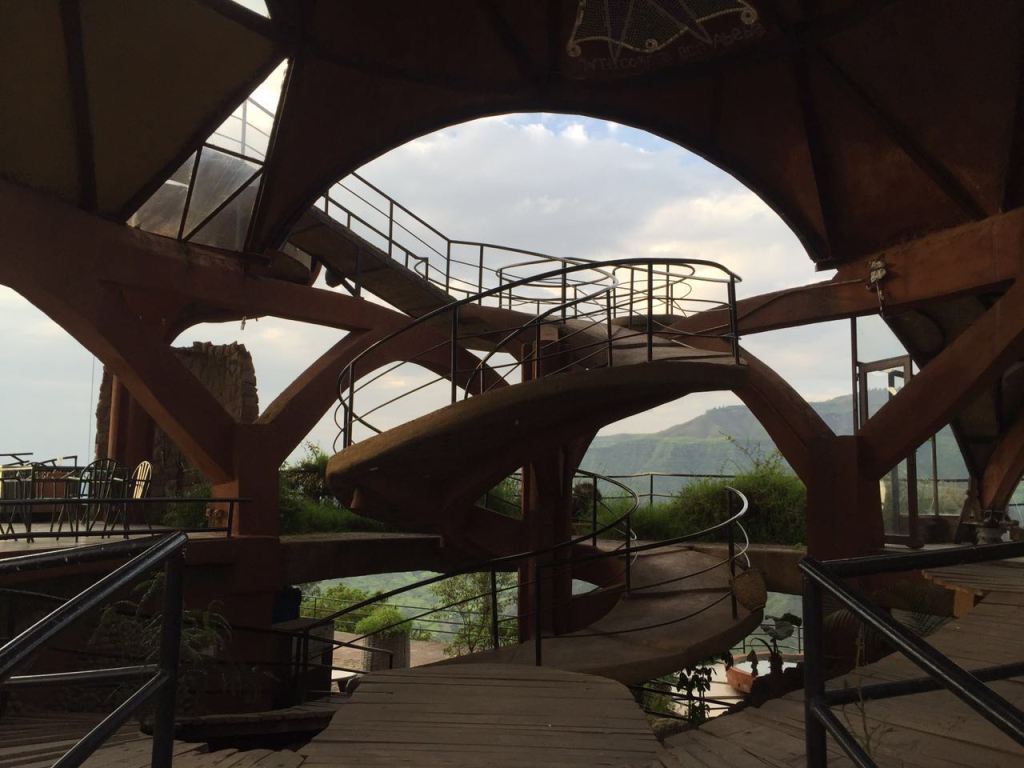
The view from Lalibela.
Bubbles on the way down.
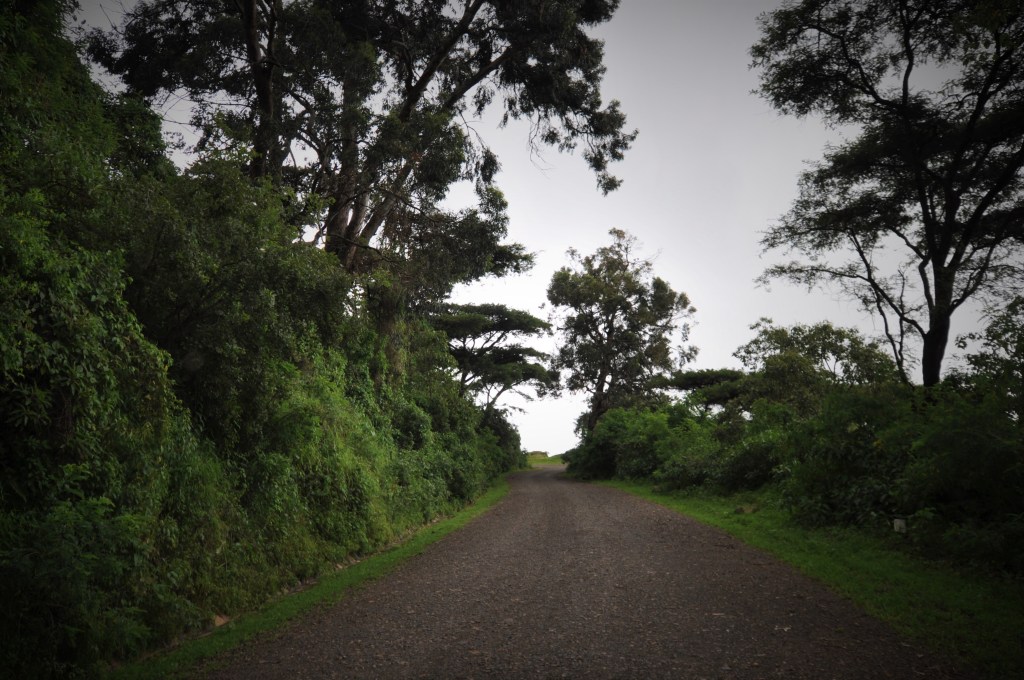
The kind of roads you encounter everywhere in Northern Ethiopia. Good fun to drive.

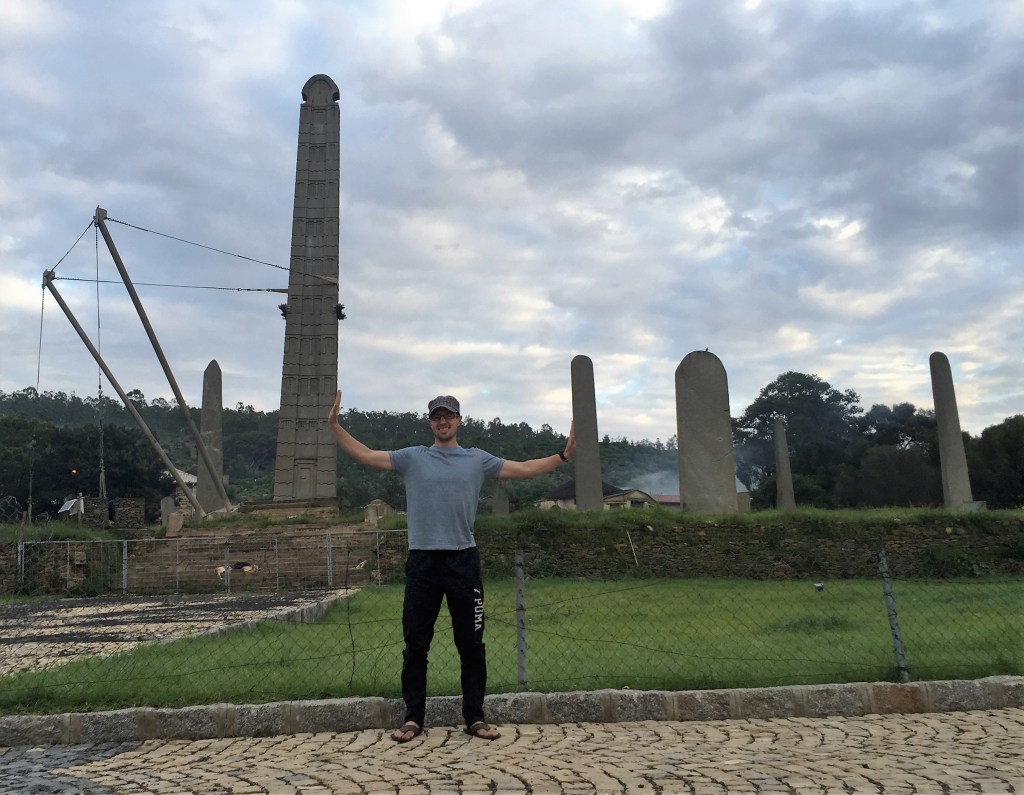
About an hour down the road, Shea and I were greeted by a policeman who informed us there was conflict further along the route to Gondor (a town 100km short of the Sudan border, not to be confused with the fictional realm from J. R. R. Tolkien). We were ordered not to take the road. Now there are other routes to Gondor but they were not what one would term “direct”. We eventually decided to take the northern option which took us past Axum and the Shire. Yup, the Lord of the Rings references just kept coming. It was a minor detour of around 1,000km. We spent a night camping in a parking lot in Axum, the supposed home of the original Ark of the Covenant, before snapping a photo of the tourist sites and heading along.
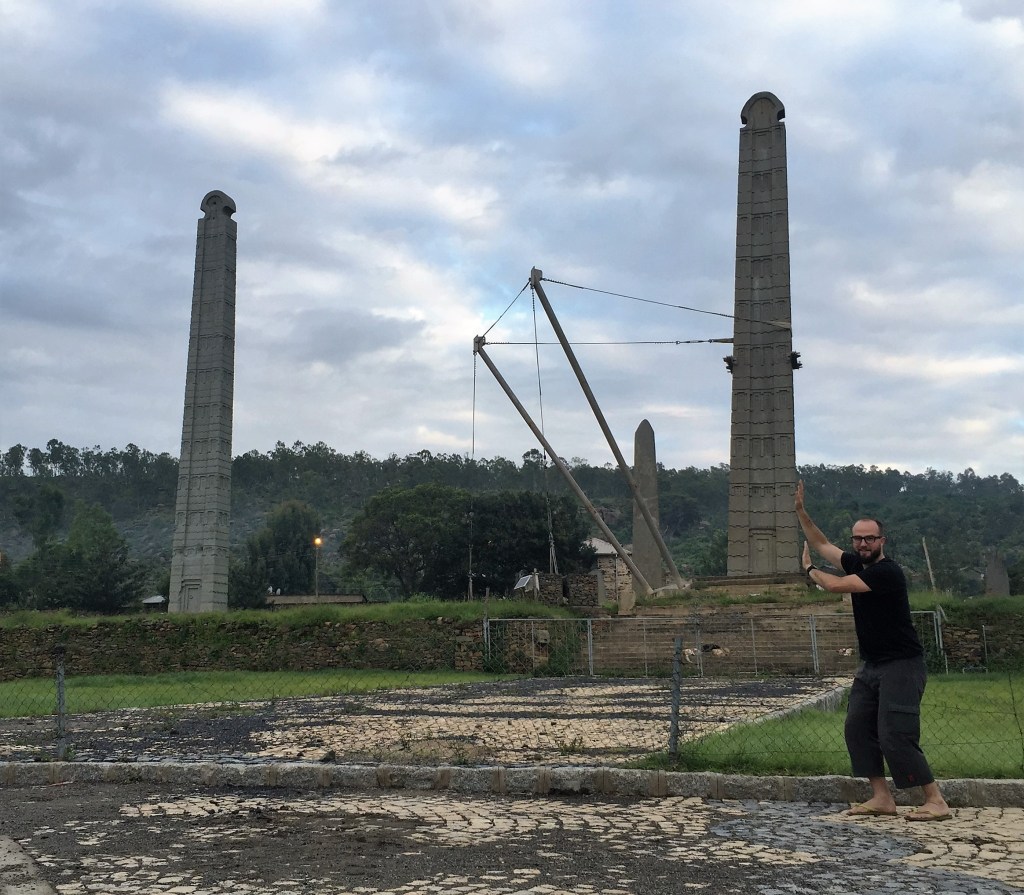
Shea, being a tourist at the Axum Obelisk.
Ross, also being a tourist at the Axum Obelisk.

The particular route we had chosen led us through the Simien Mountain pass. An incredible route winding to 3000m above sea level. The area had some of the most breath-taking views we’ve experienced all trip. Giant looming mountains resting in blankets of wispy grey cloud. The Lord of the Rings references were starting to make sense.
Warning: This photo does not do the Simien Mountain area justice. It truly is something special.

On the way up, Shea and I passed a small wall of rocks placed across the road. A slightly concerning sign, but we had nowhere else to go. We certainly weren’t going to retrace the 1,000km we had just covered back to Lalibela. Our plan was to be strategically oblivious of whatever lay ahead and we stuck to it, passing villager after villager frantically waving their hands to indicate we should stop and turn around. The reason for the rocks became clear as we rolled into the town of Simien, greeted by a substantial welcome party of angry men holding sticks and rocks. We promptly shat our pants. Luckily, one of the individuals at the front of the mob recognized the fear in our eyes. He turned and started yelling “Forenji! Forenji!” (translating to “Foreigner”) as we slowly traced his steps through the crowd, hands in the air and faces bleach white. This was to be our mantra for the multitude of protest towns and makeshift road blocks encountered over the next 80km.

We made it to within 20km of Gondor before we hit our biggest challenge. At this stage our track record was looking surprisingly good:

We rolled through into the final town, cautiously. The place was desolate, in the same way a Wild West town is desolate just before a shootout. This was a bad sign. Street vendors are one of the best pieces of evidence that everything in the town is carrying on as normal. When the shops are all bolted shut, it is either a public holiday or something is going down. It was not a public holiday. As we continued to roll through we noticed something we hadn’t seen since Lalibella… soldiers! Lots and lots of soldiers. Maybe this meant the town was under control! They gave us a wave as we passed and we breathed a temporary sigh of relief… until we hit the most impressive obstacle Bubbles had faced. A hundred meter stretch of road completely covered with a blanket of broken glass bottles. We rolled to a stop in front of the impassable obstacle just as another mob emerged from the side of the road. I’m going to be honest, I got a bit existential at this point.

We clearly did not die, because otherwise I would not be sitting here writing this post. Fortunately, our belief in our own immortality is coupled with a considerable amount of good luck. Again we managed to find a patriot for our cause from within the mob. This individual, let’s call him Captain Awesome, guided us down back alleys and past tin homes till we emerged on the other side of the broken glass wall. He convinced the crowd to clear a path back onto the road, allowing us to pass, and walked us slowly down the street alongside burnt piles of rubble and at least 30 locals hiding behind the verge of the road, guns pointed directly at us from their makeshift trench.

Shea and I rolled out of the town speechless. It took at least 15 minutes of soothing latin beats from Shea’s Salsa collection before we were close enough to normality to reflect on our harrowing ordeal. That night was spent wild camping at the Sudan border after a refuel in Gondor. We had made it through Ethiopia, but only just.
Lovely Lalibela

In Addis Ababa, other travelers we met indicated the drive to Lalibela was 14-24 hours, depending on ones mode of transport. We departed casually around 8:30 AM with the intention to camp on the side of the road when we got tired and arrive refreshed the next day. As the day wore on, we seemed to make much better progress than anticipated and so with the goal post shifted to making Lalibela in one day we pressed on through the mountain roads in the dark. We turned off the main highway with less than 100 km to go but the secondary road to Lalibela was struggling to be a road in the midst of ongoing construction upgrades. After only 5km along we ran into a logjam of semi-trucks and dump trucks stuck in the mud. The trucks were double parked blocking almost the whole road. Almost is the operative phrase. While Ross negotiated Bubbles down into the ditch and around the first set of double parked/stuck in the mud trucks, I used all the Amharic* skills at my disposal to convince two sleepy truck drivers not caught in the mud to back up 10m each so Ross and Bubbles could re-enter the main road before the ditch became impassible. With cheers from the gathered group of stuck truck drivers, Ross navigated Bubbles through the gap and back onto the open road. Only 80km to Lalibela on muddy roads in the dark to go!
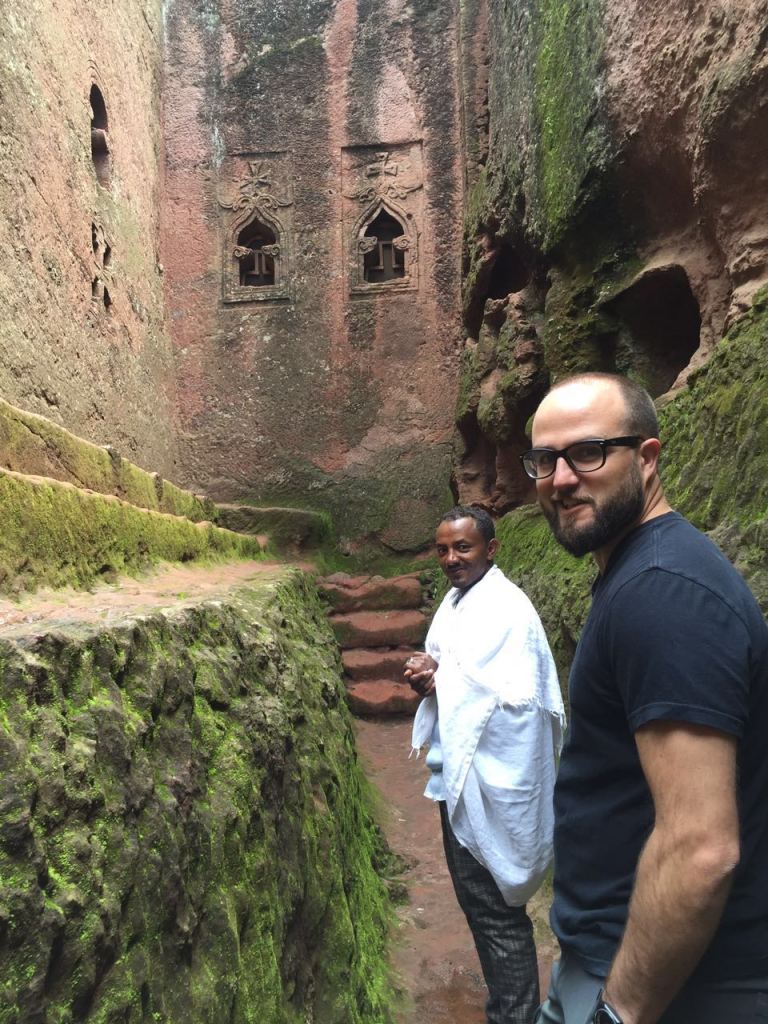
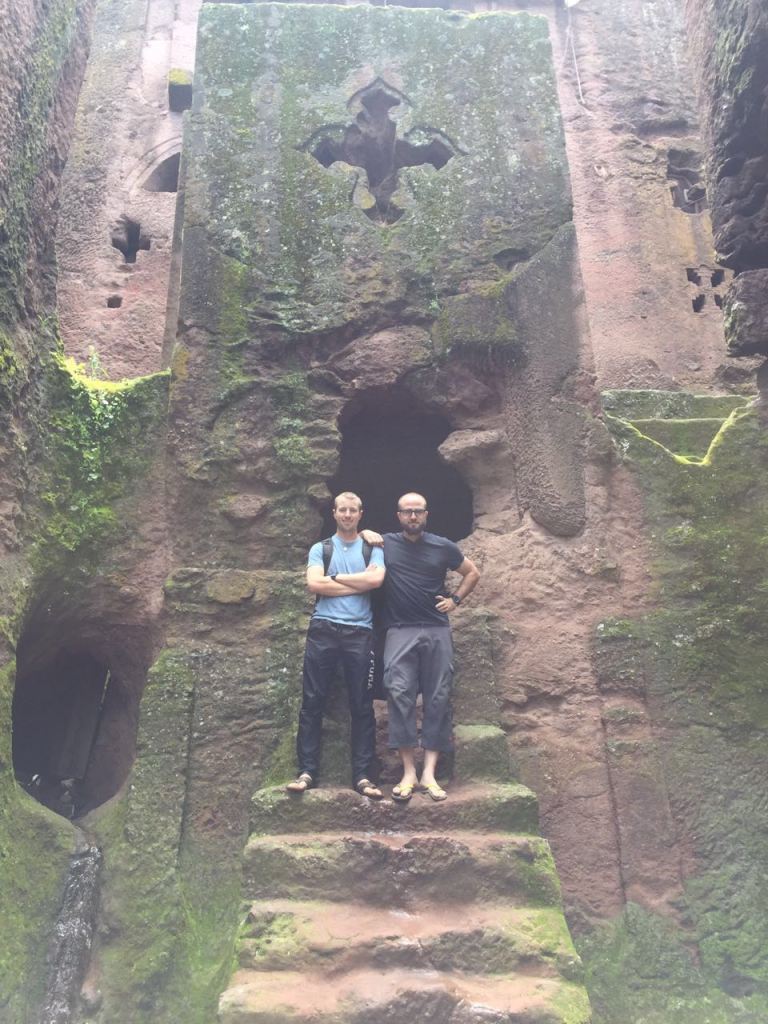
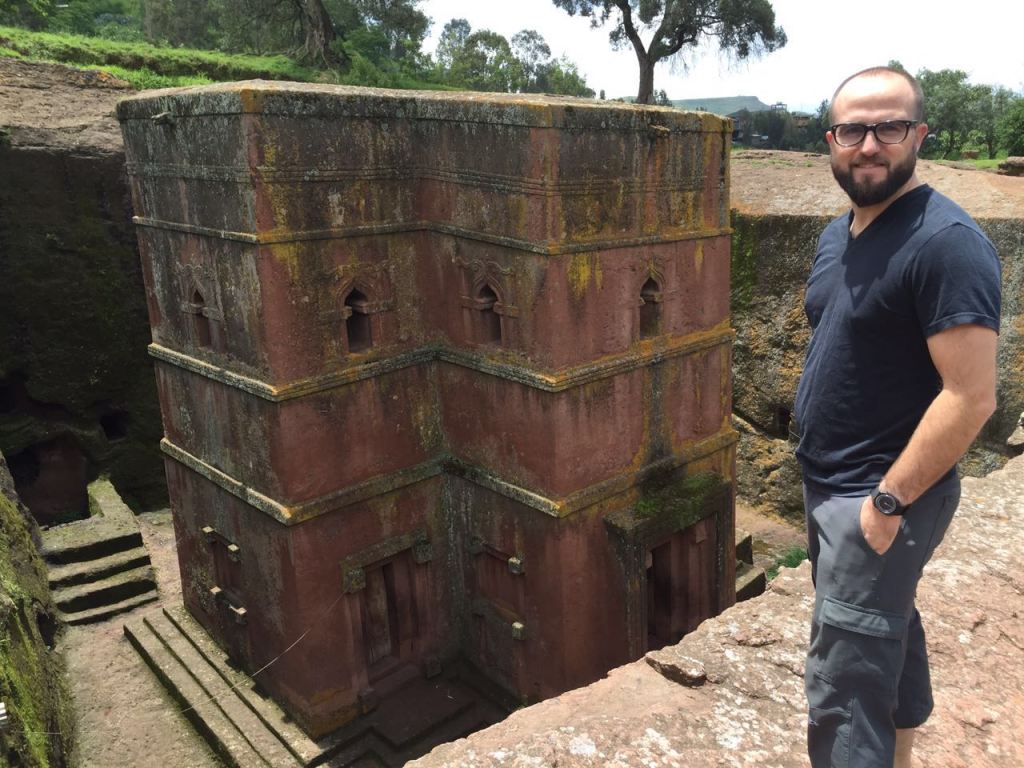
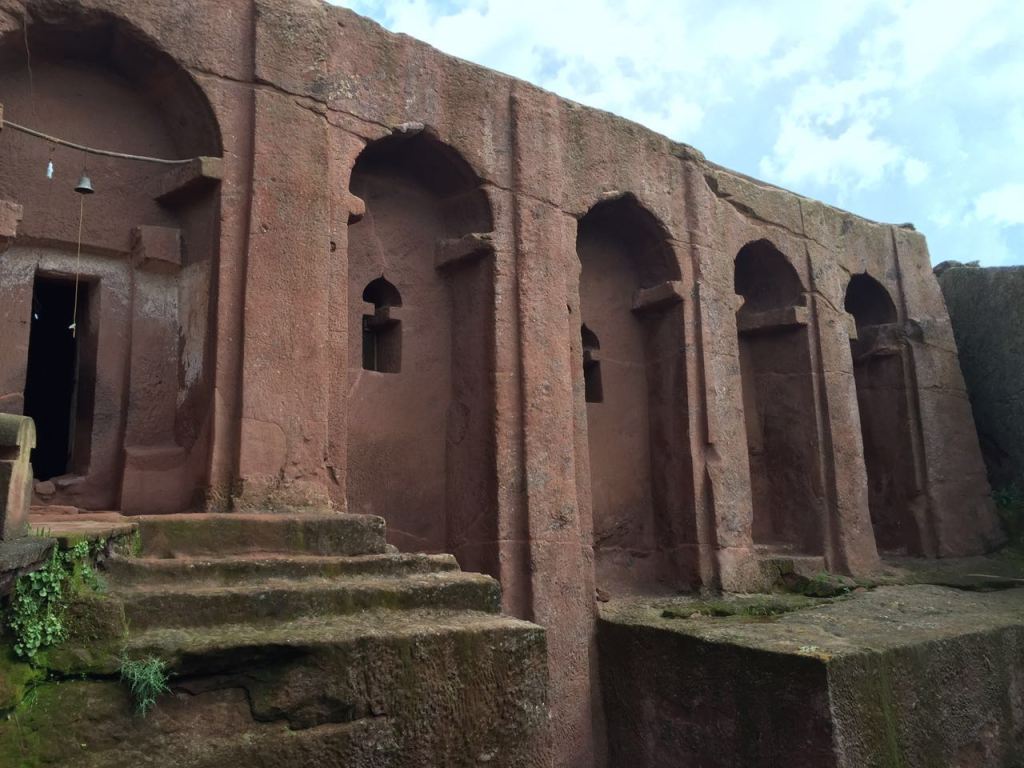
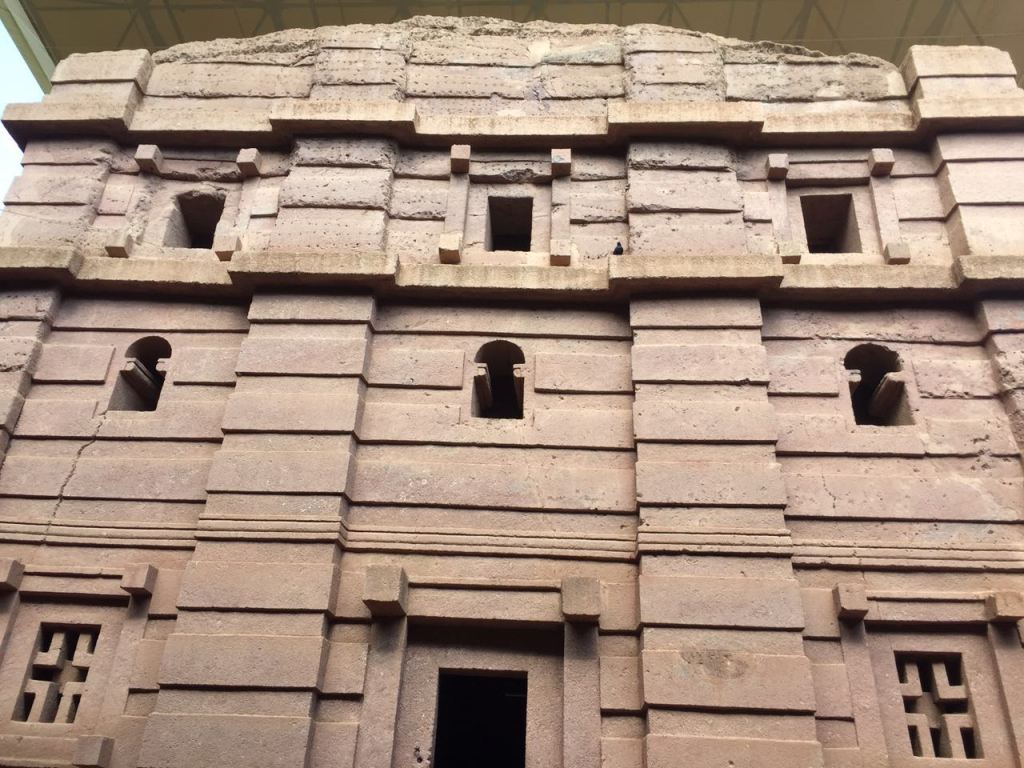
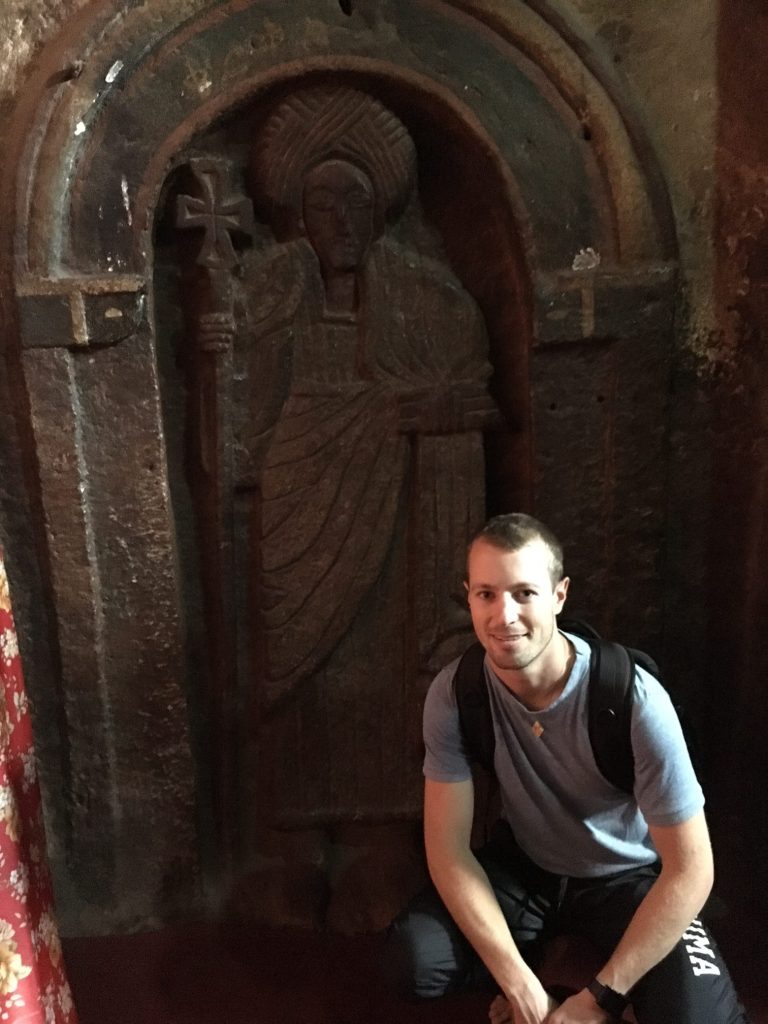
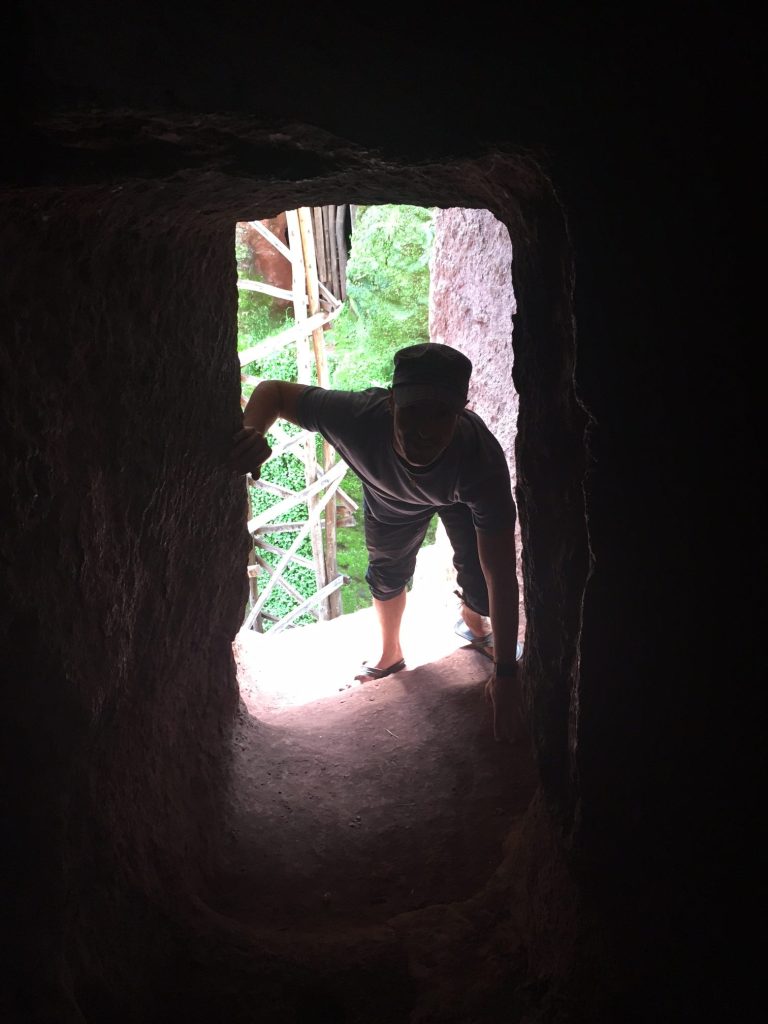
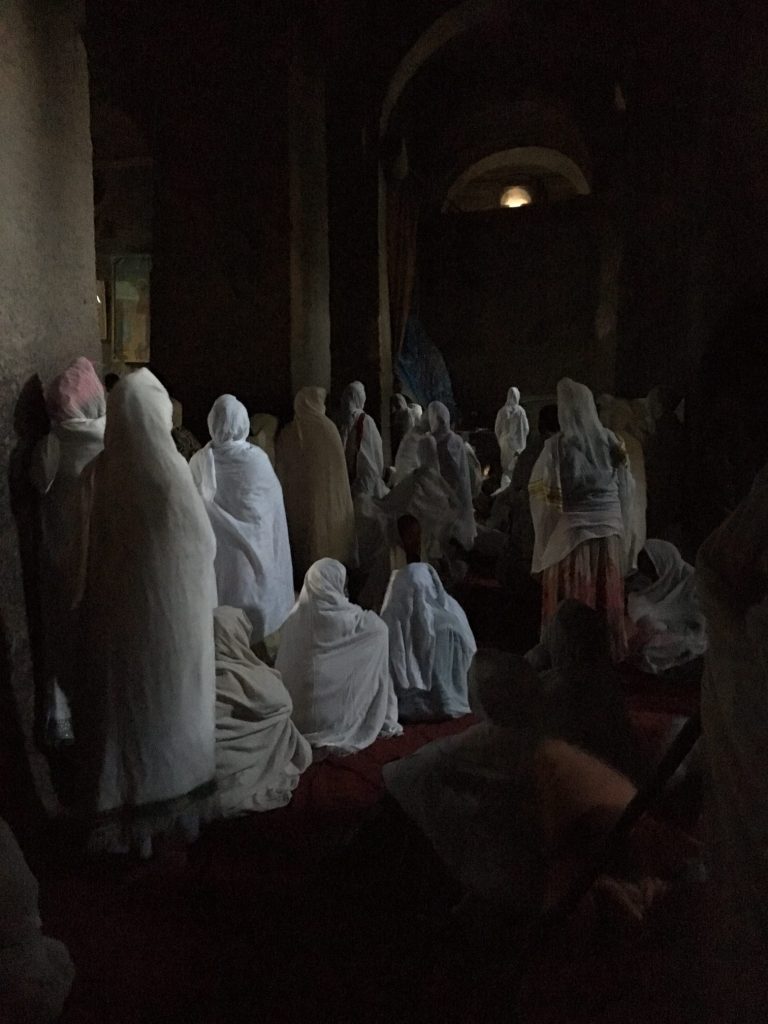
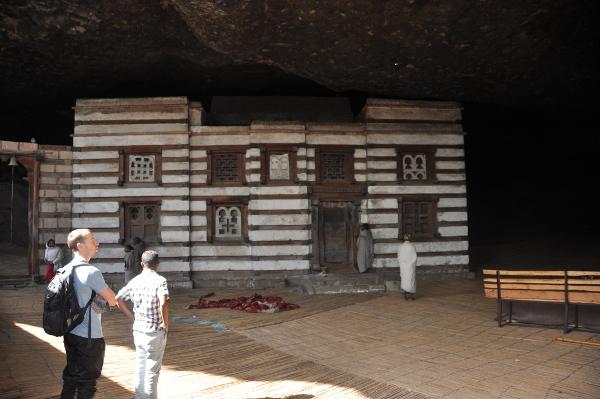
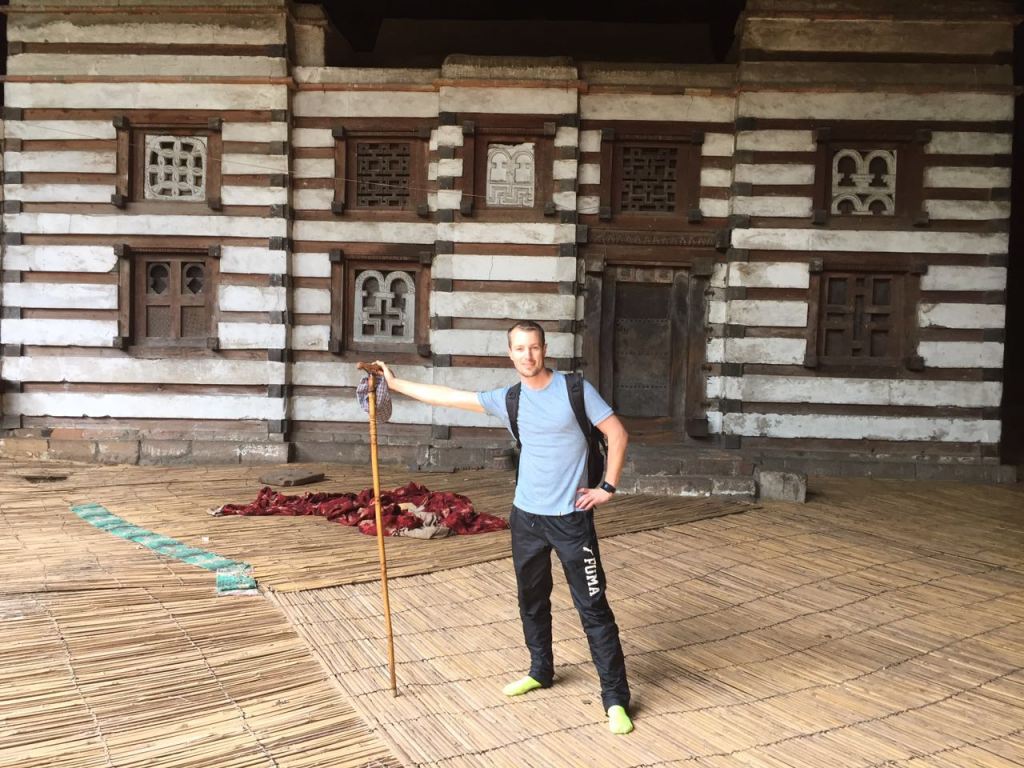
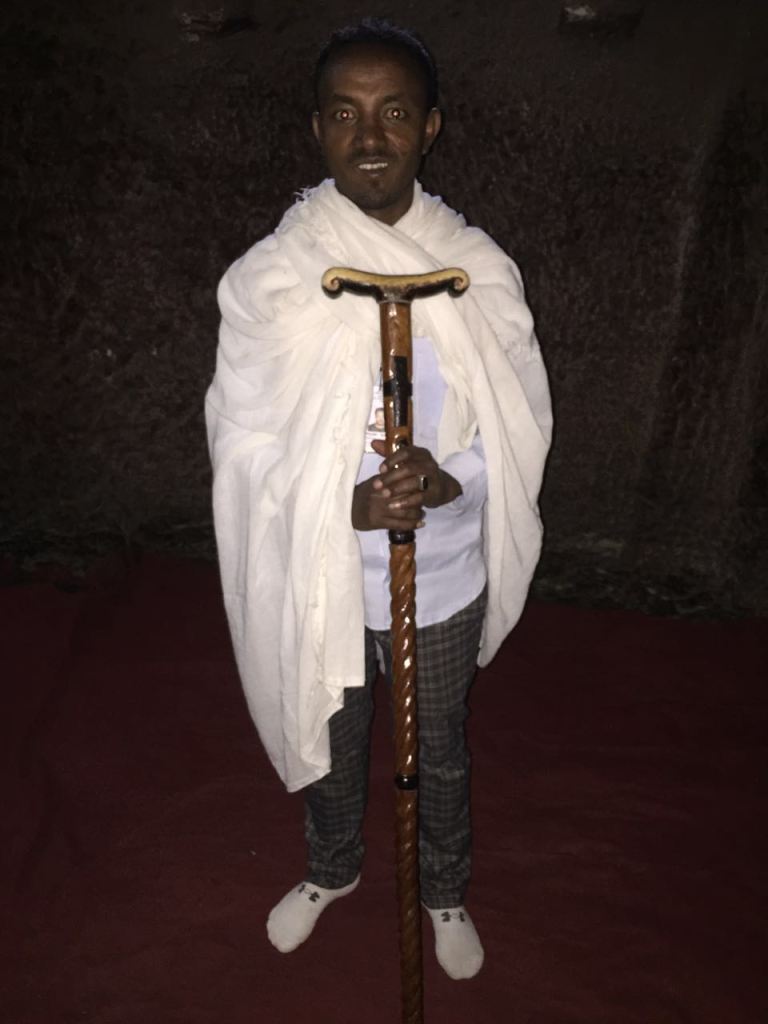
Despite the challenge in arriving at 12:30AM, we found a hotel near the traditional tourist sites still open with a room for weary travelers. We asked them to organize a guide for us in the morning and so after 6 hours of sleep we woke up to find Mr. Melise waiting for us. We toured all 11 stone churches of Lalibela which were built in the 4th century, most carved out of solid pieces of rock. Through tunnels, across bridges and up and down many stairs, these ancient houses of worship were a marvel to behold. Filled with priests, incense, pilgrims and worshipers it was a fascinating tour through Africa’s oldest churches and Ethiopian pride of their long standing Christian traditions.

Our second day touring brought us to another set of churches built into caves outside of Lalibela. It was a beautiful drive with the sun out. We spent the afternoon back in Lalibela enjoying a leisurely lunch and books in the sun. It was good to have a break after our long drive up from Addis. And also good because of what was to come . . . .

*not to be confused with ‘Murica!

Vaga-bonding

Now back in Nairobi, after a two-week bonding session with my brother, it was time to kick back into planning mode for a few days till Shea arrived. Ethiopia was the next country on our hit-list and their website confirmed we would get a visa on arrival. Perfect. Unfortunately, we had overlooked the fine print. The “visa on arrival” perk only applies for entry by plane. Overland travelers need to apply in advance in their home countries. Crap! Luckily, there was an alternative process involving the Ethiopian Embassy in Nairobi, a letter from the South African / US embassy and the signature of the Ethiopian Ambassador. It all sounded easy enough.

Around this time, I met fellow vagabonds Polo, a Spaniard who had been travelling the world for over two years, and Will, an Englishman doing a circumnavigation of Africa. They were in a similar situation to myself, hoping to get an Ethiopian visa to complete their travels. The three of us made a daily pilgrimage over the next week and a half to the Ethiopian Ambassador’s pad hoping for a glimpse of his holy face. Each day we were told he was not around but would be returning within two weeks. Eventually we gave up and I switched to plan B, sending my passport back to South Africa via DHL*.

All the while, Shea was having similar problems trying to organize his Ethiopian Visa from Dubai. After a bit of brainstorming we concluded that the most efficient solution was for Shea to fly into Addis Ababa, cash in a “visa on arrival” and bus south to meet me near the border. I would put on my big boy pants and drive through Northern Kenya alone once my passport arrived back.

In the interim, I moved in with Calden and Bridget, fellow South Africans, who were willing to give shelter to a dirty vagabond like myself while my passport jet set around the continent. The little green book made it safely into the hands of a visa agent in South Africa. It was basted with a beautiful Ethiopian visa and handed back to the friendly DHL deliveryman to escort back to Nairobi. And that is where everything started to unravel:

After the mad dash for my passport, I was finally ready to head north for a stopover at Marsabit Nature Reserve, before meeting up with Shea in Ethiopia. When I finally reached him in the tiny town of Awassa, his first words to me, after a month of separation: “Why is bubbles so dirty?” Priorities…

* Dear DHL. Please notice this lovely piece of free advertising. If you would like to compensate me with money or free things please feel free to do so. Much love. Ross.

Vacation from Vacation

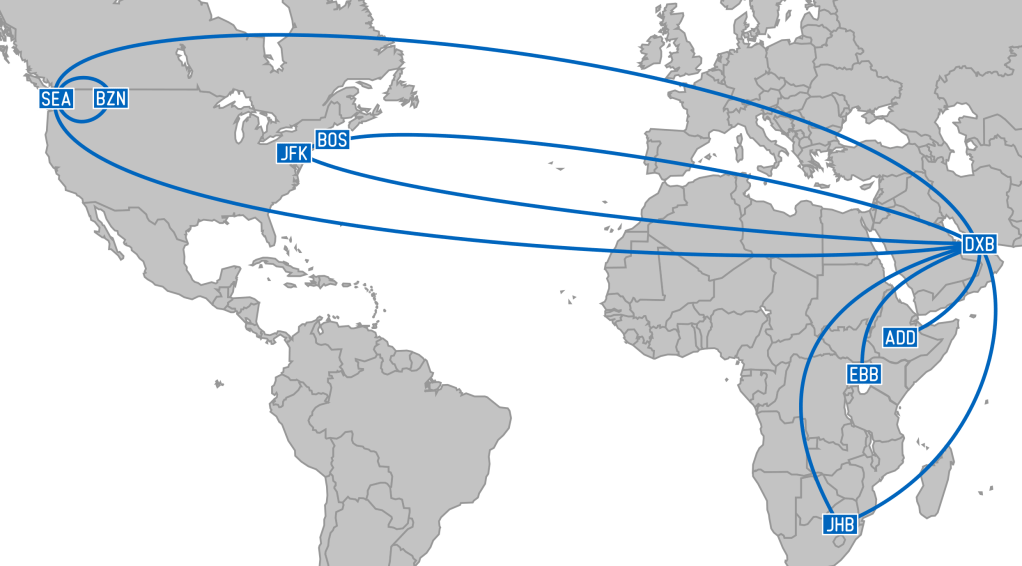
The plan was simple. A short drive from Cape Town to Cairo with a small break in the middle to attend a few weddings back home in America. Well, due to some visa complications with the UAE, Sudan, Kenya and Ethiopia I basically flew around the world at least once orbiting Bubbles as she progressed through Kenya. If you speak airport code, it went something like this: EBB-DXB-SEA-BZN-SEA-DXB-JNB-DXB-JFK-BOS-DXB-ADD. If you don’t speak airport code, see below:

Highlights of course were: seeing nieces and nephews in Seattle; seeing JT and AGC get hitched in Bozeman; catching up with great friends in Dubai; collecting Sudan visa in Pretoria and then skiing in Lesotho with great friends from Joburg; a great catch up in NYC with my Dominican Family and most excellent friends from Dubai; suiting up in my best Ugandan tux for LA and CJ wedding in New Hampshire. It was a whirlwind. And totally worth it.

Now that I’m in southern Ethiopia waiting to meet up with Ross, I am ready again for a simple life on the road. But gosh, I will miss the champagne on those Emirates flights.

Hakuna Matata

Goodday fellow bloggers, and those loyal to the writings of the ever-talented travelling duo that is Ross and Shea. My name is Shaun, a recently promoted member of Team “JoburgtoScotland” having flown in for a guest appearance during the Uganda-Kenya stint alongside a brother from the same mother, with the tenacity of an enraged honey-badger, it can only be Ross-Boss himself.

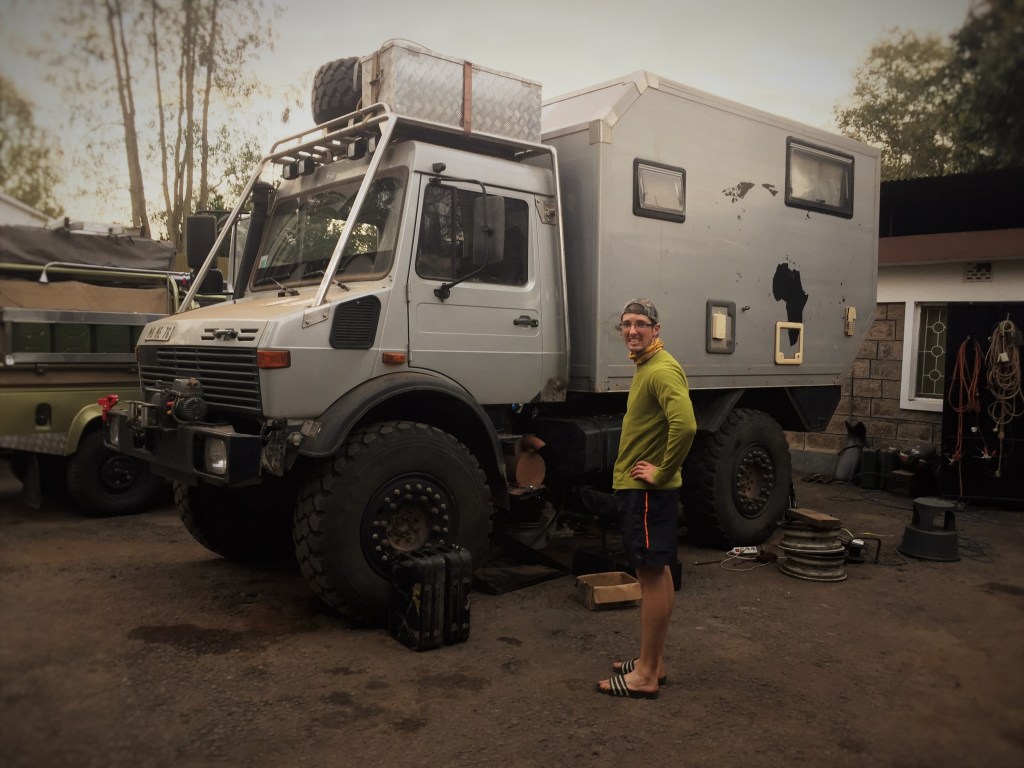
So without further adieu, allow me to pick up from where he left off as we made our way across a painfully truck-congested border post from Uganda, into the very birth-place of Disney’s “The Lion King”, indeed we were now playing on Simba’s turf. Pit-stopping in Nairobi, we stayed at a fairly bad-ass over-landers campsite. It was like over-lander Utopia, a place where flashing your skottel braai, camping chairs and mosquito repellent was your ticket in. Amongst the over-landing equipment eye-candy was this monstrosity of a vehicle belonging to a slightly deranged German who was a “professional” over-lander in every sense of the word.

Moto-indestructible. Fear is only natural.

A clear MacGyver fan at heart, he had bought himself a German ex-military “tank”-come-“snow-plough” and transformed it into Moto-indestructible. We use the term “deranged” quite lightly, but to be honest after spending roughly 3 years on the road, travelling throughout Asia, Europe and now Africa, and being arrested at least 3 times for suspicion of being a terrorist he was properly mad by the time we caught up with him.

Onwards to the coast saw us arrive in the beautiful coastal city of Mombasa, which I believe in Portuguese roughly translates to Whales… no I joke, I have no idea how they got the name. There’s stacks of fascinating history behind this place, with Portuguese, Arabic, British and Native Africans all having occupied the city at different times over the last 500 years. Vasco Da Gama himself, who was the first European to set foot on South African soil for those of you who didn’t know, also was the first to discover Kenya, arriving in Mombasa in 1498… what a legend.

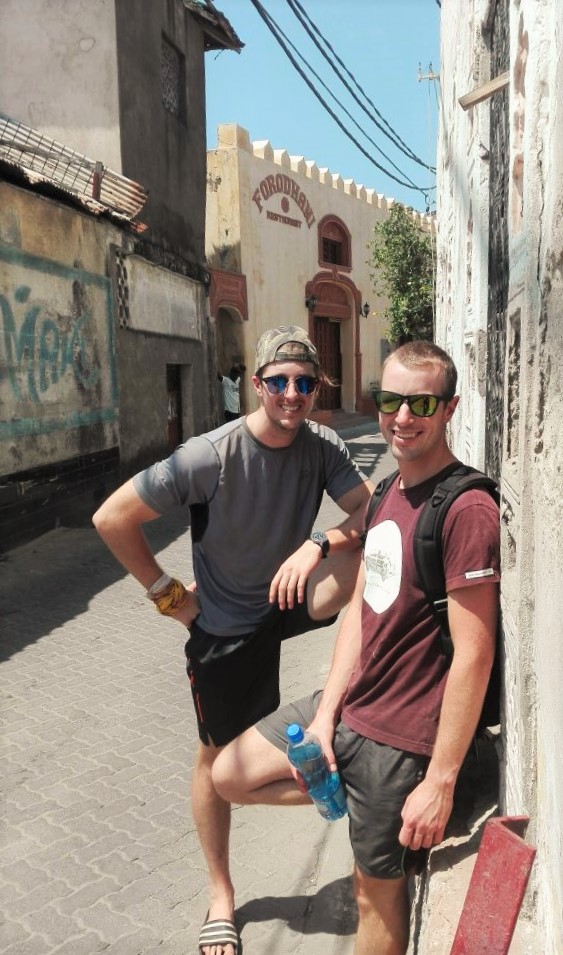
Reflex boy-band photo in Old Mombasa.

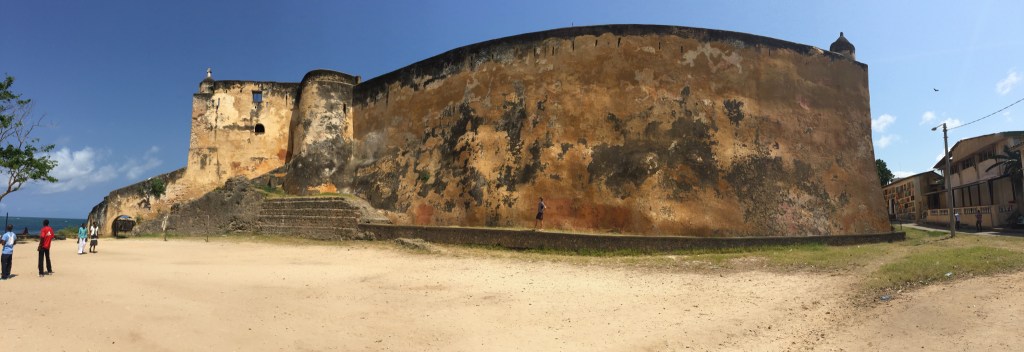
We wandered round old city streets and iconic landmarks including the Portuguese-built, Fort Jesus. A flippen impressive structure considering it’s more than 400 years old. The most remarkable thing is that those Pora-sailors carved this colossal thing out of solid rock! I kid you not. Literally took 3000 slaves all of 3 years to do, so to be fair they deserve the credit. The Portuguese were no doubt on the side eating Prego’s and kicking a soccer ball while these legend Swahili folk were hard at work. Nonetheless impressive.

Fort Jesus in all its glory. See if you can spot me in front of the wall.
The official entrance. Don’t worry, the canons are on safety.
The basement.

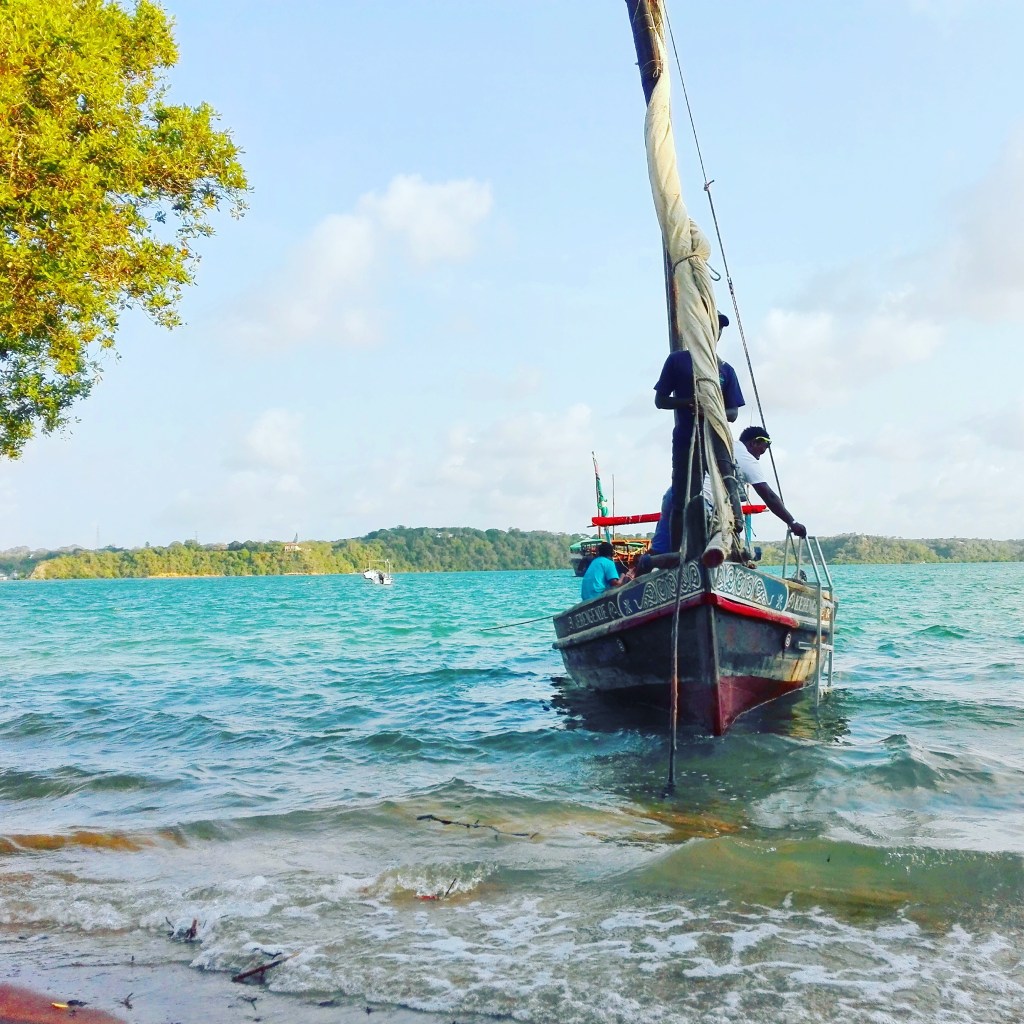
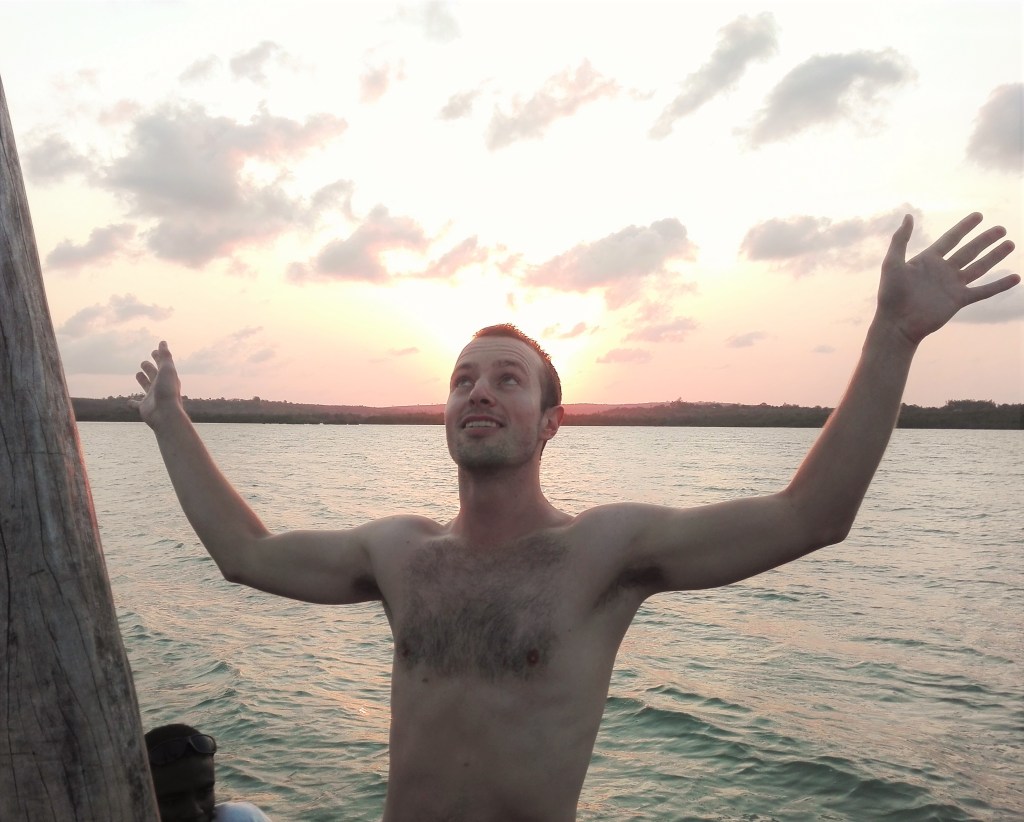
The Coast is packed with things to do and sights to see. Indeed life was good, amidst sailing into the sunset in a traditional Swahili Dhow, swimming in Bioluminescence (that crazy plankton in the water that glows at night!), daytrips to exotic beaches, market-place browsing and feasting on the freshest seafood platters money can buy. Let’s just say we weren’t struggling to keep ourselves entertained.

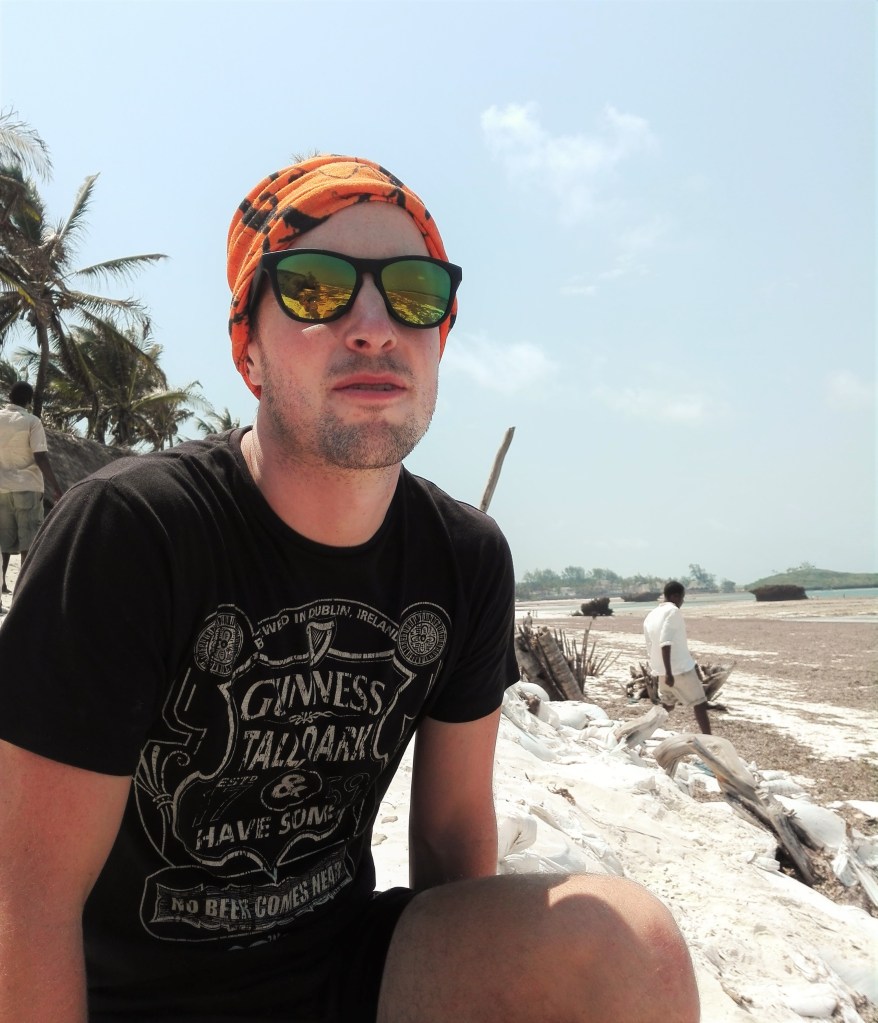
Soaking up the sun.
Our fine stallion of a sailboat.
Sunset from the deck.
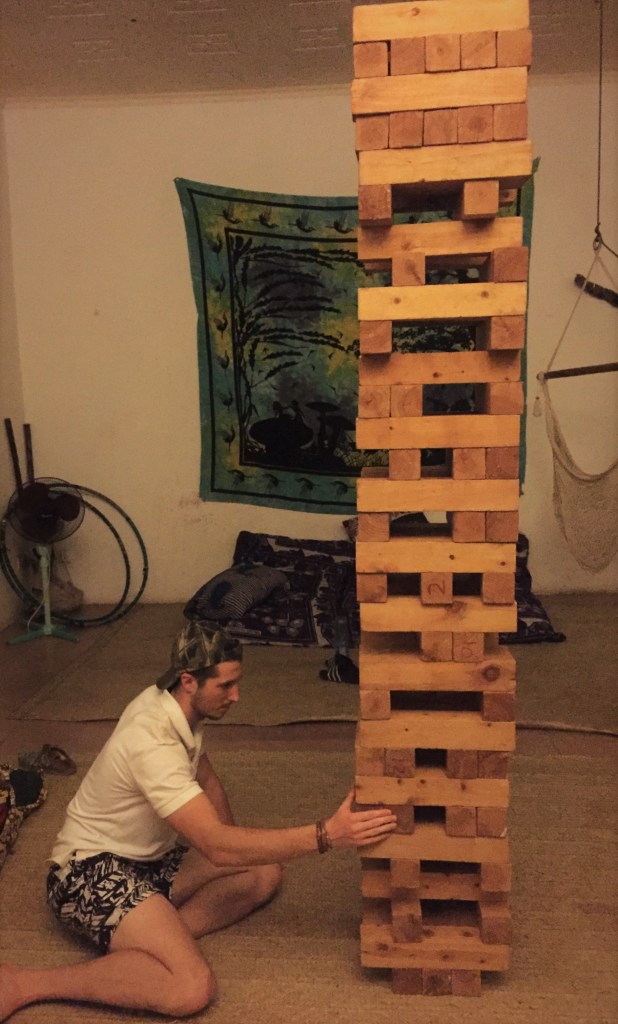
A potentially fatal game of Jenga at Distant Relatives Backpackers.

The only downer, if you happen to be an individual of European descent, is that the locals often mistake you for a walking ATM machine. As a result, you are bound to get haggled at every opportunity, but keep your wits about you, your head down and your back hand strong and you’ll be just fine 😉

Fancy a Sipi?

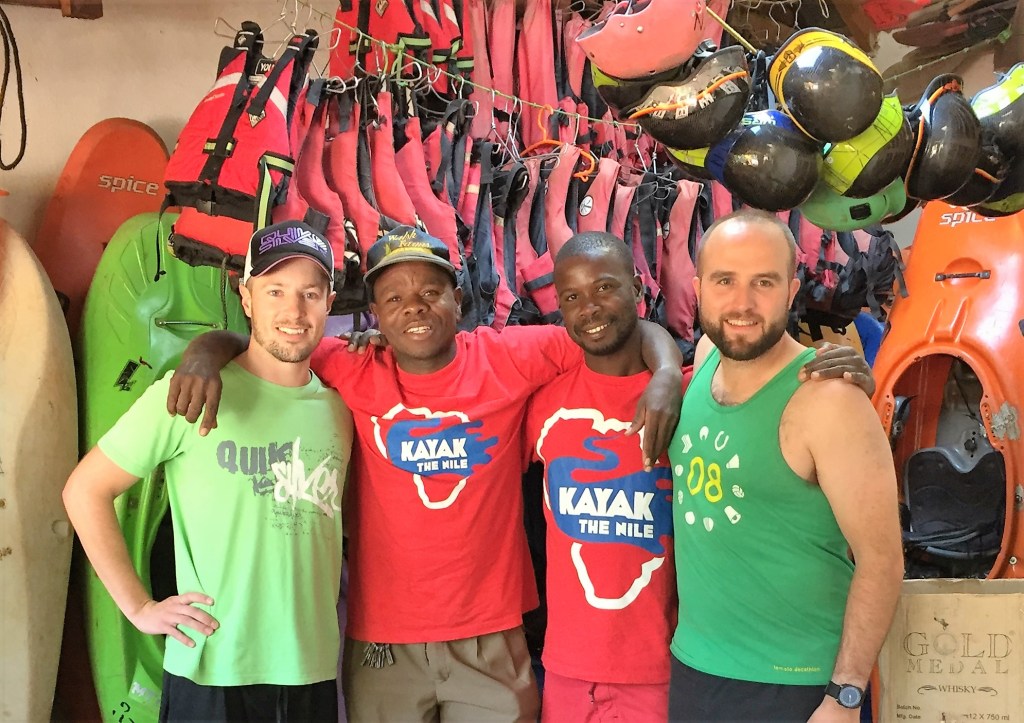
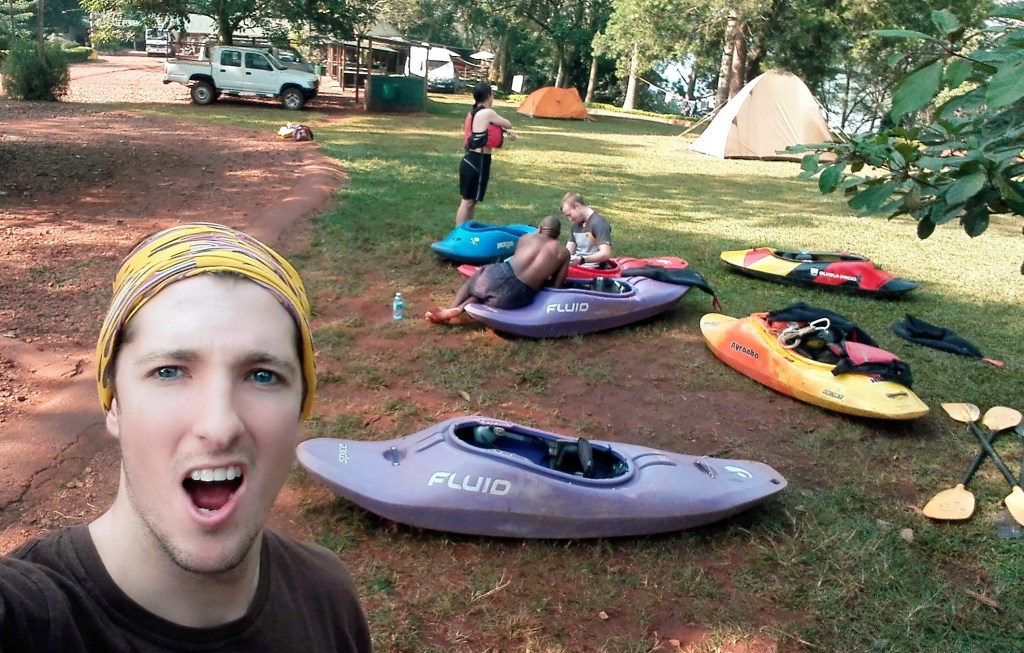
Considering our close proximity to the source of the White Nile, it would be a shame to miss an opportunity to spend some time in the water. Shea and I signed up for a day of paddling in a plastic bucket with Kayak the Nile. After a morning of training in the flatwater, we headed off to the rapids where we capsized at almost every turn, but looked good doing it. Luckily our guide David, who competed in the last World Kayak Championships, was there to save us from drowning due to incompetence. This guy was really brilliant. His enthusiasm was contagious as he forward flipped and pirouetted while waiting for us in the flatwater.

Shea and I with the king of kayaks, David (mid-left).

The guys at Kayak the Nile really run a slick operation and commendably try to provide as much employment as possible through partnerships with service providers in the community. Our lunch was prepared in the village and the transit to the white-water section of the river was conducted in an “off-road” Mutatu*.

We enjoyed our day out with David so much that I signed up for a second run with my brother, Shaun, when he arrived for our two-week brotherly bonding stint while Shea was attending weddings in the US. We are both naturally competitive and he is bigger than me so I like a rigged game.

Prepping for another awesome day in a bucket!

After splashing about in the Nile, it was time to say goodbye to Jenny and Chris, our incredibly hospitable hosts in Jinja. We headed through to Sippy Falls for a day of hiking in mountain pastures. What a spot!

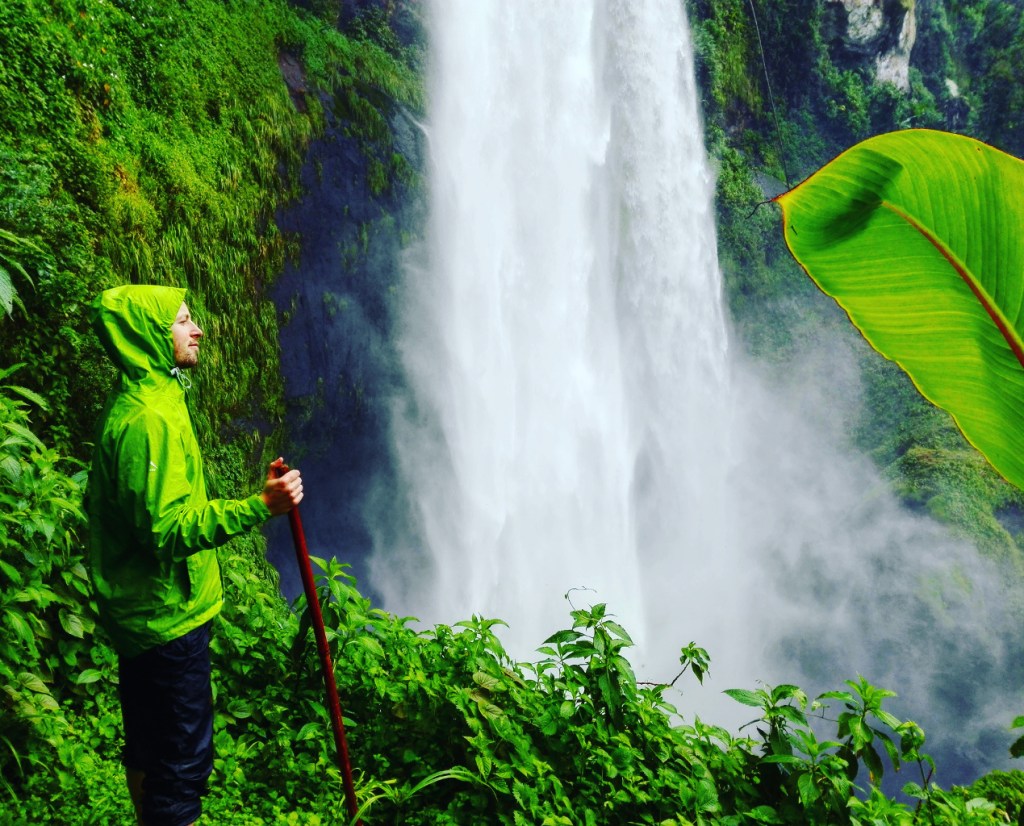
The glorious Sipi Falls.
Me, thinking about what’s for lunch.
The lush green meadows of Sipi Falls.

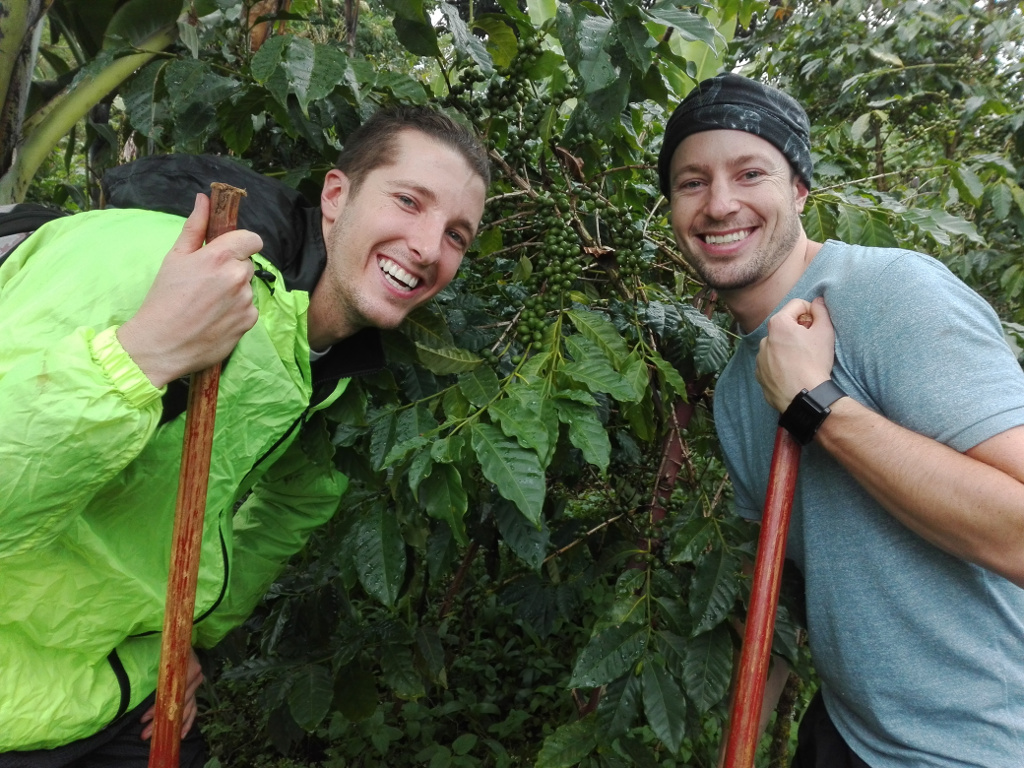
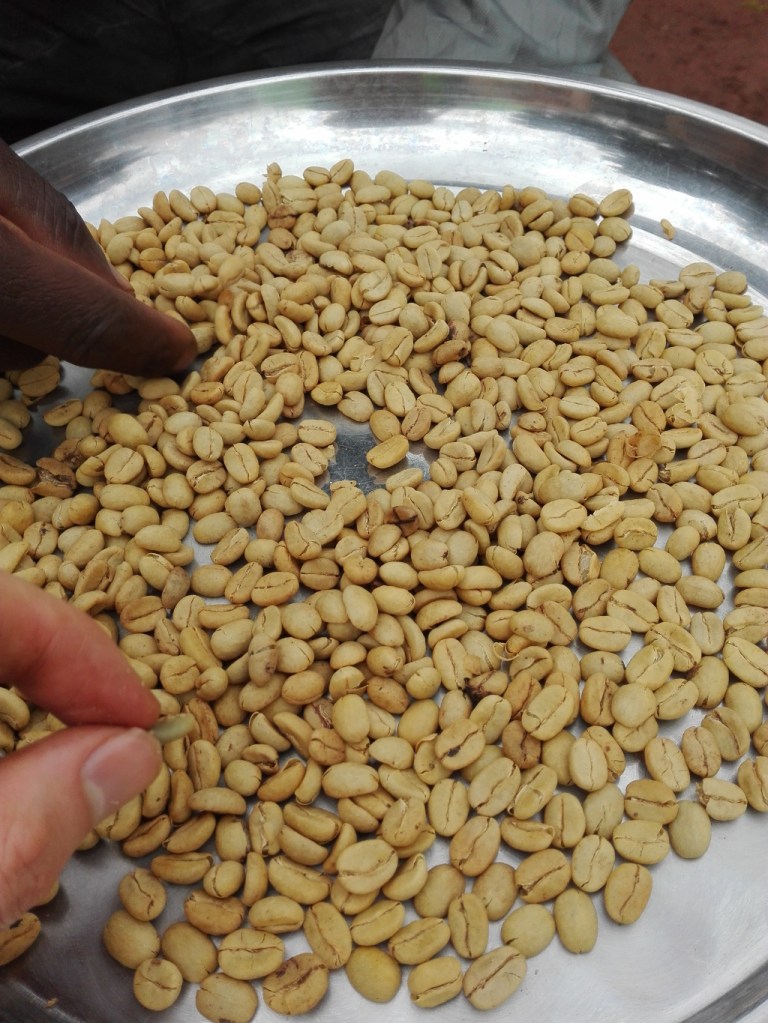
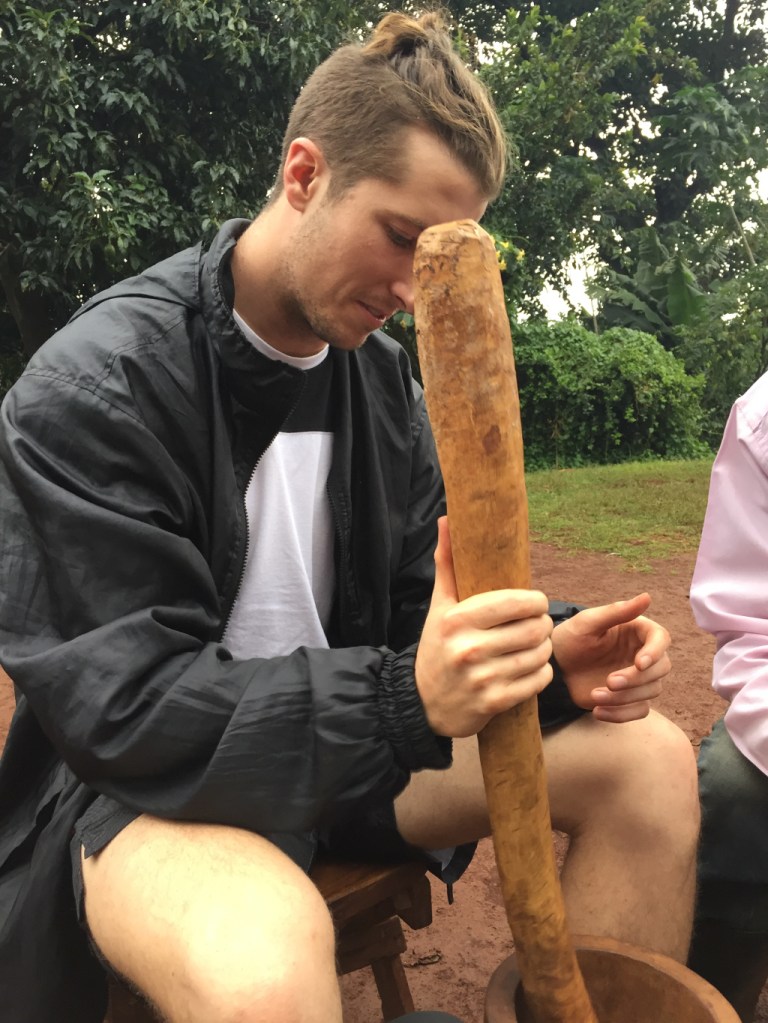
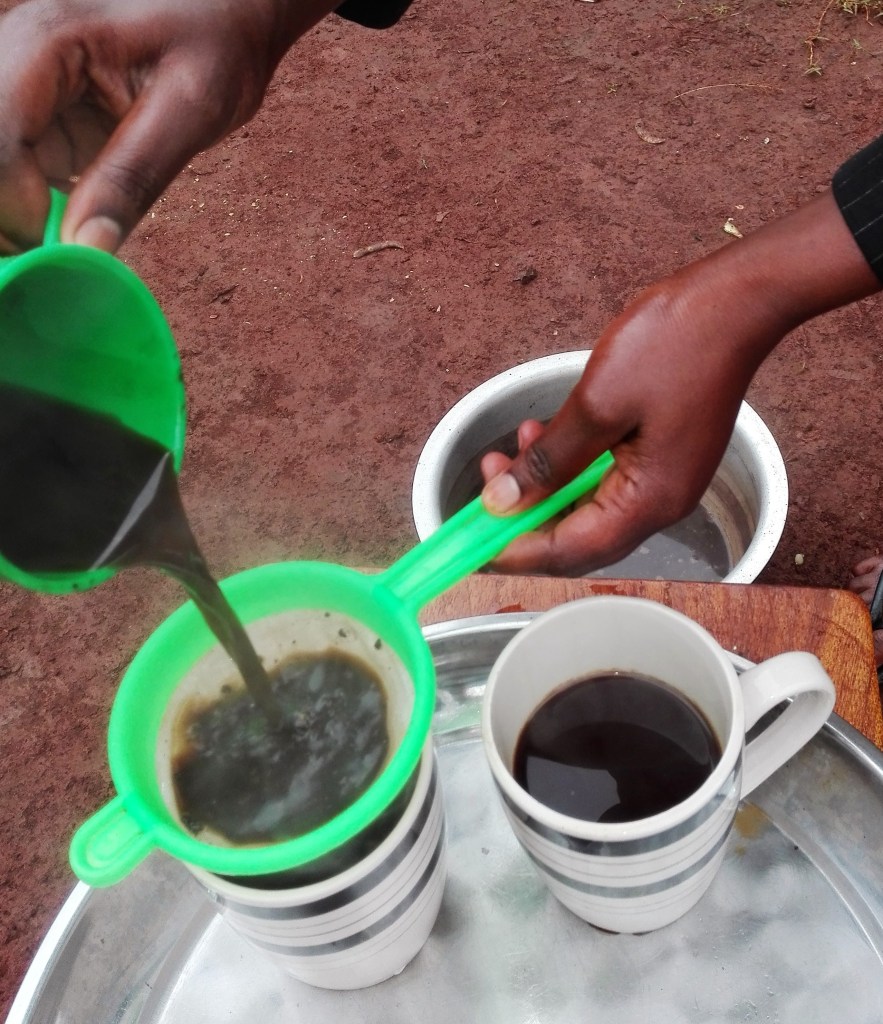
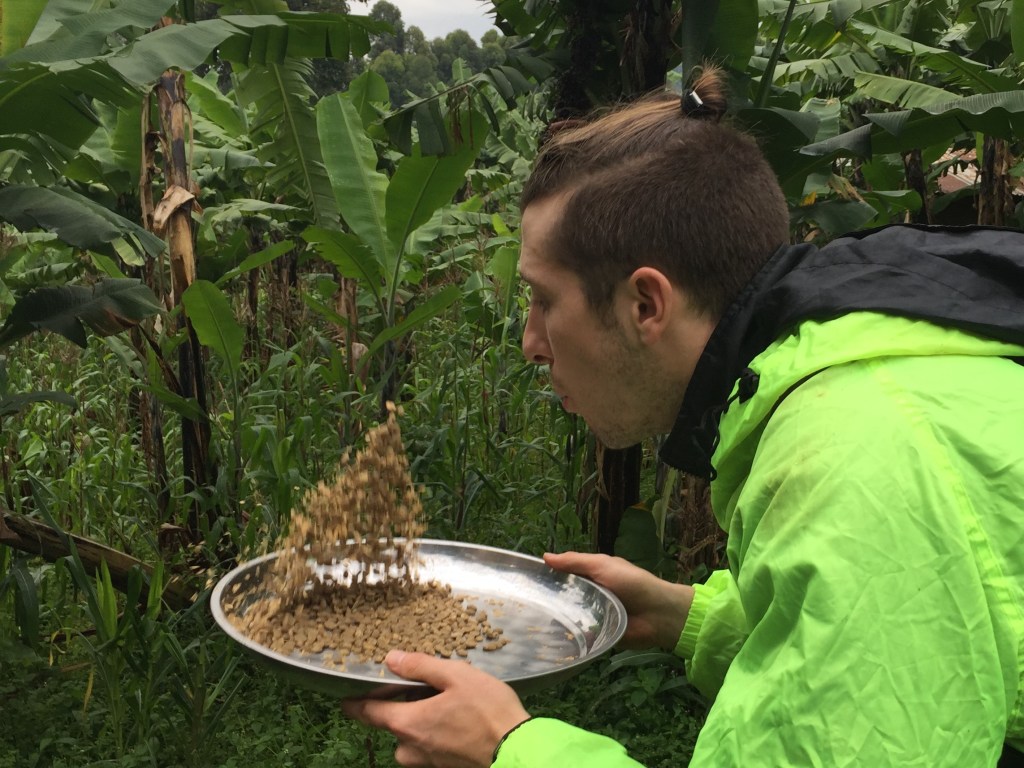
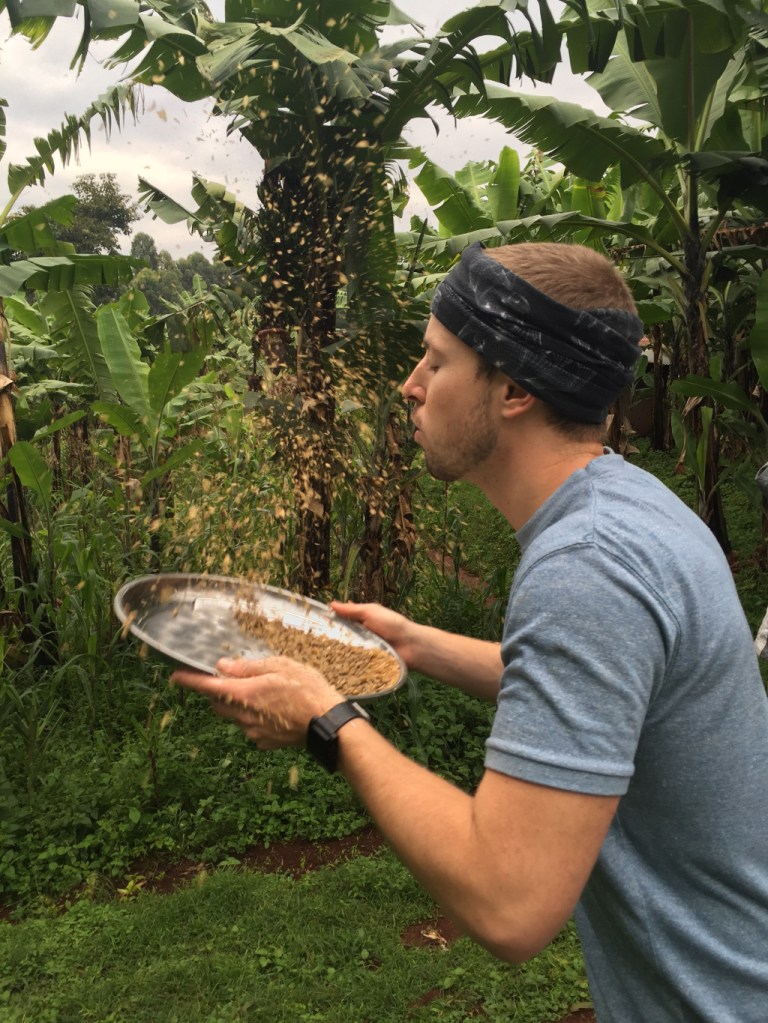
Our hike was led by the ever-knowledgeable Patrick, who also took us on a 100% local coffee tour where we were guided through every stage of the coffee making process from picking and drying the beans, to de-husking and roasting on a wood fire. Not to blow our own horn, but we are pretty damn talented coffee roasters. The locals say coffee used to be a beverage reserved for special occasions, but its increased popularity globally has made it much more accessible. The appropriately named Sipi Falls coffee is now grown and sold for export to all corners of the world.

* The East African term used to describe a Minibus Taxi.

Suiting Up

After getting passed the equator it was time to start thinking about our planned “gap” in the trip. I had agreed to join Ross with the caveat that I needed to go on a North American wedding tour in July and this seemed to correspond with Ross’s need to renew health insurance in South Africa after almost three months away. Though we had made plans to park the car at Kakira Sugar in Jinja we had not sorted out some of the final details, for example: after eleven weeks driving across Africa, did we have any remaining clothes respectable enough to wear on an airplane? Also, after re-reading one wedding invitation I realized the event was a black tie event and none of my current suits would work. It was time to make a plan.

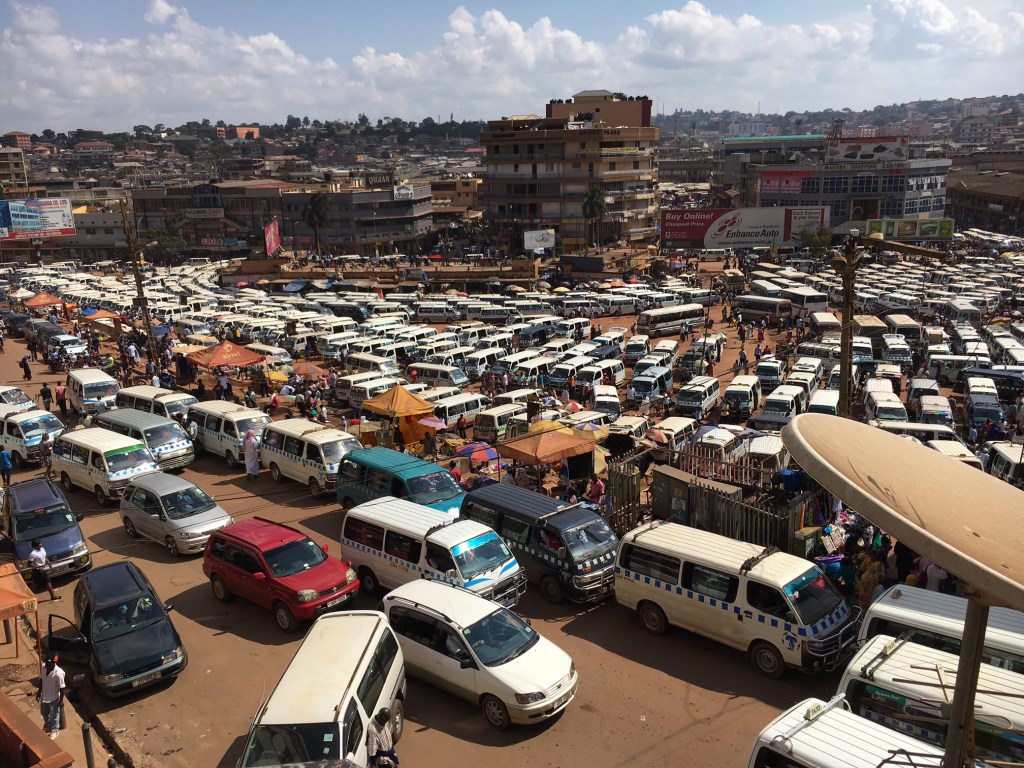
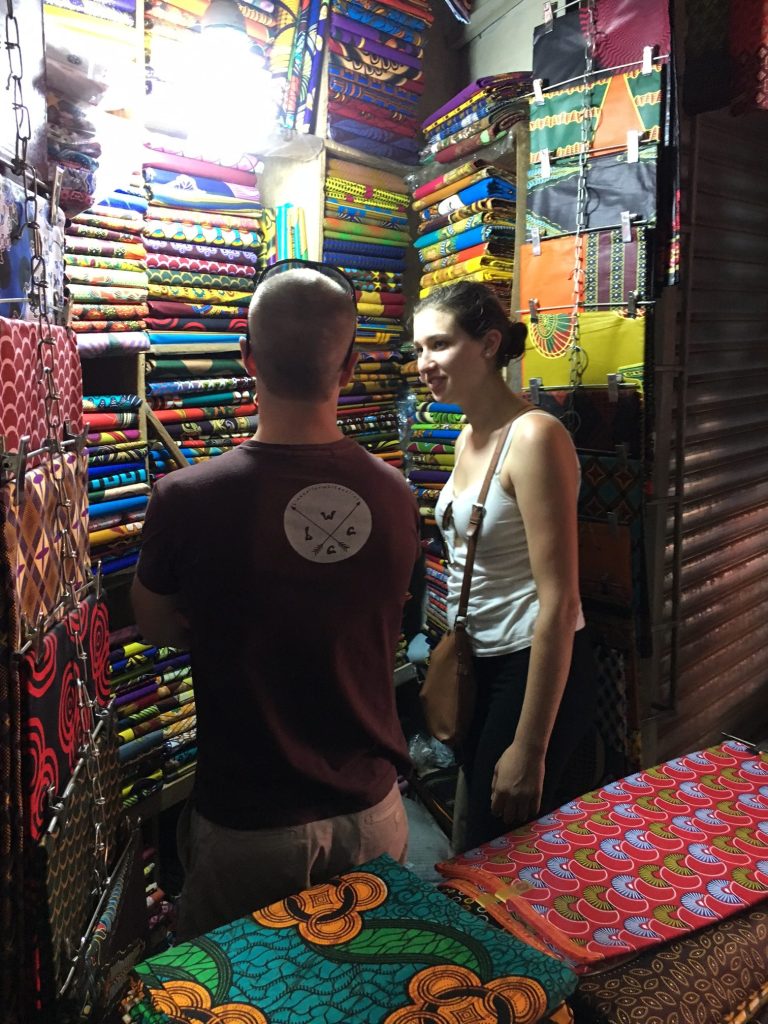
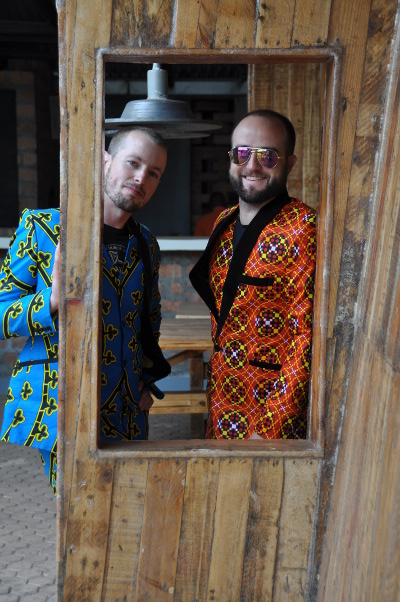
We had always had it in the back of our minds that fine bespoke tailoring of unique African fabric would be a nice souvenir from our trip. But now, with my wedding tour so formalized and Ross determined to dress to impress during a few MBA scholarship interviews, it became an imperative that we locate a fabric shop and find the finest tailor in all the land. The fabric shopping was easy enough – we only had to cross the “Great Barrier Reef Taxi Stand” without being maimed or robbed and then choose from one of the 100+ fabric shops selling a variety of homespun (read: from China) and other unique (read: wax paper clothes?) fabrics to choose from. Fortunately, we had help from our Vets Without Borders friends from Mbarara.

Carefully choosing a route to the fabric markets.
So many colors, how can we possibly choose?
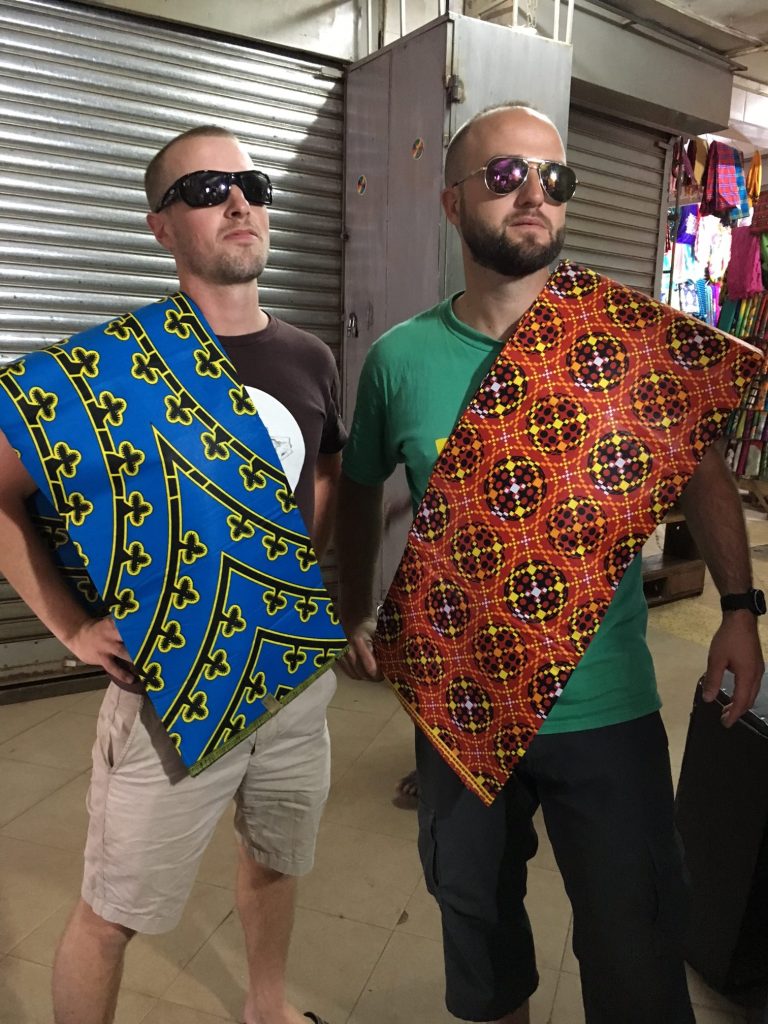
Finding something we can work with.

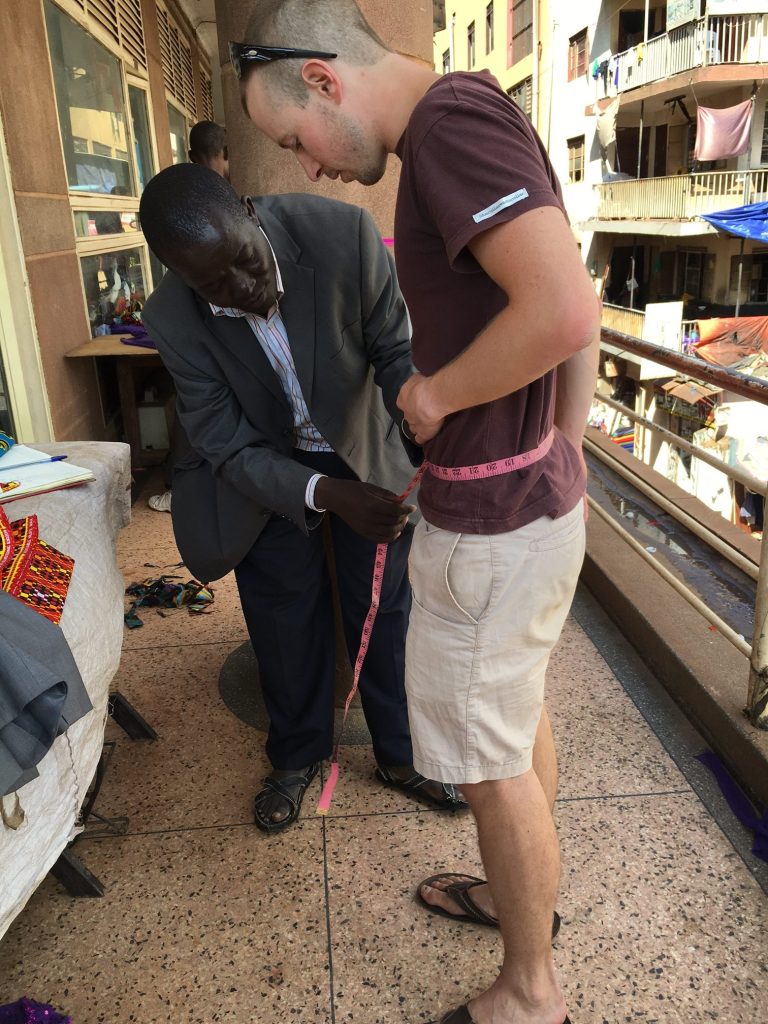
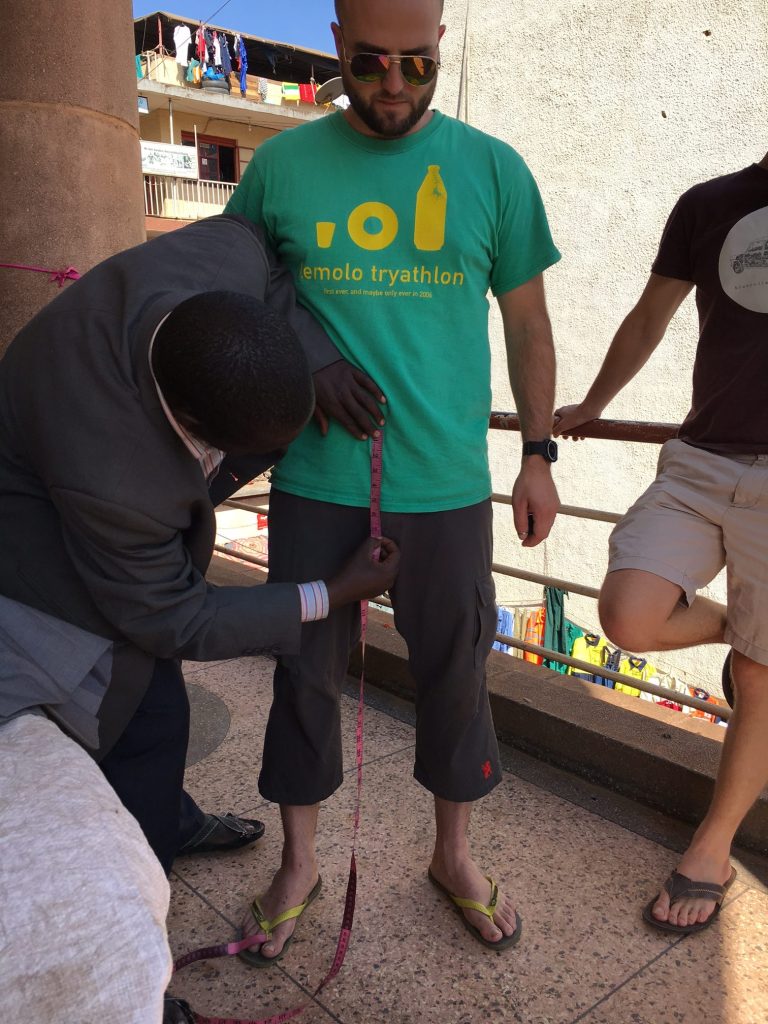
Fabrics selected, we again crossed the taxi terminal (and again made it financially whole) to initiate the process of selecting the best tailor we could find. One particular street close to the main market in Kampala seemed to be where all tailors congregate. The muddy half-paved half-pothole filled street was lined on both sidewalks with rickety tables holding precariously balanced sewing machines. Behind each machine a man worked the electric foot pedal sewing furiously to stitch together shirts, dresses, trousers, suit coats and more. Behind the tailor, ropes and wire were strung along the wall bearing hangers of finished wares. We walked the entire street talking to assorted tailors and inspecting their finished merchandise. After some discussion between Ross and I debating the finer finishing details of one such tailor, we determined that we would move forward with him to the next stage. Our chosen tailor, Mr. Mathias, was happy to then show us his actual shop which was on the top floor of an adjacent building. It seems the tailors on the street are only the front man for a business that has an entire back end structure. Before we could ask too many questions, it was time to get measured up.

Ross confirms extra slim fit style.
I confirm: left.

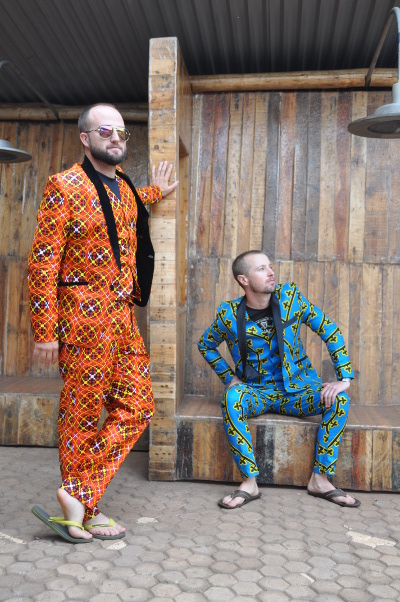
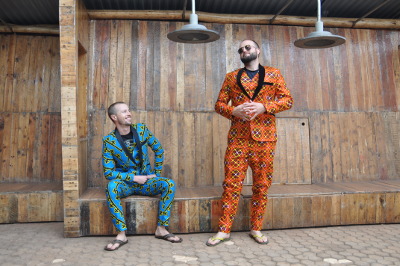
With measurements completed, we only had to finalize pricing. With no printed price list it took around ten minutes of tough negotiation in order for Mr. Mathias to agree to 90,000 UGX per suit. Considering we paid 35,000 UGX each for the fabric it was starting to add up. Neither Ross or I had owned a six figure piece of clothing before. And so we departed ways with our money and Mr. Mathias with instructions to return in one week for the finished ensembles hoping the new fashion collection would be finished prior to our planned trip break. He did not disappoint and we are happy to show a few stills from our first trip fashion show.

Falling Short

After a day of relaxation with Chris and Jenny, Shea and I decided to make a short venture north to Murchison Falls. We also managed to convince ourselves that it wasn’t much extra effort to take a four hour detour first to the equator to capture that elusive equator photo.

Equator jump-shot! So worth it.

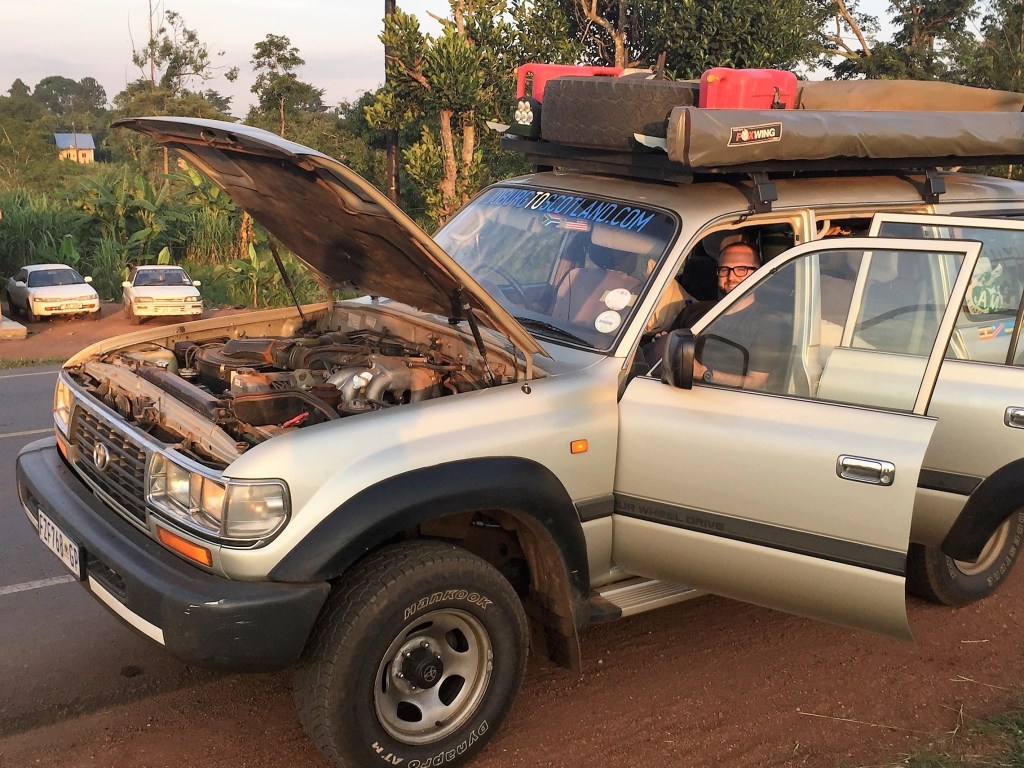
Unfortunately Bubbles suffered a second snapped fan belt which necessitated some roadside repairs. The delay from our detour combined with the repair time meant we weren’t going to make it all the way to Murchison. We decided to stop off at the Uganda rhino sanctuary, roughly half way there, and look for a camping spot. Unfortunately we arrived after the gates were closed and opted to bush camp rather than pay $20 to summon a game ranger to escort us through the reserve. We drove around campsite hunting with the aid of our ridiculously bright spotlights (a.k.a. “The Apocalypse”*) till we found the perfect spot just off the road. Well, we thought it was the perfect spot until a few gentlemen from the Ugandan Anti-Terrorism Police arrived and kindly asked us to move. Apparently, we had scared some of the locals with our spotlights who had subsequently reported us to the authorities.

Bubbles waiting to cool down after her second fan-belt incident.

The next day we took a visit to the sanctuary which contains only 16 rhinos. Each rhino is assigned a 24hr, two-ranger security detail. Applied to the South African context, with our roughly 20,000 rhinos, that constitutes a serious job creation opportunity. We headed next to Murchison only to discover it was going to cost us $250 to see the falls because of all the “tourist pricing” associated with our foreign vehicle and passports. Probably should have looked that up in advance. We turned around and headed back to Kampala after washing down our self pity with goat kebabs and a healthy glass of drinking yoghurt.

Real men drink yoghurt.

* This name was chosen so we could scream “Engage the Apocalypse” every time we used them.

THIS BLOG IS NOT FOR SALE

Onward we marched towards the civilized chaos of Kampala. We left early in the morning hoping to get into town before rush-hour traffic. What we didn’t realize is that it is ALWAYS rush hour in Kampala. In our haste we also managed a critical oversight; we missed the “equator” sign. Even worse, we only realized this sitting knee deep in gridlock Kampala traffic, two hours drive from the equator. We both sat in silence; overcome by sadness at the thought of a missed opportunity for a jump-shot photo.

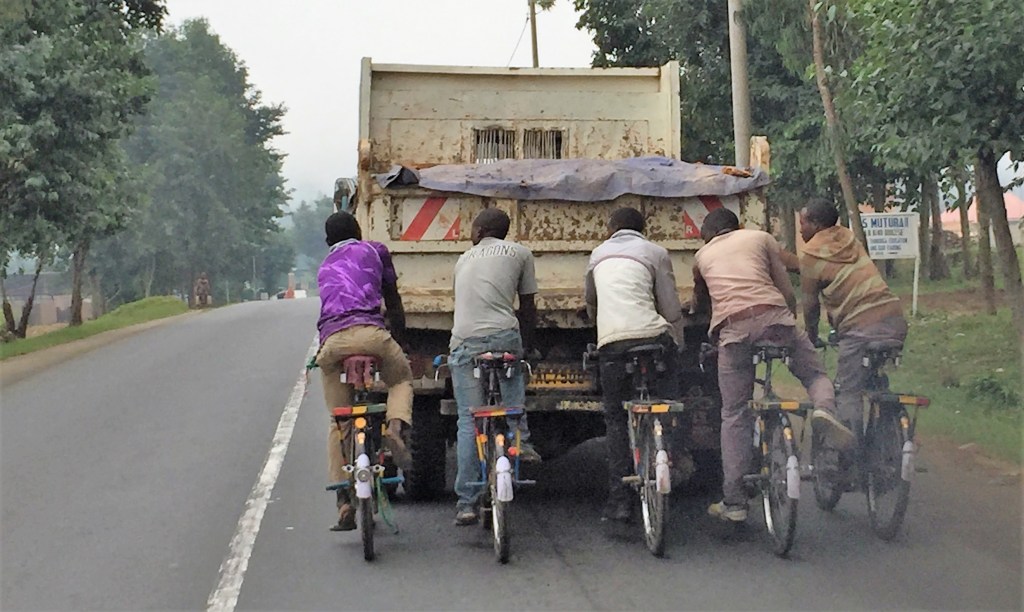
The trip wasn’t all bad. We did run into this, the most impressive case of bicycle freeloading we have seen on the road to date.

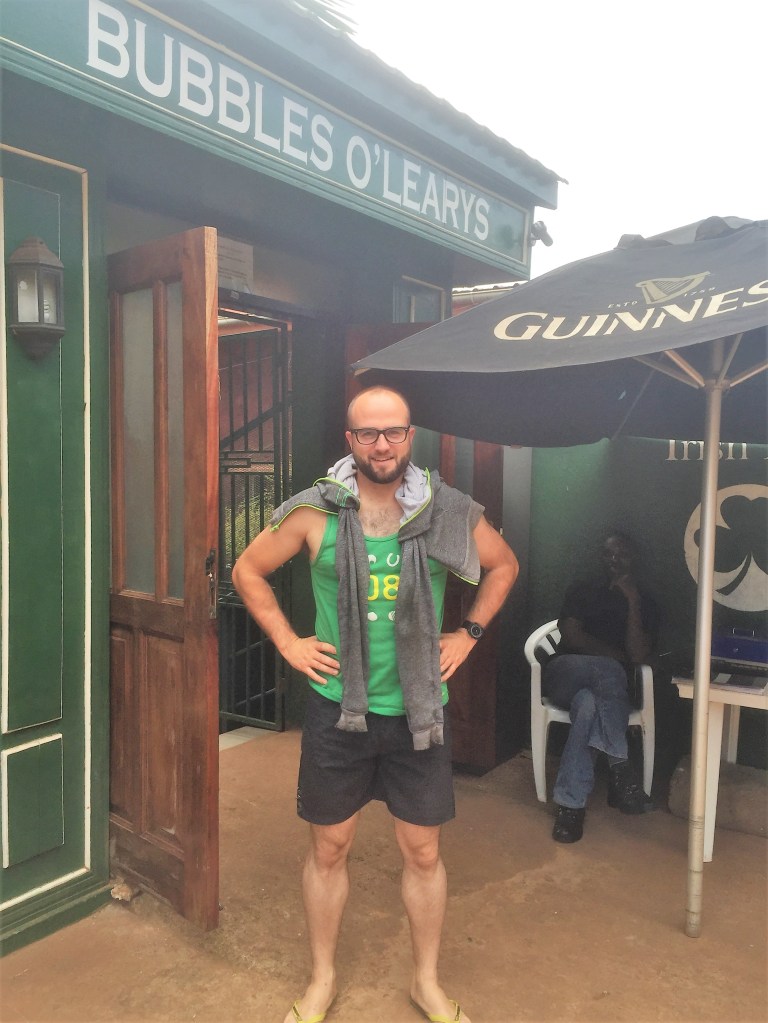
After visiting a handful of backpackers in Kampala we settled in at Bushpig. A great little spot in the “Beverley Hills” of Kampala. We dropped our bags and went pub hunting. Shea’s team (Croatia) was playing in the Euro and it was imperative that we find a place to watch the game. We stumbled upon a classic Irish Pub named Bubbles O’Learys (naturally) where we were vividly reminded of the 2010 fan park bombings with an informational poster in the bathroom depicting the entire known range of bombs, landmines, grenades and missiles.

The Irish wonderland of Bubbles O’Learys.
Highly educational but a bit unnerving.

The next evening we found ourselves at Guvnor, a local Kampala super club, with the group of veterinary students from Veterinarians Without Borders that we had met in Kigali. Shea was on high alert after having been propositioned by a “professional” female companion at Bubbles O’Learys the night before but loosened up after a few whiskeys and by the end of the evening we took shameless control of the dance floor. Veronica, one of the vet students, found the evening particularly educational after pulling a pair of escorts dressed as policewomen to our table. The ladies attempted to teach her a series of booty-shake dance moves only to conclude that she did not have enough junk in the trunk to pull it off. The evening was rounded off with a Rolex, a distinctly Ugandan street-food dish comprising of an omelette wrapped in chapati.

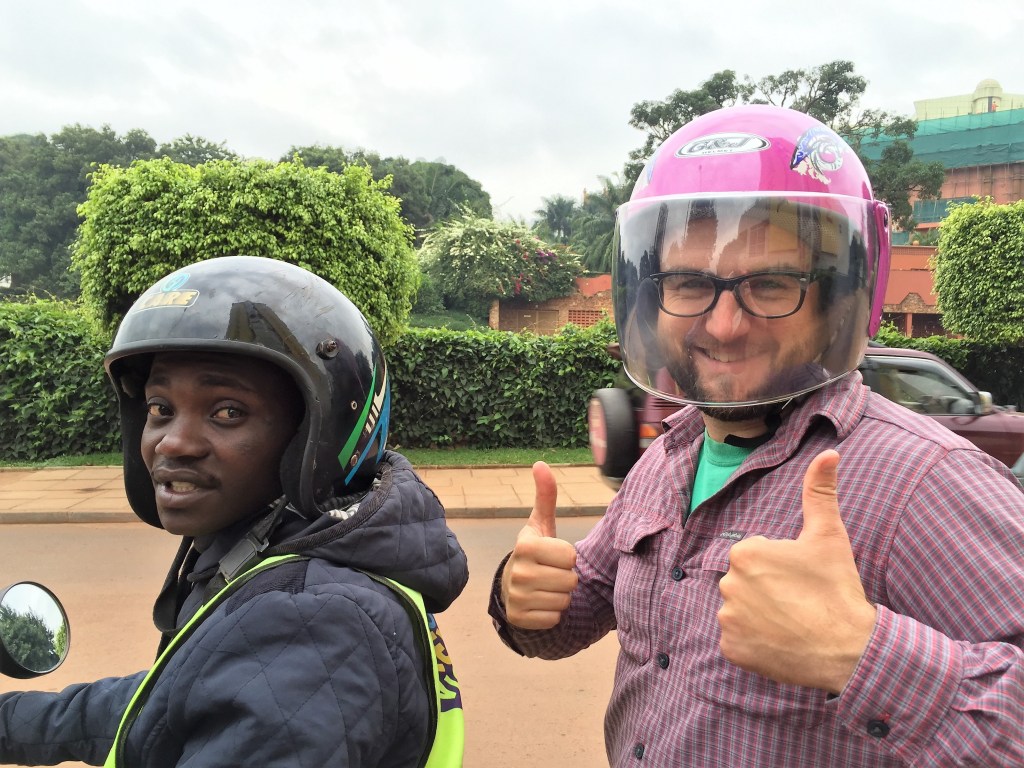
Considering the constant traffic, the most efficient way to get around Kampala is undoubtedly by motorcycle. It is also by far the most dangerous so Shea and I were relieved to discover that the Boda Boda tour company we had selected provided helmets. Shea’s was an ultra-manly pink colour, slightly concerning in a country where it is illegal to be gay. I probably should have mentioned to the tour operator that we were both male when booking a day trip for two.

Shea loving his helmet choice.

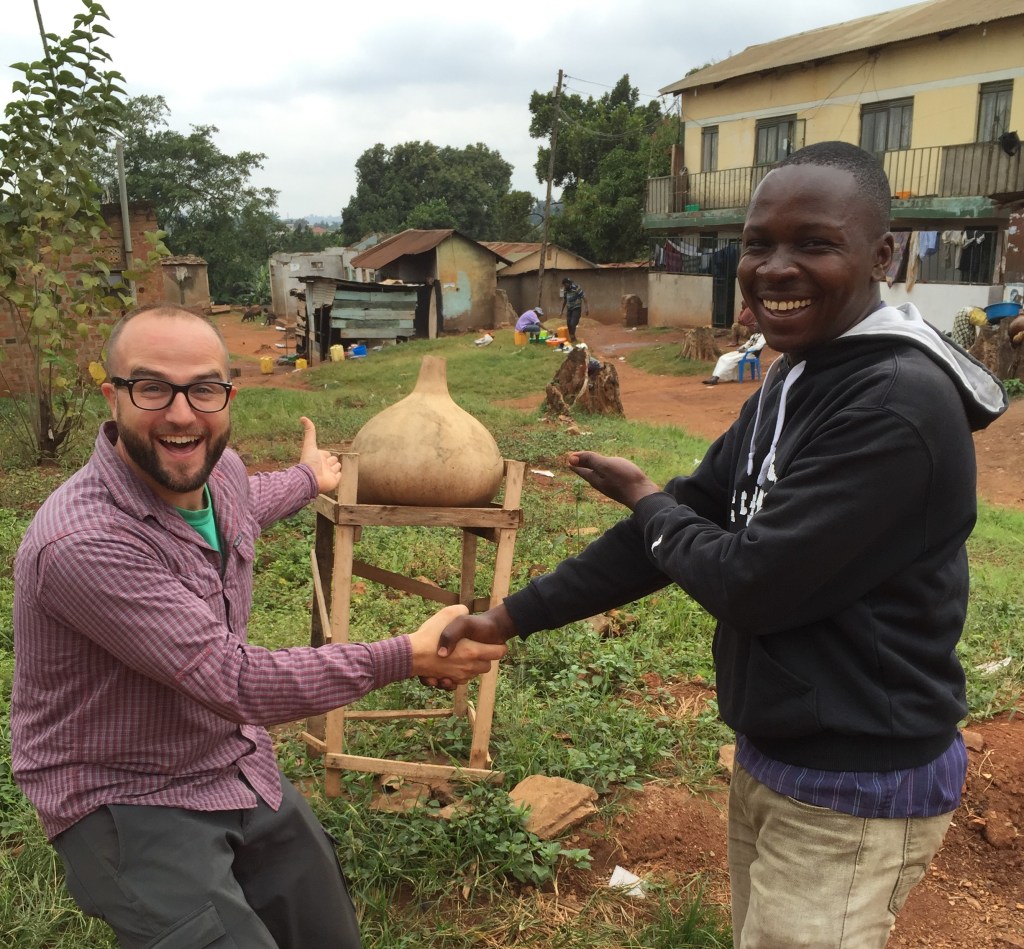
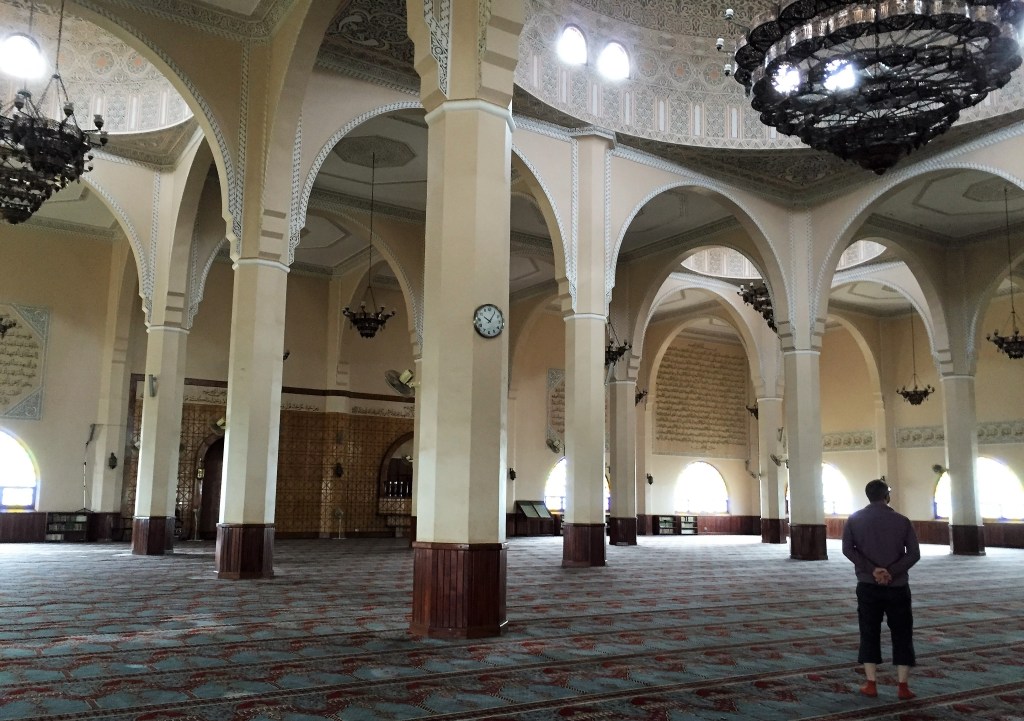
The tour was great fun and incredibly informative. Sites visited include Gaddafi Mosque, the Hindu temple, Idi Amin torture chambers, the Royal Palace and the Baha’i temple. We also had the fortune of savoring some local banana beer at a stall marked out by a giant calabash.

Shea, excited about the prospect of a thirst quencher after a long morning’s ride. The “extra strong” banana beer option packs quite a punch. Watch out!
The inside of Gaddafi National Mosque. Enough space for 16 thousand worshipers!
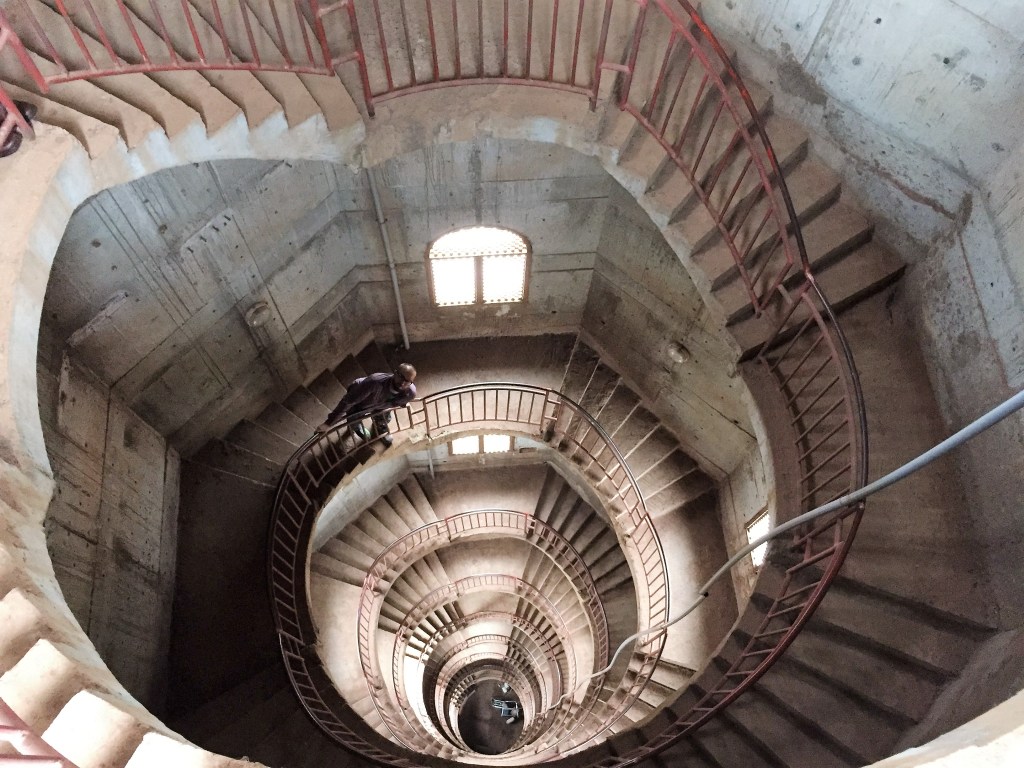
A short walk back down from to the top of the mosque tower.

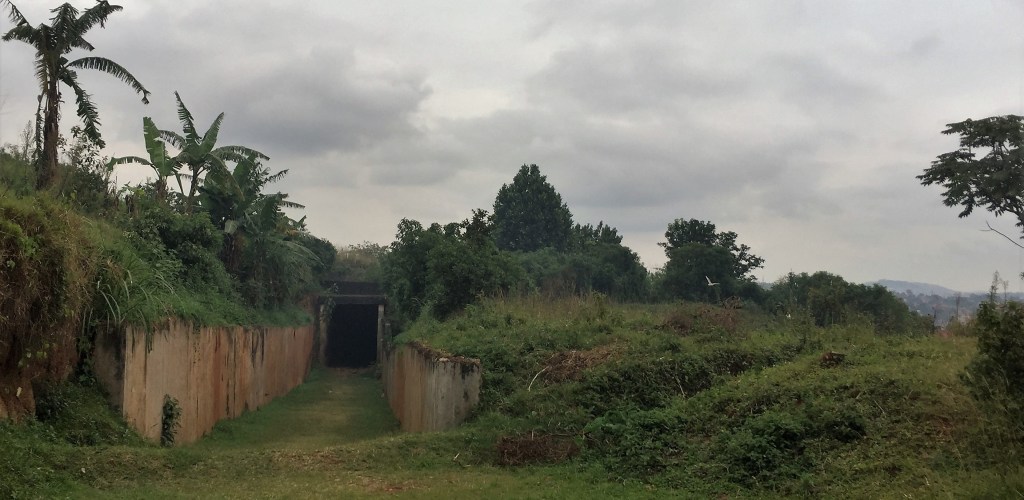
The Idi Amin torture chambers in particular were incredibly underwhelming. The entire construction consists of a single corridor connecting three featureless cells. Political prisoners were crammed into the cells waiting to be electrocuted in the water-logged passage. Many died from suffocation or hunger while waiting. All a bit morbid and rather uncreative. The bodies were taken to the closest dam where Idi Amin had imported crocodiles from the Nile to eat the bodies. The crocs are all dead now but I am told they grew enormous.

The entrance to Idi’s chambers.

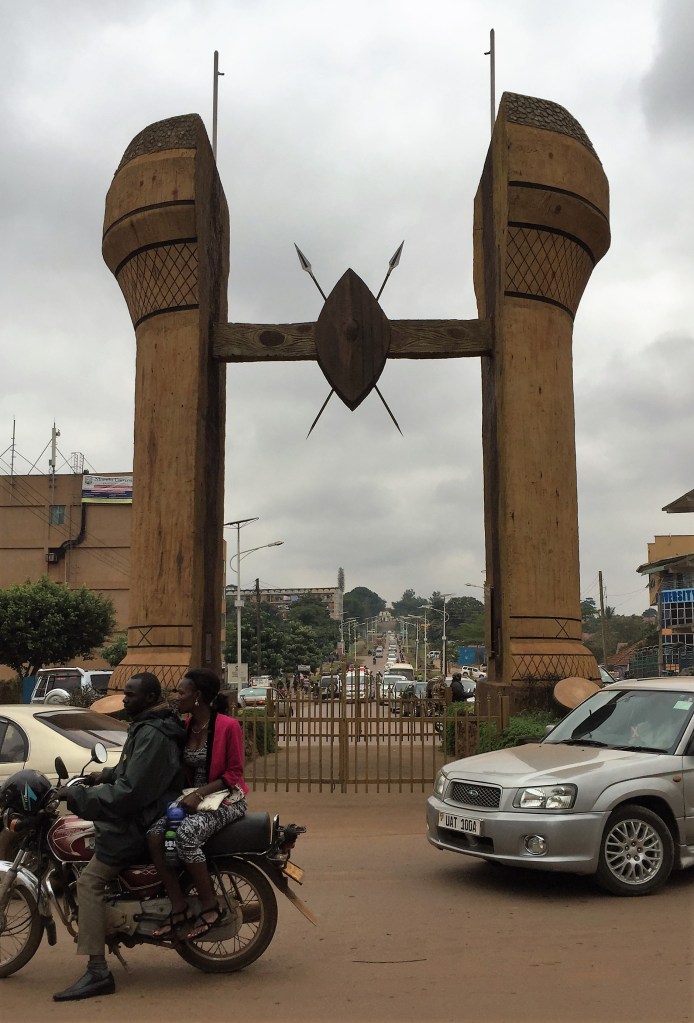
An interesting quirk of Ugandan society is the precarious relationship between the tribal kings and the political powers. The royal mile is a particularly interesting case. This mile of road links the residence and parliament of the king of the Buganda, the tribe covering Kampala and its surrounds. The road is bisected by a monument with a path directly through the centre through which only the king is permitted to drive.

The king’s monument on the royal mile.

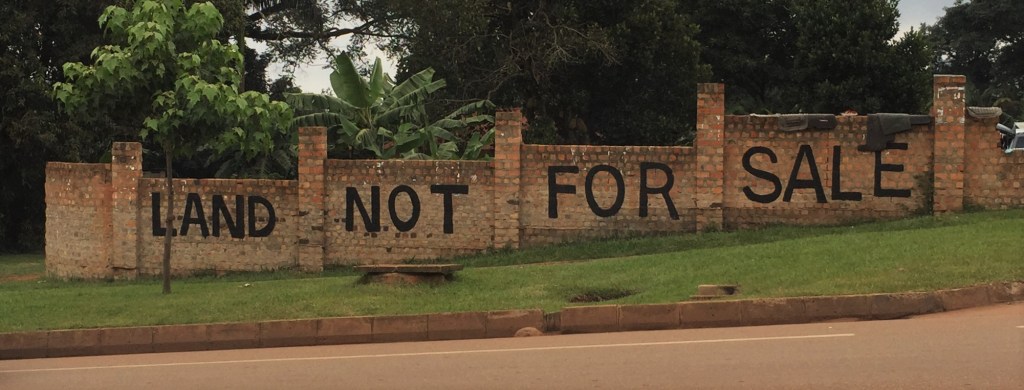
We’ve spoken before about the peculiar signage we’ve spotted throughout our travels. The most notable one in Uganda has to be the ubiquitous “this land is not for sale” sign which is hand painted on nearly every vaguely commercial building in the country. I’m told it has something to do with false ownership claims linked to fraudulent title deeds but the details are not clear.

A classic not for sale sign on a piece of land being used to run a car wash.

After a few days in Kampala it was time to continue through to Jinja where we were to meet up with some friends at the Kakira Sugar Plantation. Jenny and Chris Strathern welcomed us in with open arms, despite our very loose connection, and we settled in for a few days of home cooked meals, stimulating conversation and tours of the facilities. We were spoilt rotten.

Relationship Status: Silverback

Surviving the DRC meant a return to some more basic objectives of our trip: maintaining dating bliss between Ross and April. I’m not aware of all the nuances of their relationship but the phone was on speaker when I heard April say “Ross, if you don’t go see the gorillas I’m breaking up with you!” Before our successful volcano summit we had attempted to see mountain gorillas in the Parc Nationals des Volcans in Rwanda but the tours were very crowded which left little room to negotiate down the $750 list price. And so as we crossed the border into Uganda it became imperative that we make a plan.

Lake Bunyoni Overland Camp, Southern Uganda.

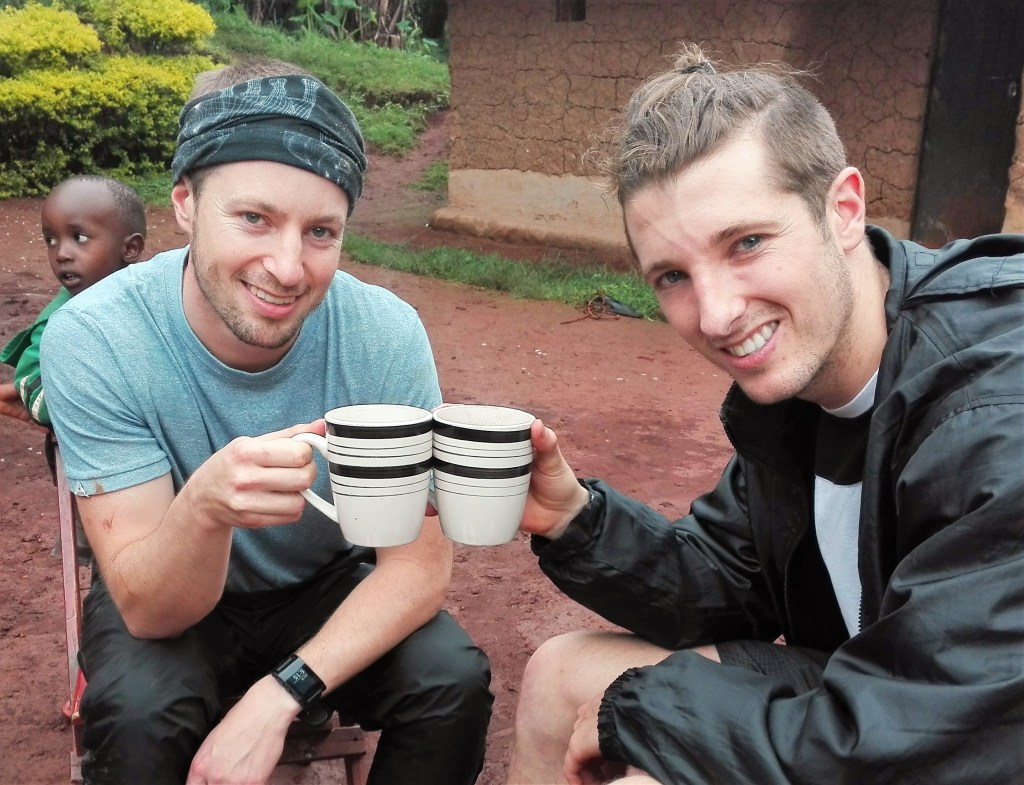
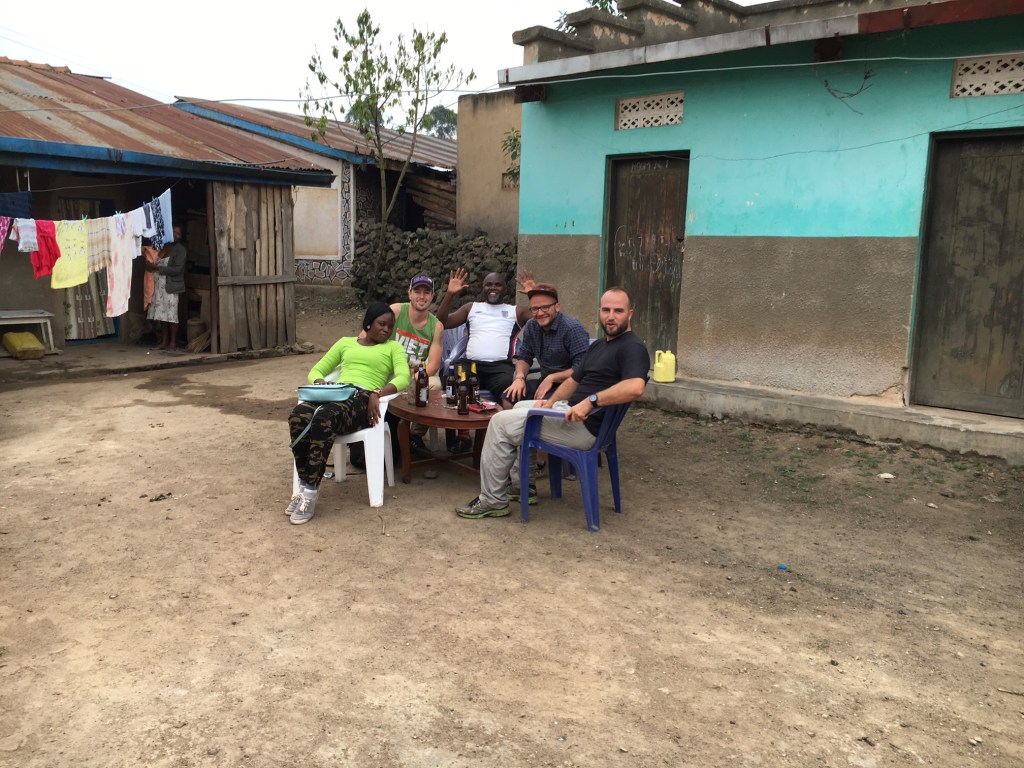
After getting our camping organized at Lake Bunyoni Overland Resort, a beautiful and lusciously green campground with great facilities, we started networking with the locals to organize a gorilla tour. A sneaky tour was organized with payment contingent upon seeing actual mountain gorillas. The next day we met our driver and two other tourists, a gentleman named Eve from Switzerland and his friend Aaliyah from Kampala. The nature of their friendship/relationship was unclear. We set off for the Bwindi Impenetrable Forest National Park about 25km down the road. It was unclear why we left at 9:30 AM because most other drivers we had seen thus far in our journey followed the “hurry up and wait” method of pedal to the metal acceleration followed by screeching brakes. It was an unusual surprise to have a driver so committed to leaving early in the morning but extending the driving time by maintaining steady pace of 5kph on the road. It turns out, our time slot for the gorillas wasn’t until the afternoon and the driver had nowhere to take us so was determined to just kill time by driving slowly. We put a stop to this by demanding to be driven to a bar. As there were no bars alongside the road, we found a shop selling beer, organized some tables and chairs and started our own bar.

Bar D.I.Y.

After 3 or 4 beers, we got the call that our gorilla tour was ready to start so we drove the 30 minutes into the park and met our ranger guide. It was a quick 15 minute bushwhack through dense jungle and when I narrowly missed stepping into some steaming feces, I knew we were getting close. We entered a gap in the dense jungle and could suddenly see the gorillas. Coming within 10 meters of the creatures was amazing, until the flatulence started. I suppose if you ate leaves all day everyday, you would also have pretty bad gas. We watched for an hour or so as they climbed the trees around us eating leaves and bugs. It was a once in a lifetime viewing experience and I was relieved that Ross and April would be able to maintain their relationship going forward.

Mission accomplished.

Unlike the drive to the park, the drive home was done as fast as possible. Unfortunately, the third tier tour company we choose was determined our tour should include the entire park and so instead of the 30-45 minute return journey after seeing the gorillas, we spent the next 3.5 hours winding through the hills around the Bwindi Impenetrable forest on our way home. When we finally exited the vehicle 10 hours after entering, we reflected on time spent in the car versus cost saved through alternative tour methods. Happy to have saved Ross and April, we are further committed to official tours and efficient uses of time going forward.